A comprehensive study based on large-sample multi-omics integration and machine learning to decode mitochondria-associated genes: from digestive tract tumours to gastric cancer - Summary - MDSpire

A comprehensive study based on large-sample multi-omics integration and machine learning to decode mitochondria-associated genes: from digestive tract tumours to gastric cancer

  • By

  • Wei Zhang

  • Yu-Lu Tang

  • Yi-Yang Chen

  • Ya Shang

  • Hong-Bo Mo

  • Jie Huang

  • Yu-Feng Li

  • Ze-Hua Liu

  • Ge-Li Tan

  • Yan-Kun Ning

  • Guo-Qiang Chen

  • Jing-Wen Ling

  • Lei Wang

  • Jia-Shu Jiang

  • Jia-Yuan Luo

  • Gang Chen

  • July 6, 2026

  • 0 min

Share

Objective:

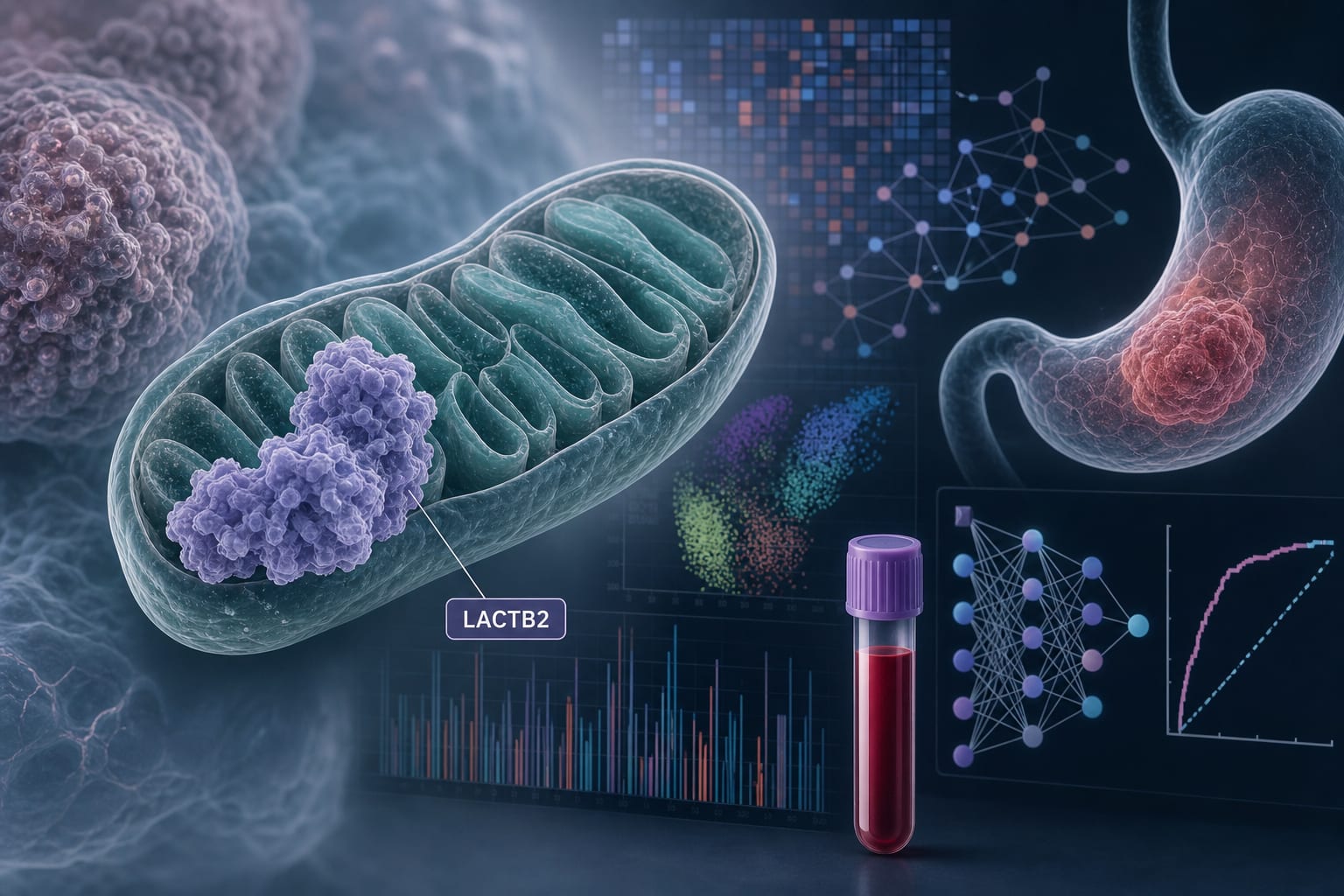
To analyze the mitochondrial key gene LACTB2 in digestive tract tumors and explore a novel early blood-based diagnostic model for gastric cancer (GC).

Approach:
  • Sample Analysis: Analyzed LACTB2 expression and biological pathways in a cohort of 10,581 samples, including 236 internal GC samples.
  • Multi-Omics Integration: Integrated multi-omics data for comprehensive analysis of LACTB2 in GC.
  • Machine Learning Models: Constructed prognostic and blood-based diagnostic models using extensive clinical samples and multiple machine learning models (n = 14,219).
Key Findings:
  • LACTB2 overexpression is linked to clinical metastasis and activation of pro-cancer pathways.
  • LACTB2 may mediate immune suppression and immune evasion.
  • A significant transcriptional regulatory network exists upstream of LACTB2.
  • Dysregulated LACTB2 expression affects the prognosis of GC patients.
  • Afatinib and Ulixertinib may target LACTB2 in GC treatment.
  • An early blood diagnostic model for GC was developed based on upstream miRNA of LACTB2.
Interpretation:

The study provides insights into the role of LACTB2 in digestive tract tumors, particularly its significance in gastric cancer.

Conclusion:

The study elucidates the molecular characteristics of LACTB2 in gastrointestinal tumors.

Original Source(s)

Related Content