Shuci method of electroacupuncture improves self-perception and quality of life in patients with knee osteoarthritis: a multicenter randomized controlled trial - Summary - MDSpire
Conexiant’s news site is now MDSpire News. Learn more
Advertisement
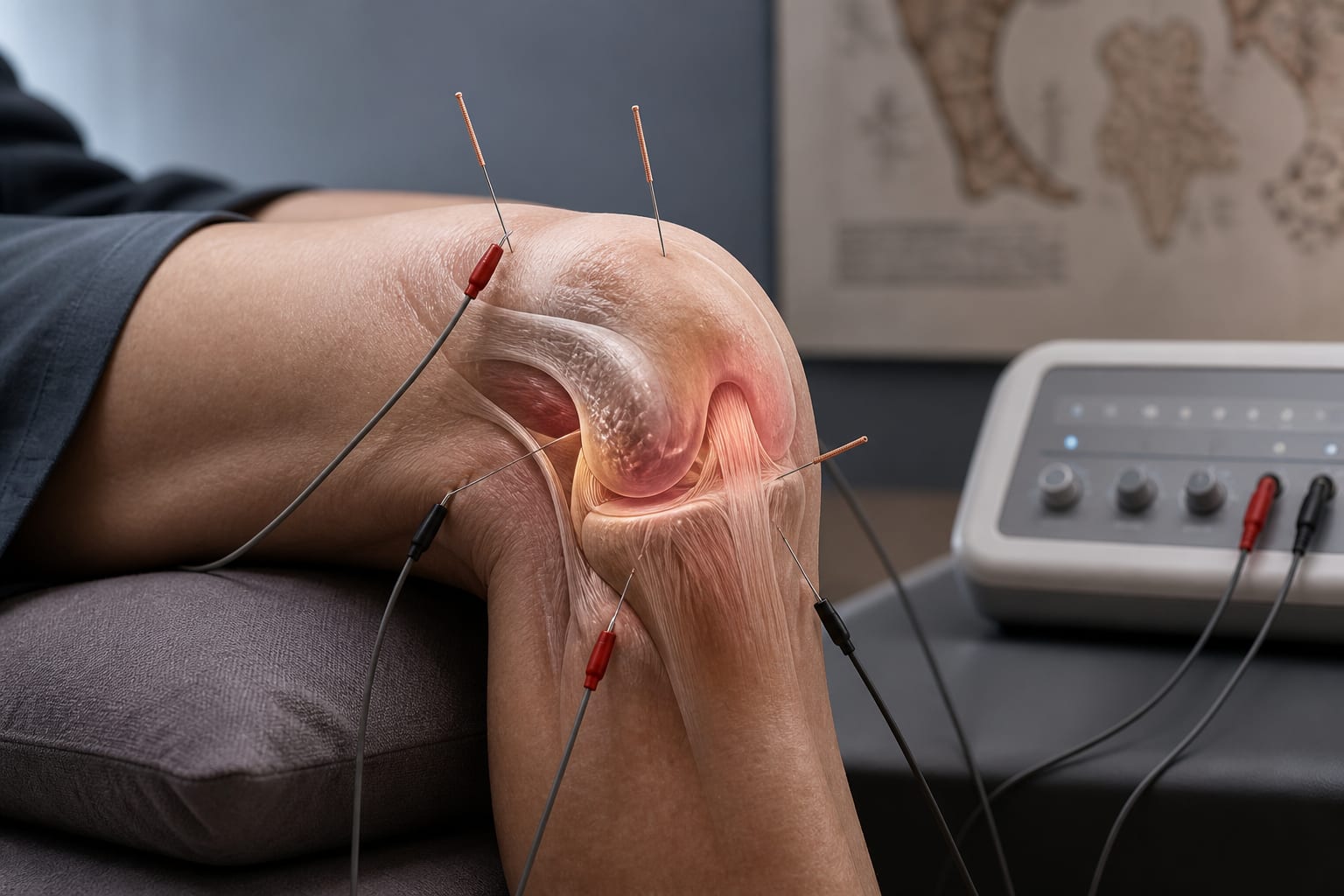
Electroacupuncture Using the Shuci Technique Enhances Self-Assessment and Life Quality in Individuals with Knee Osteoarthritis: Results from a Multicenter Randomized Controlled Trial
To evaluate the efficacy of the Shuci method of electroacupuncture in improving self-assessment and quality of life in patients with knee osteoarthritis (KOA).
Approach:
Study Design: A multicenter, patient- and assessor-blind, superiority randomized controlled trial was conducted with 110 patients with KOA, randomly assigned to receive either electroacupuncture (EA) or sham electroacupuncture (SEA) over two weeks.
Outcome Measures: Primary outcome was response rate based on the Clinical Global Impressions scale–Improvement. Secondary outcomes included Visual Analogue Scale (VAS), pressure pain threshold (PPT), and Knee Injury and Osteoarthritis Outcome Score (KOOS).
Key Findings:
Response rates were 76.4% for EA and 27.3% for SEA, with a significant between-group difference of 49.1% (p < 0.001).
EA showed significantly greater improvement than SEA in VAS [Difference (95% CI), −2.1 (−2.6 to −1.6); p < 0.001], PPT [20.1 (14.9 to 25.3); p < 0.001], KOOS-pain [23.3 (18.3 to 28.3); p < 0.001], KOOS-Symptoms [16.8 (10.8 to 22.8); p < 0.001], KOOS-Activities of daily living [7.2 (0.1 to 14.3); p = 0.046], and KOOS-Knee-related quality of life [7.6 (3.0 to 12.2); p = 0.001].
Interpretation:
The study establishes the efficacy of the Shuci method of electroacupuncture in enhancing self-assessment and quality of life in KOA patients.
Limitations:
The study may have limitations related to the sample size and the short duration of treatment.
Conclusion:
The Shuci method of electroacupuncture demonstrates efficacy in patients with KOA.
Achievable goals, activity tracking, and social support are among the strategies JAMA researchers recommend for patients with chronic medical conditions.
A case report highlighted extensive intratendinous urate deposition and bilateral Achilles tendon rupture, raising awareness of tendon complications in advanced gout.