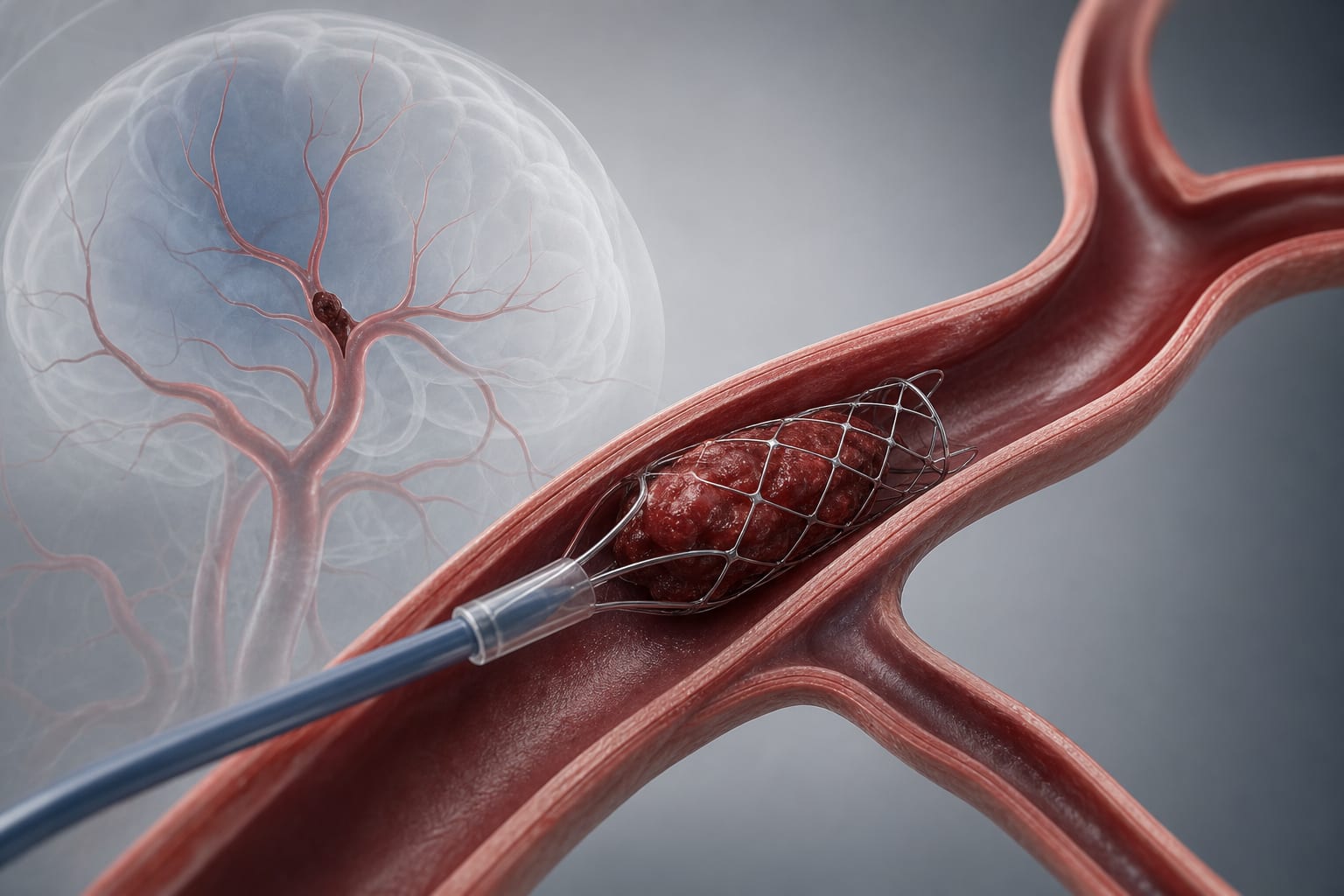
To analyze a resected carotid web specimen histopathologically and hypothesize the role of myofibroblasts in its pathogenesis, particularly in relation to ischemic stroke risk.
Key Findings:
Carotid webs are associated with increased risk of ischemic stroke, particularly in younger patients, with a prevalence of 9-37% in those under 60 with cryptogenic stroke.
Histopathological analysis revealed significant myofibroblast accumulation and collagen changes in the excised specimen.
Post-surgical follow-up showed no recurrence or neurological symptoms in the patient.
Interpretation:
The findings suggest that myofibroblast dysregulation may play a role in the pathogenesis of carotid webs, warranting further investigation into its implications for stroke prevention.
Limitations:
The study is based on a single case, limiting generalizability and introducing potential biases.
Long-term outcomes and the effectiveness of surgical intervention in asymptomatic cases remain unclear.
Conclusion:
This case highlights the potential role of myofibroblasts in carotid web formation and supports the need for further research into optimal management strategies, particularly regarding stroke prevention.