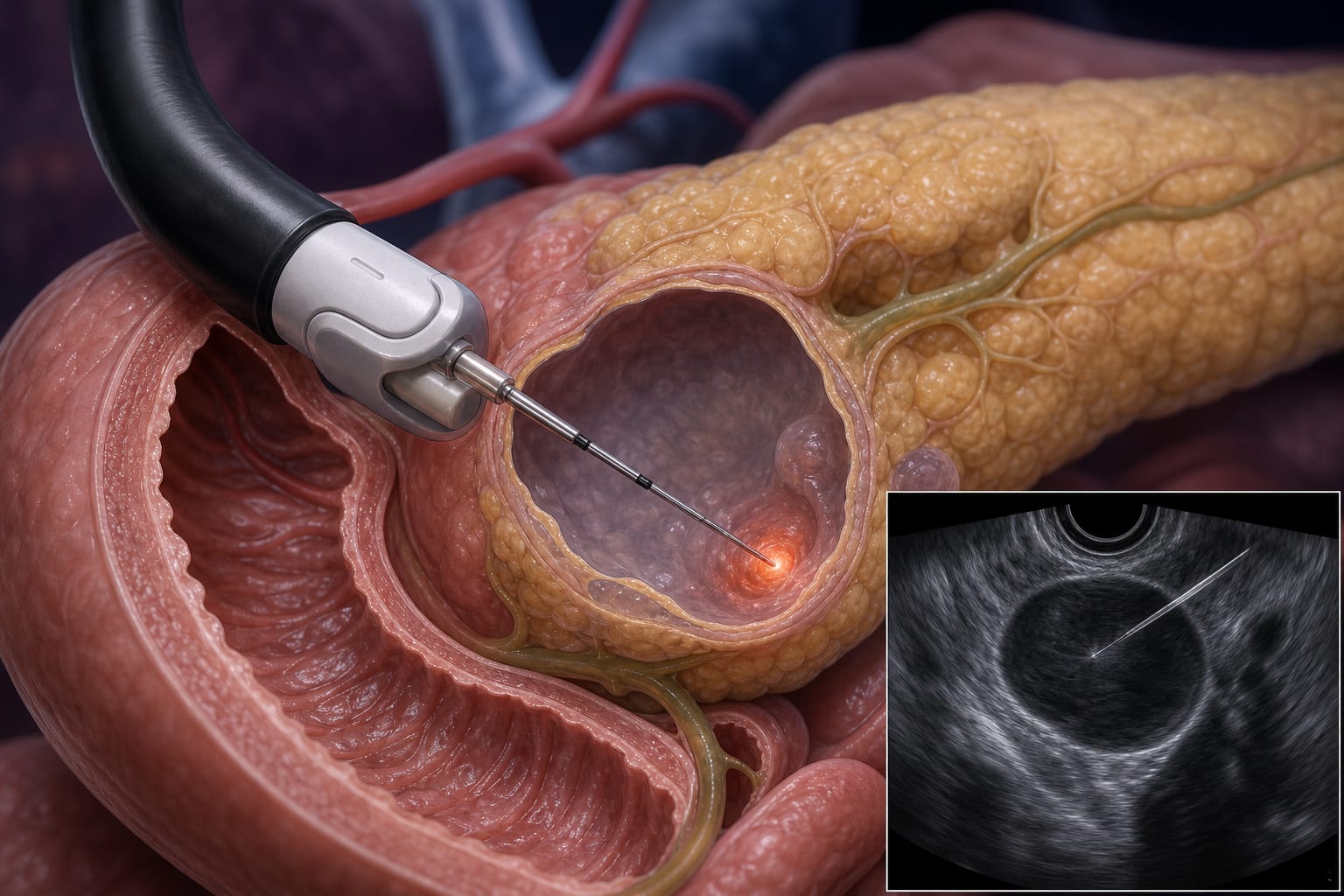
To systematically explore the technical principles, device evolution, and standardized operational procedures of endoscopic ultrasound-guided radiofrequency ablation (EUS-RFA) for pancreatic cystic neoplasms (PCLs), emphasizing its clinical significance.
Approach:
Key Findings:
EUS-RFA is a promising local treatment option for PCLs with malignant potential, showing a 90% success rate in recent studies.
The technology has evolved significantly, demonstrating high efficacy and safety, with complication rates below 5%.
Minimally invasive therapies like EUS-RFA address the limitations of traditional surgery and long-term surveillance, reducing hospital stays by 50%.
Interpretation:
EUS-RFA represents a significant advancement in the management of PCLs, particularly for high-risk patients unfit for surgery, potentially improving patient outcomes.
Limitations:
The specificity of imaging and EUS for predicting malignancy is not 100%, leading to potential overtreatment.
There is a need for higher-level evidence-based data to fully establish the clinical value of EUS-RFA, particularly in diverse patient populations.
Conclusion:
EUS-RFA has emerged as an important therapeutic option for selected PCLs, but further standardization and evidence accumulation are necessary to validate its role in clinical practice.