To identify and describe the available scientific evidence on emerging applications of AI in risk stratification for head and neck cancer, highlighting its potential to improve clinical outcomes.
Key Findings:
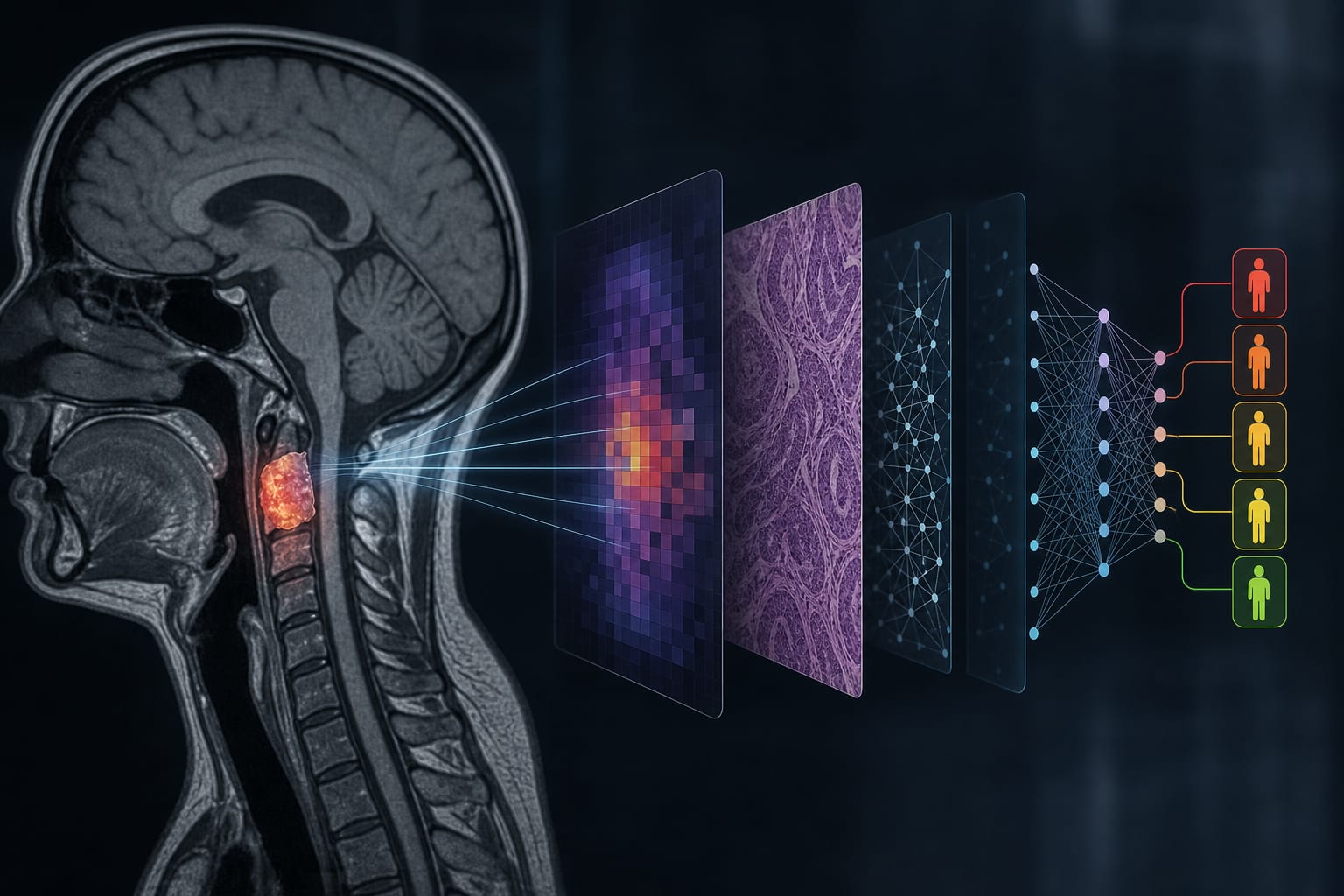
44 studies were included, focusing on AI techniques for diagnostic tasks and prognostic risk stratification in head and neck cancer, including prediction of lymph node metastasis and extranodal extension.
Common AI approaches included machine learning models, deep learning architectures, and radiomics-based methods, applied to various data modalities such as computed tomography, magnetic resonance imaging, digital histopathology, and structured clinical variables.
Studies reported moderate to high predictive performance but exhibited substantial methodological heterogeneity, including variations in design, sample size, and validation strategies.
Interpretation:
AI has the potential to enhance risk stratification in head and neck cancer, complementing conventional clinical approaches and improving patient outcomes.
Limitations:
Substantial methodological heterogeneity among studies, including variations in design and sample size.
Predominance of retrospective designs and limited external validation, raising concerns about reproducibility.
Insufficient assessment of the clinical impact of proposed models and potential biases introduced by retrospective designs.
Conclusion:
Responsible clinical implementation of AI technologies requires addressing challenges related to methodological standardization, prospective multicenter validation, model interpretability, and ethical considerations to ensure equitable access.