To review recent applications of virtual simulation (VS) in medical education and clarify its strengths, limitations, and potential directions for improvement.
Approach:
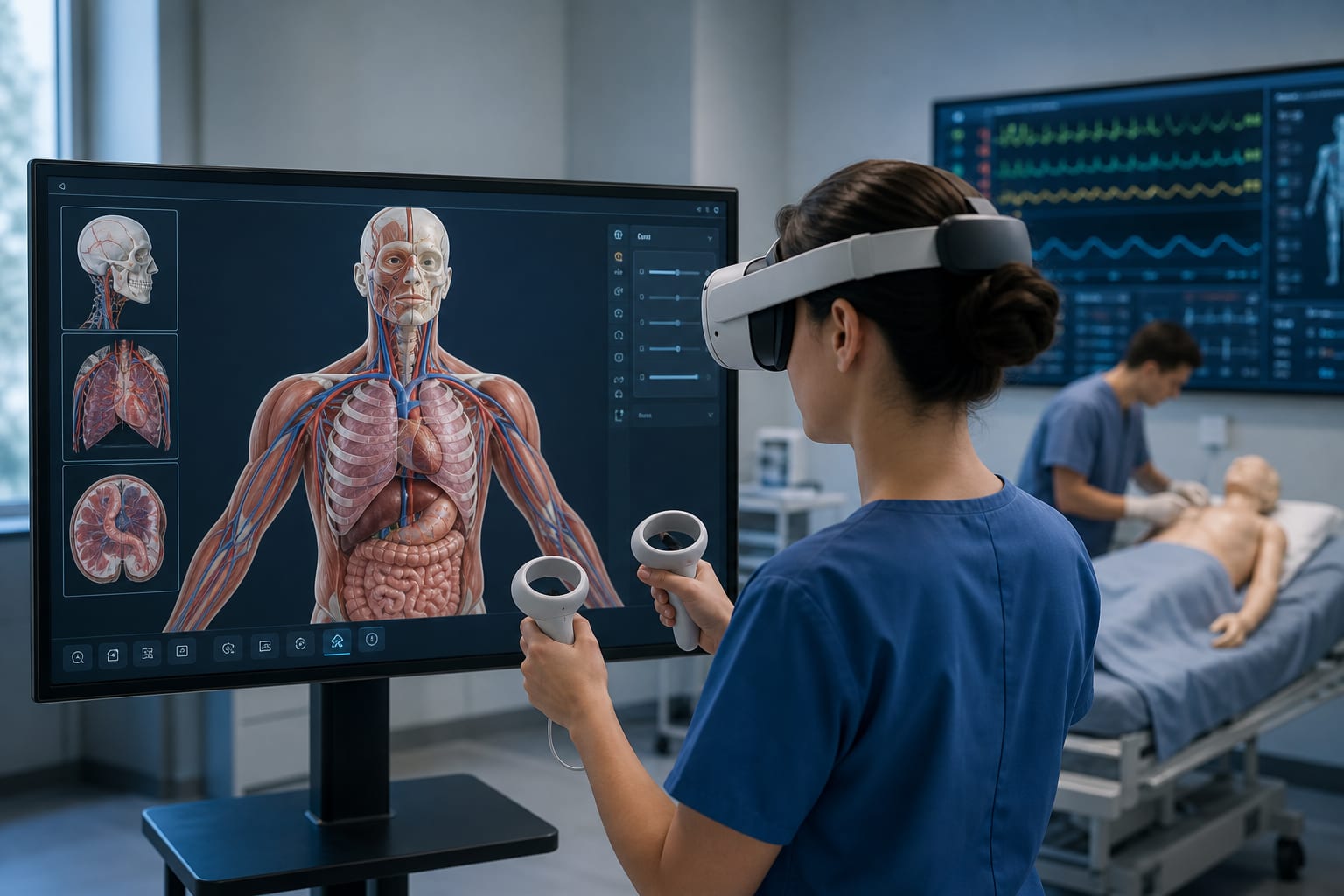
Review of Applications: The article reviews the use of VS in basic medicine, clinical medicine, and nursing education, highlighting its educational benefits and challenges.
Key Findings:
Virtual simulation provides a high-fidelity, repeatable, and low-risk learning environment.
Existing studies support the educational benefits of VS but are often short-term and small-sample.
There is a lack of evaluation regarding long-term clinical transfer and cost-effectiveness of VS.
Challenges include high device heterogeneity and insufficient integration of nontechnical skills training.
Interpretation:
Limitations:
Most studies on VS are short-term and involve small sample sizes.
There is insufficient evaluation of long-term clinical transfer and cost-effectiveness.
High device heterogeneity complicates the integration of VS into medical education.