Associations of TNF-α, MIF, and cortisol with cognitive function in patients with bipolar disorder during acute manic episodes: a short-term follow-up study - Summary - MDSpire
Conexiant’s news site is now MDSpire News. Learn more
Advertisement
Links Between TNF-α, MIF, and Cortisol Levels and Cognitive Abilities in Bipolar Disorder Patients Experiencing Acute Mania: A Short-Term Follow-Up Investigation
To examine the associations of TNF-α, MIF, and cortisol with cognitive function in patients with bipolar disorder during manic episodes and to characterize their short-term changes.
Approach:
Study Design: Short-term follow-up study involving 53 patients with bipolar disorder during manic episodes and 53 healthy controls.
Measurements: Plasma levels of TNF-α, MIF, and cortisol were measured; cognitive function was assessed using the Chinese Brief Cognitive Test.
Analysis: Group comparisons and biomarker-cognition correlation analyses were performed, controlling for multiple testing.
Key Findings:
Patients with bipolar disorder had significantly lower cognitive scores across multiple domains, including information processing speed, executive function, sustained attention, and working memory, and higher levels of TNF-α, MIF, and cortisol compared to healthy controls.
Cognitive scores improved significantly after 8 weeks of treatment, but reductions in TNF-α, MIF, and cortisol did not reach statistical significance.
Only the negative association between TNF-α and working memory remained significant after adjustment for covariates and multiple comparisons.
Interpretation:
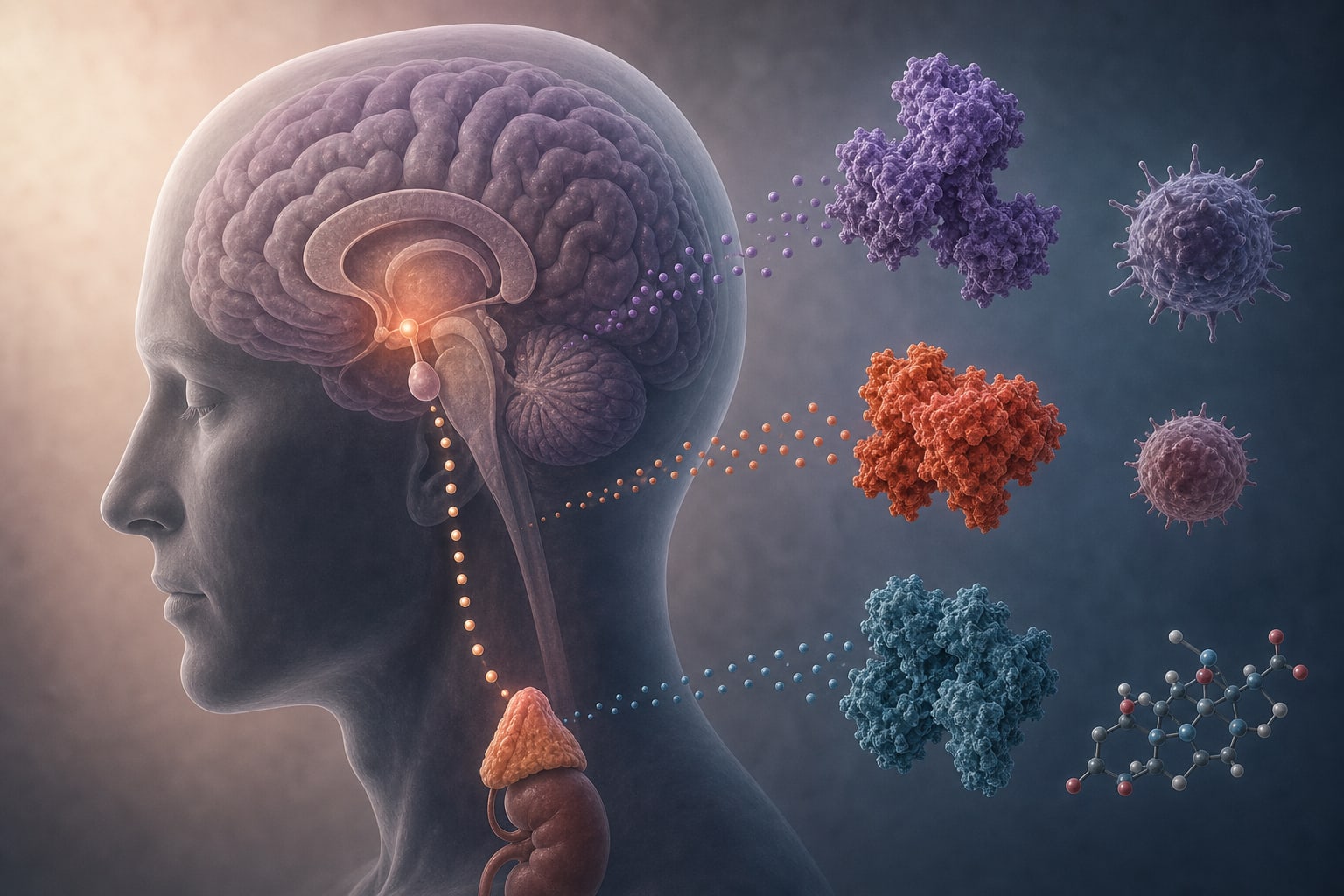
Cognitive impairment in bipolar disorder during manic episodes is associated with elevated inflammatory and neuroendocrine markers, particularly the association of TNF-α with working memory.
Limitations:
The study's sample size may limit the generalizability of the findings.
Associations involving MIF or cortisol and executive function are exploratory and require validation in larger studies.
Conclusion:
The findings indicate a link between cognitive impairment and inflammatory/neuroendocrine markers in bipolar disorder, with TNF-α being notably associated with working memory.