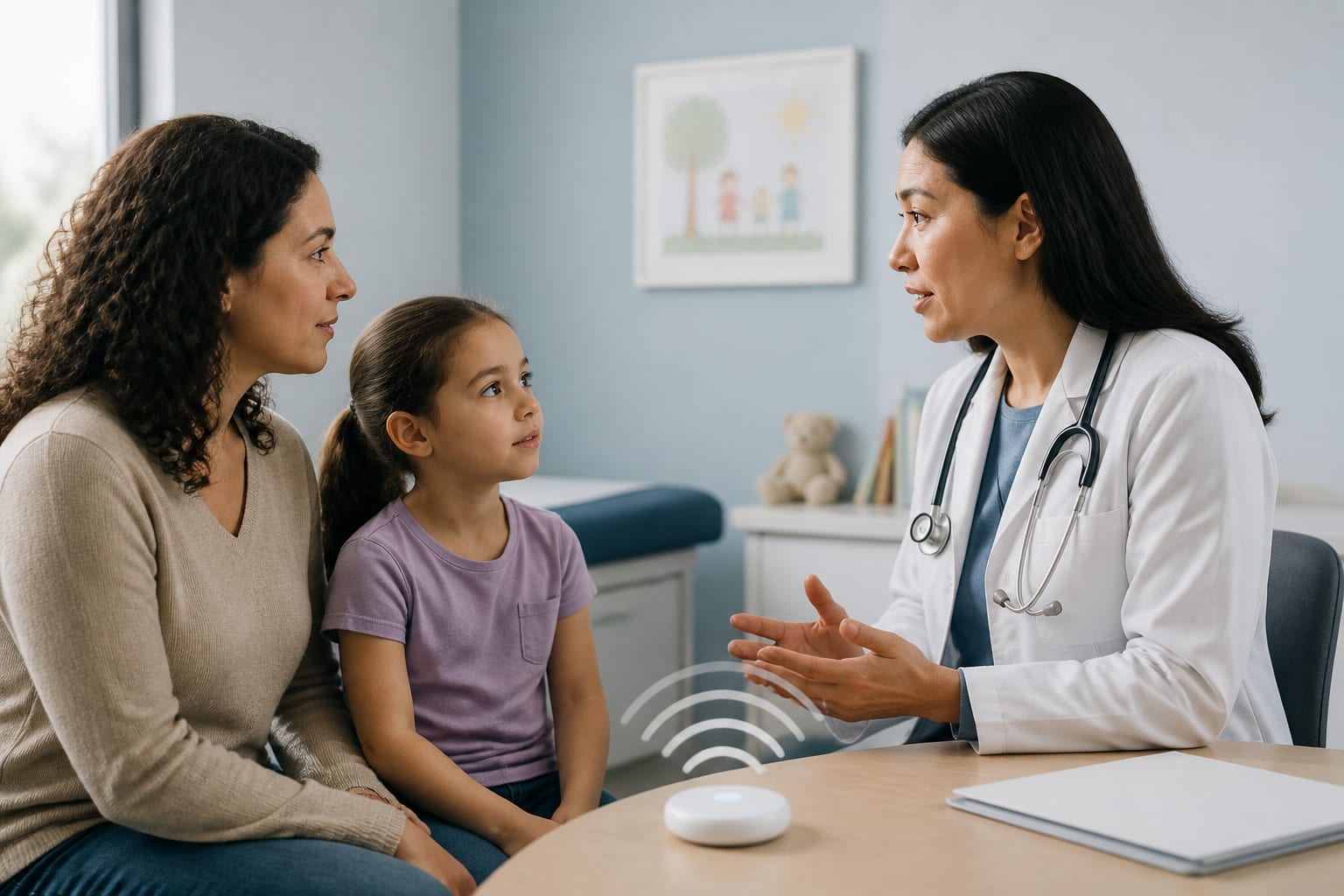
The article describes how ambient AI tools such as DAX Copilot may change pediatric visits by drafting clinical notes and producing plain-language summaries for families.
Approach:
How it works: After a family grants permission, an app listens during the pediatric visit and automatically drafts a clinical note when the appointment ends.
Family-facing summaries: Some tools may produce plain-language summaries of the visit, including the pediatrician’s findings, their possible meaning, and next steps. These summaries can serve as a reference at home and may help older children and teenagers participate in their care.
Clinician review: AI-generated notes are drafts. Clinicians review them before finalizing because the systems can make mistakes.
Key Findings:
Ambient AI can prepare an initial documentation draft, potentially reducing time pediatricians spend entering notes after clinic.
The article says that less time spent documenting may give pediatricians more opportunity to engage with children and families during visits.
Plain-language summaries can provide families with a reference to the visit’s findings and next steps; the article notes their potential value for families managing complex or chronic conditions and for older children and teenagers participating in their care.
The systems remain imperfect, and clinicians review AI-generated notes before finalizing them.
The article describes paperwork as a significant contributor to pediatrician burnout.
Interpretation:
The article presents ambient AI as a documentation aid that may make pediatric visits feel less administrative, more human, and more connected, while emphasizing that clinicians must review AI-generated notes.
Limitations:
AI-generated notes can contain mistakes, so clinician review remains essential.
Conclusion:
The article describes how ambient AI may change pediatric visits through draft documentation and family-facing summaries, while noting that the systems can make mistakes and require clinician review.
Investigators linked distinct odor patterns to life stage, sex, and skin microbes, while limited longitudinal evidence leaves their clinical utility uncertain.