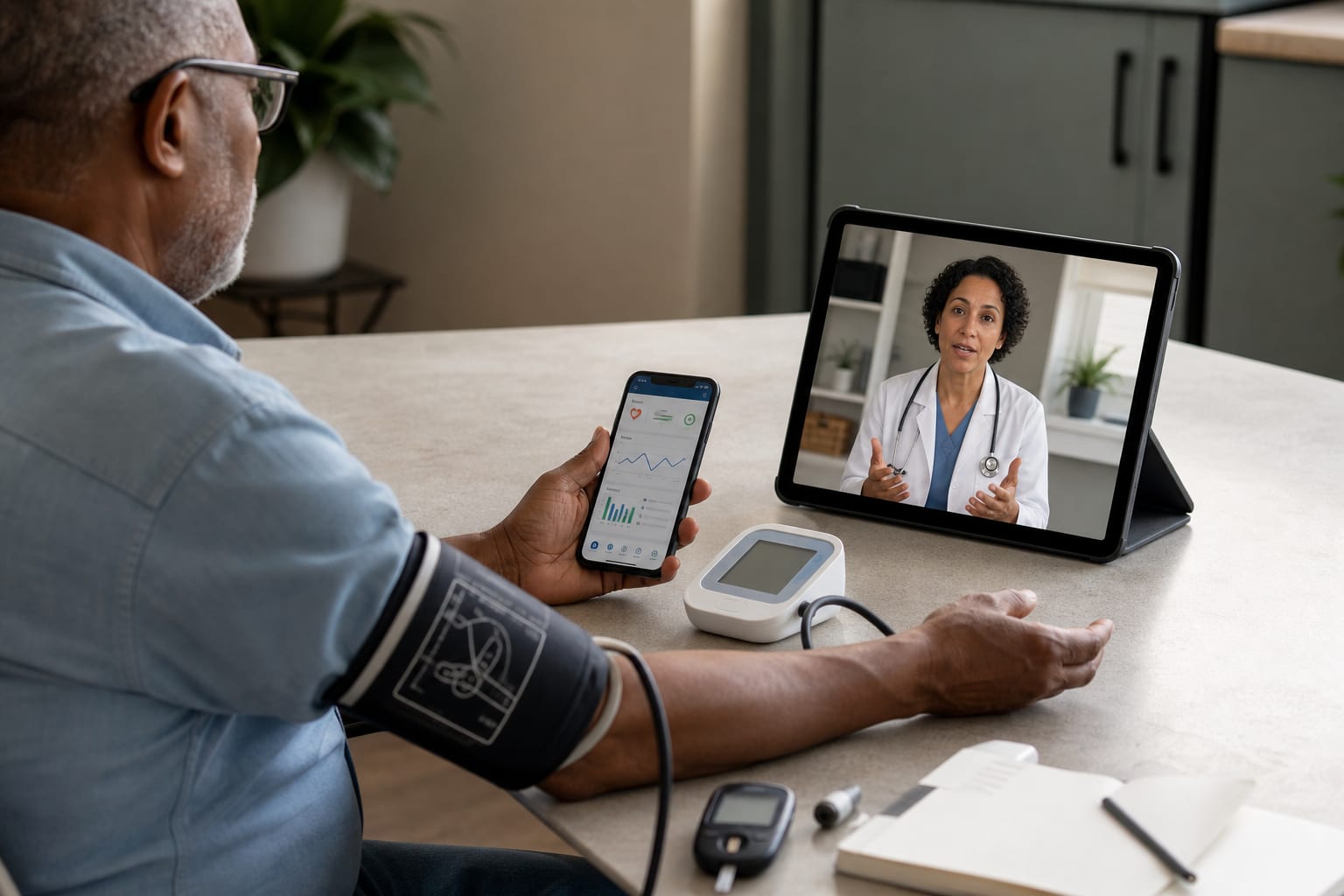
To identify specific patient-reported outcomes associated with participation in the OnCall Advanced Care (OCAC) program and assess improvements in patients’ perceptions of diabetes and hypertension management.
Key Findings:
Telehealth programs can enhance access to care and improve clinical outcomes for diabetes and hypertension patients, as evidenced by specific metrics.
Patient-reported outcomes provide critical insights into the effectiveness of telehealth interventions, highlighting areas for improvement.
Socioeconomic factors significantly impact the ability of Medicaid patients to engage with telehealth solutions, necessitating tailored approaches.
Interpretation:
The study underscores the importance of understanding patient experiences and outcomes in telehealth programs, particularly for underserved populations, to inform and enhance chronic disease management strategies.
Limitations:
Limited generalizability due to the focus on a specific telehealth program, which may not reflect broader telehealth efficacy.
Potential biases in self-reported data from participants, which could skew the understanding of patient experiences.
Conclusion:
Incorporating patient-reported outcomes is essential for evaluating the effectiveness of telehealth interventions in managing chronic conditions, particularly among socioeconomically disadvantaged populations.