Harmonic analysis of radial pulse in traditional Chinese medicine: physiological alterations associated with hepatitis B and hepatitis C infections - Summary - MDSpire
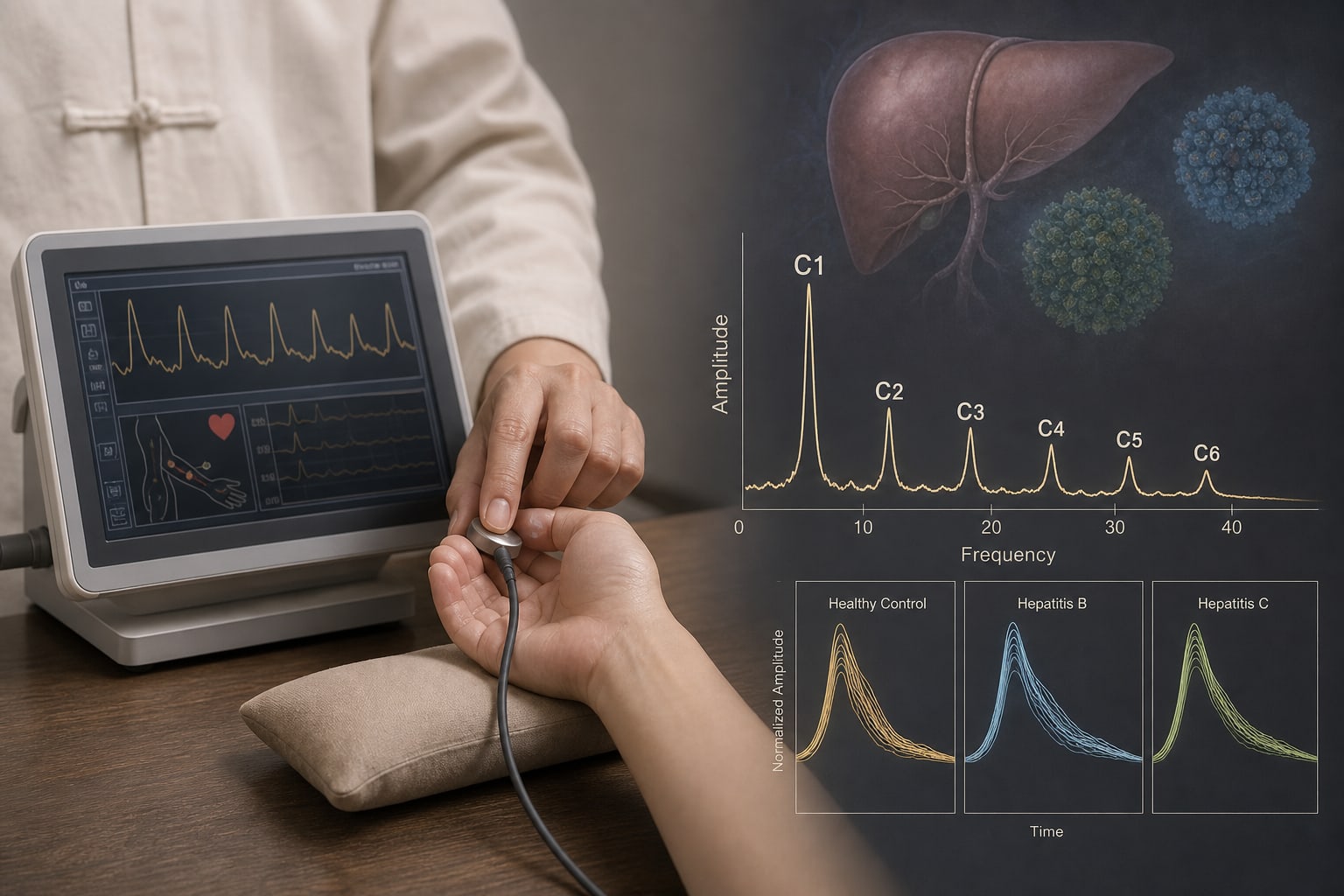
To investigate the association between harmonic analysis of radial pressure pulse signals and physiological alterations in patients with hepatitis B and C infections.
Approach:
Participants: 75 participants were enrolled, including 36 healthy controls, 17 patients with HBV infection, and 22 patients with HCV infection.
Methodology: Radial pressure pulse signals were acquired using the Skylark Pulse Analysis System, and harmonic components were calculated from six radial pulse positions.
Statistical Analysis: One-way ANOVA and exploratory logistic regression analysis were used to assess differences and associations between groups.
Key Findings:
The first harmonic component (C1) demonstrated significant differences among the three groups (p = 0.014).
Post hoc analysis revealed significantly higher C1 values in the HCV group compared with healthy controls (529.09 ± 57.99 vs. 477.78 ± 100.49, p = 0.047).
The HBV group showed a similar but non-significant trend (503.65 ± 64.51 vs. 477.78 ± 100.49, p = 0.481).
No significant difference was observed between the HBV and HCV groups (p = 0.098).
Exploratory logistic regression analysis demonstrated an independent association between C1 and HCV infection status (OR = 1.008, 95% CI: 1.000–1.017, p = 0.047).
Interpretation:
Alterations in the first harmonic component (C1) of radial pulse waveforms were observed in patients with chronic viral hepatitis, particularly in those with HCV infection.
Limitations:
The study had a small sample size.
The effect size was modest.
The exploratory nature of the study warrants cautious interpretation.
Conclusion:
Harmonic analysis may provide complementary information regarding systemic physiological alterations associated with viral hepatitis. However, the exploratory nature of this study, together with the small sample size and modest effect size, warrants cautious interpretation.
The goal of this clinical trial is to find out if giving extra adaptive radiation therapy after standard chemoradiation treatment is safe and helpful for people with rectal cancer.