Screening and validation of ZFYVE27 as a potential diagnostic biomarker for osteoporosis via integrative bioinformatics and machine learning approaches - Summary - MDSpire
Conexiant’s news site is now MDSpire News. Learn more
Advertisement
Evaluation and Confirmation of ZFYVE27 as a Promising Diagnostic Biomarker for Osteoporosis Through Integrated Bioinformatics and Machine Learning Techniques
To identify and validate ZFYVE27 as a diagnostic biomarker for osteoporosis using bioinformatics and machine learning techniques.
Approach:
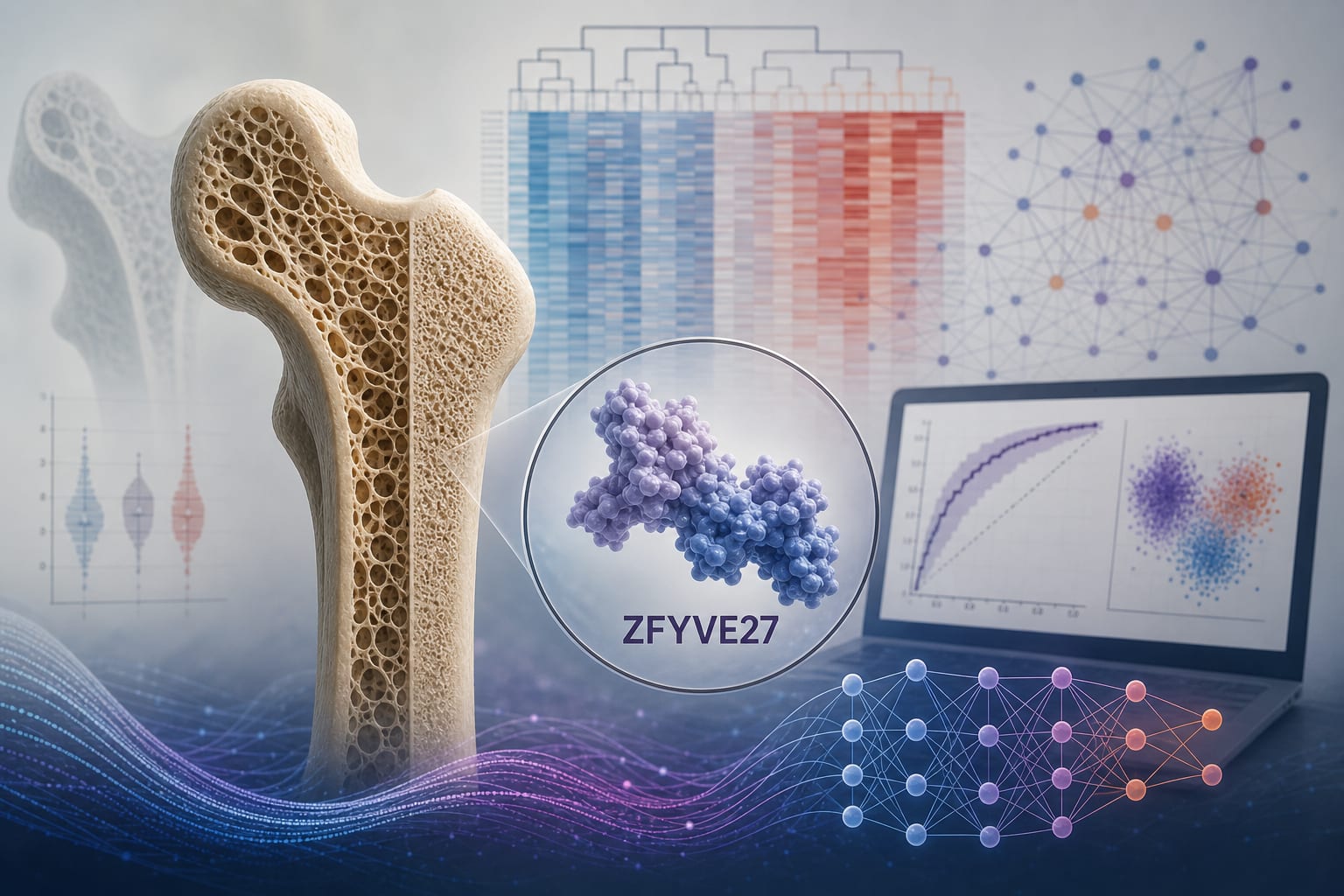
Differential Gene Expression Analysis: Identified differentially expressed genes (DEGs) by comparing transcriptomic profiles of healthy controls and osteoporotic patients.
Functional Enrichment Analysis: Conducted functional enrichment analyses of biological processes and signaling pathways associated with DEGs.
Weighted Gene Co-expression Network Analysis: Applied WGCNA to isolate disease-specific module genes and intersected these with DEGs to delineate OP-related DEGs.
Machine Learning Algorithms: Utilized LASSO regression, Support Vector Machine, and Random Forest algorithms to filter and validate potential diagnostic biomarkers.
Experimental Validation: Established an ovariectomized mouse model to validate ZFYVE27 expression levels.
Regulatory Network Construction: Constructed a competitive endogenous RNA regulatory network to elucidate post-transcriptional regulatory mechanisms.
Key Findings:
ZFYVE27 was validated as an optimal diagnostic biomarker for osteoporosis.
Both mRNA and protein expression levels of ZFYVE27 were significantly upregulated in the OVX model group (p < 0.01).
Interpretation:
ZFYVE27 plays a critical role in the pathological progression of osteoporosis.
Limitations:
The study primarily focuses on bioinformatics and machine learning without extensive clinical validation.
Further research is needed to explore the full implications of ZFYVE27 in osteoporosis.
Conclusion:
The present study identifies ZFYVE27 as a novel biomarker for the clinical diagnosis of OP.