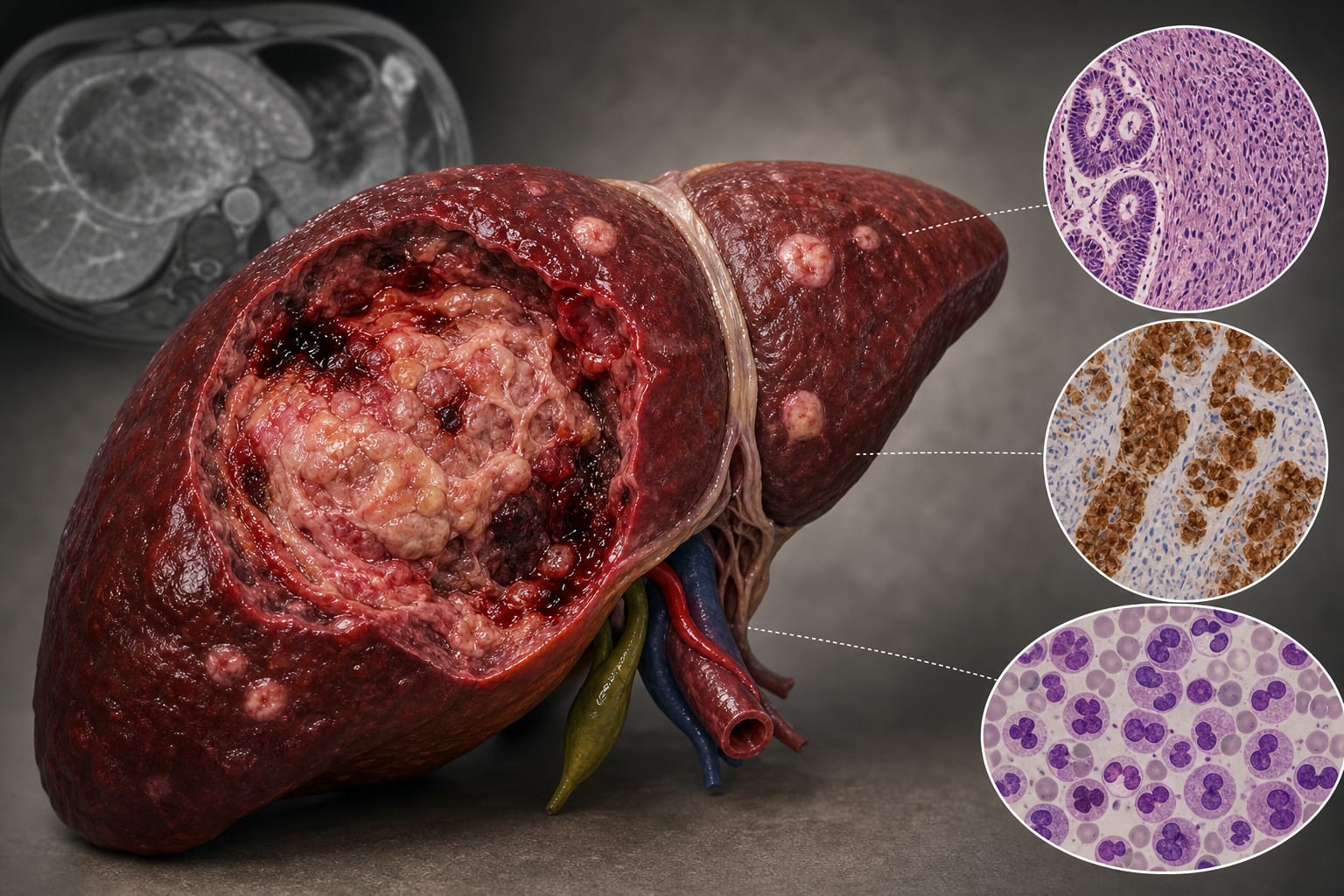
To systematically review the characteristics, metabolic pathways, immunosuppressive functions, and therapeutic strategies related to lipid-associated macrophages (LAMs) in pancreatic ductal adenocarcinoma (PDAC).
Approach:
Review Methodology: Conducted a narrative review by systematically searching PubMed, Web of Science, and Scopus for articles on LAMs in PDAC up to December 2023.
Key Findings:
LAMs are characterized by co-expression of TREM2, APOE, CD9, and lipid-handling genes, and their accumulation correlates with poor prognosis. They undergo metabolic rewiring involving CD36-mediated lipid uptake, dysregulated cholesterol efflux, fatty acid oxidation, and de novo lipogenesis, which collectively enforce an immunosuppressive phenotype. LAMs interact bidirectionally with cancer-associated fibroblasts and directly suppress CD8+ T cells and NK cells. Preclinical targeting of CD36, TREM2, or fatty acid oxidation shows promise but faces challenges in toxicity and delivery.
Interpretation:
LAMs represent a distinct and immunosuppressive macrophage subpopulation in PDAC, with potential as a therapeutic target.
Limitations:
The field is still in its early stages, requiring further research to establish causal evidence in PDAC-specific models. Challenges exist in developing tumor-selective delivery systems and validating biomarkers for patient stratification specific to LAMs in PDAC.
Conclusion:
Future work should focus on advancing research on LAMs in PDAC to explore their therapeutic potential.