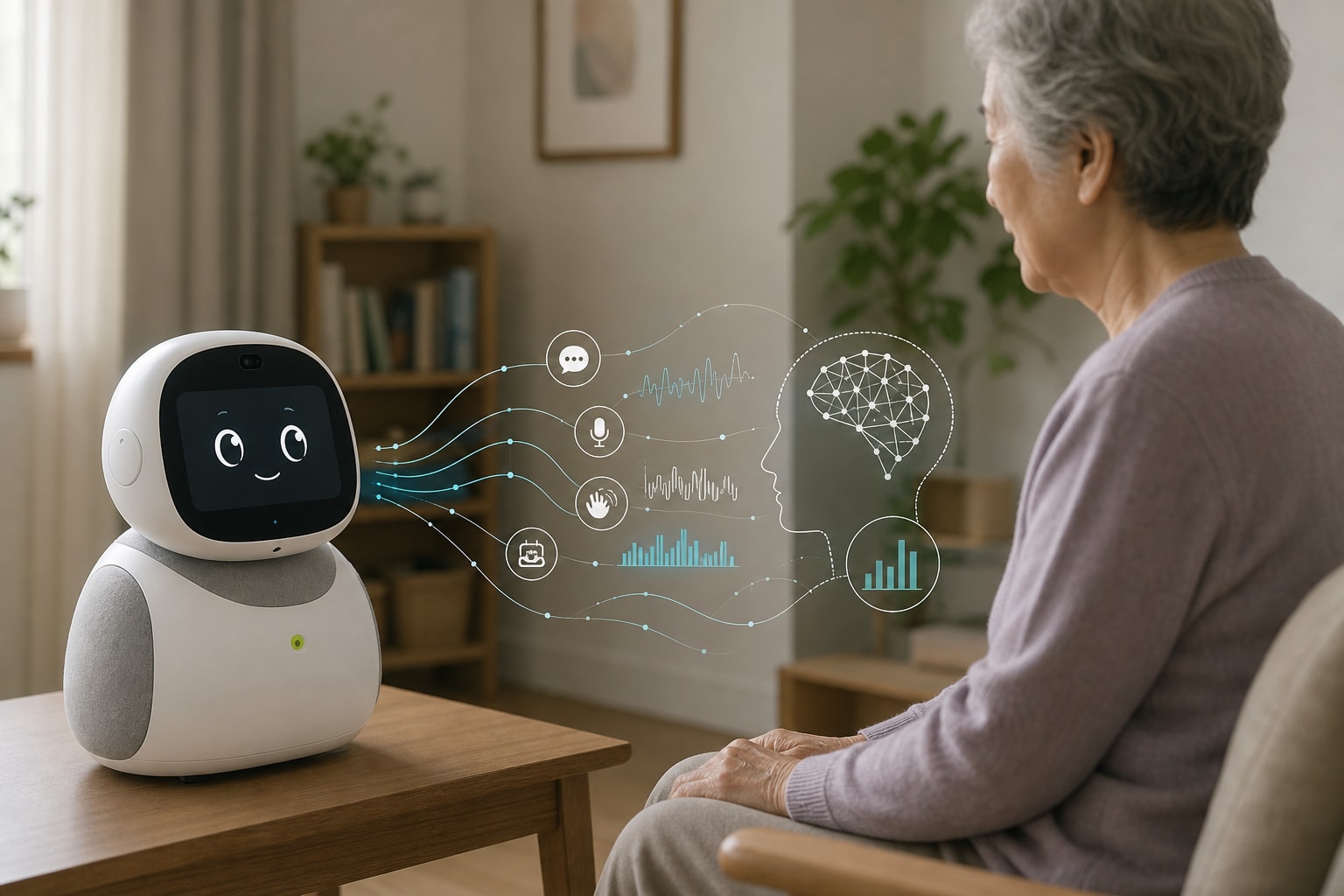
To predict depression risk and identify individuals in need of specialized depression care using data from the socially assistive robot Hyodol.
Approach:
Key Findings:
The model predicted symptomatic participants with a sensitivity of 0.939.
The model predicted participants requiring referral with a sensitivity of 0.900.
Features associated with depression included engagement with quiz content, frequency of free conversations, positive responses to daily check-ins, regular meal intake, and frequency of physical interactions with the robot.
Interpretation:
Hyodol-based monitoring may serve as a viable screening tool for detecting depression risk in older adults.
Limitations:
The model produced considerable false positives, which may lead to unnecessary referrals.
Future work is needed to refine the model and minimize false alarms.
Conclusion:
The study suggests that integrating monitoring functions into SARs can enhance mental health surveillance for older adults, potentially improving outcomes and reducing healthcare costs.