Long-term efficacy and renal safety of SGLT2 inhibitors in patients with heart failure and advanced chronic kidney disease (stage 4): a propensity score-matched retrospective cohort study - Summary - MDSpire
Advertisement
Long-term efficacy and renal safety of SGLT2 inhibitors in patients with heart failure and advanced chronic kidney disease (stage 4): a propensity score-matched retrospective cohort study
To evaluate the long-term efficacy and renal safety of SGLT2 inhibitors in heart failure patients with advanced chronic kidney disease (CKD stage 4), addressing a critical clinical gap.
Key Findings:
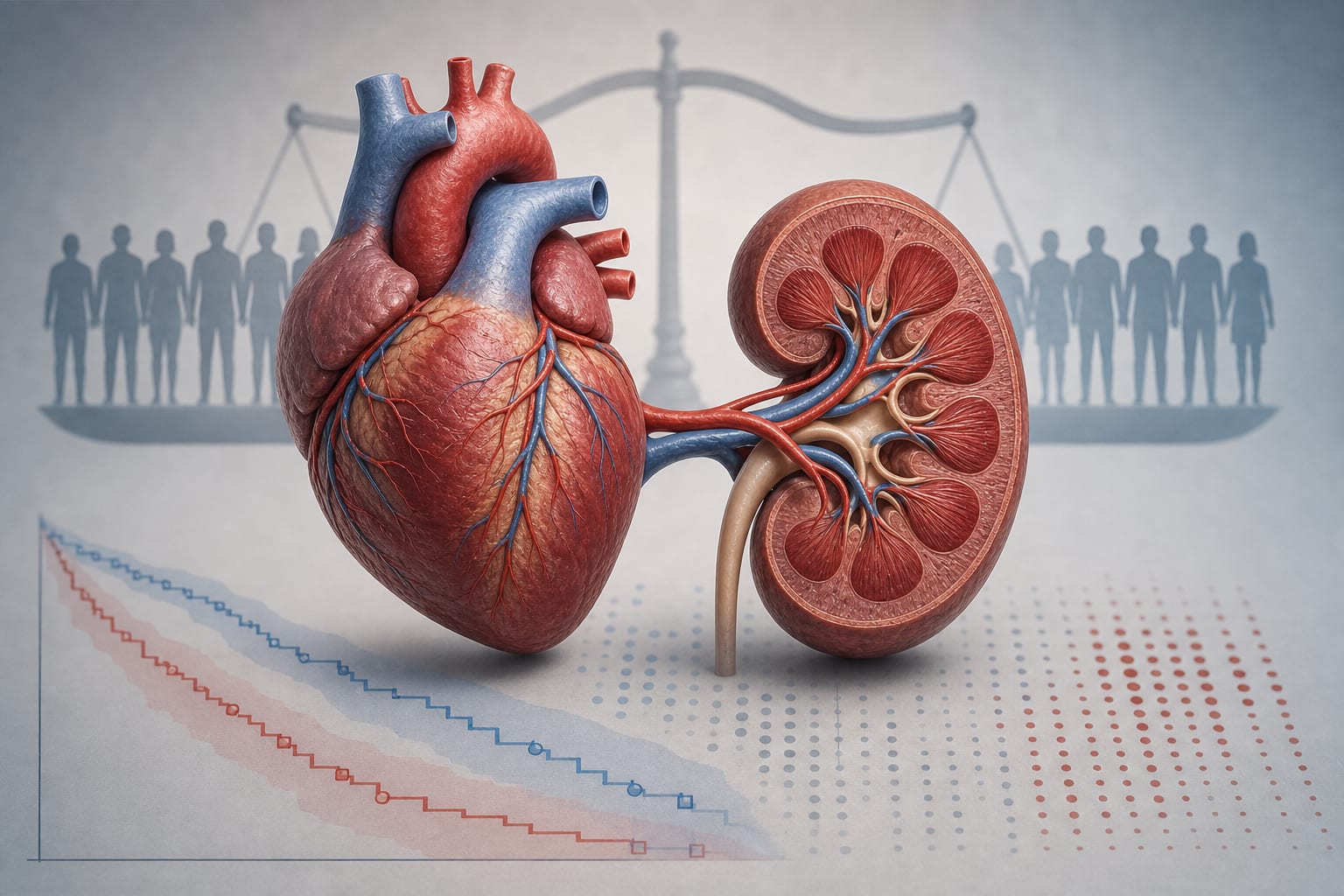
SGLT2i group showed a 38% relative risk reduction in primary efficacy outcome compared to controls (30.6% vs. 45.6%; P = 0.005).
The incidence of major adverse kidney events was comparable between SGLT2i and control groups (14.4% vs. 16.9%; P = 0.550).
SGLT2i utilization was associated with a shallower annualized eGFR decline compared to standard care (−1.2 vs. −3.5 mL/min/1.73 m2 per year, P < 0.001).
Interpretation:
SGLT2i therapy in heart failure patients with advanced CKD (Stage 4) is associated with cardiovascular benefits and may slow renal function decline, suggesting a need for careful consideration in clinical practice.
Limitations:
Retrospective design may introduce bias.
Single-center study limits generalizability.
Potential confounding factors inherent in observational studies.
Conclusion:
SGLT2i therapy should not be instinctively avoided in patients with severe renal impairment due to potential cardiovascular benefits, but further research is needed to confirm these findings.