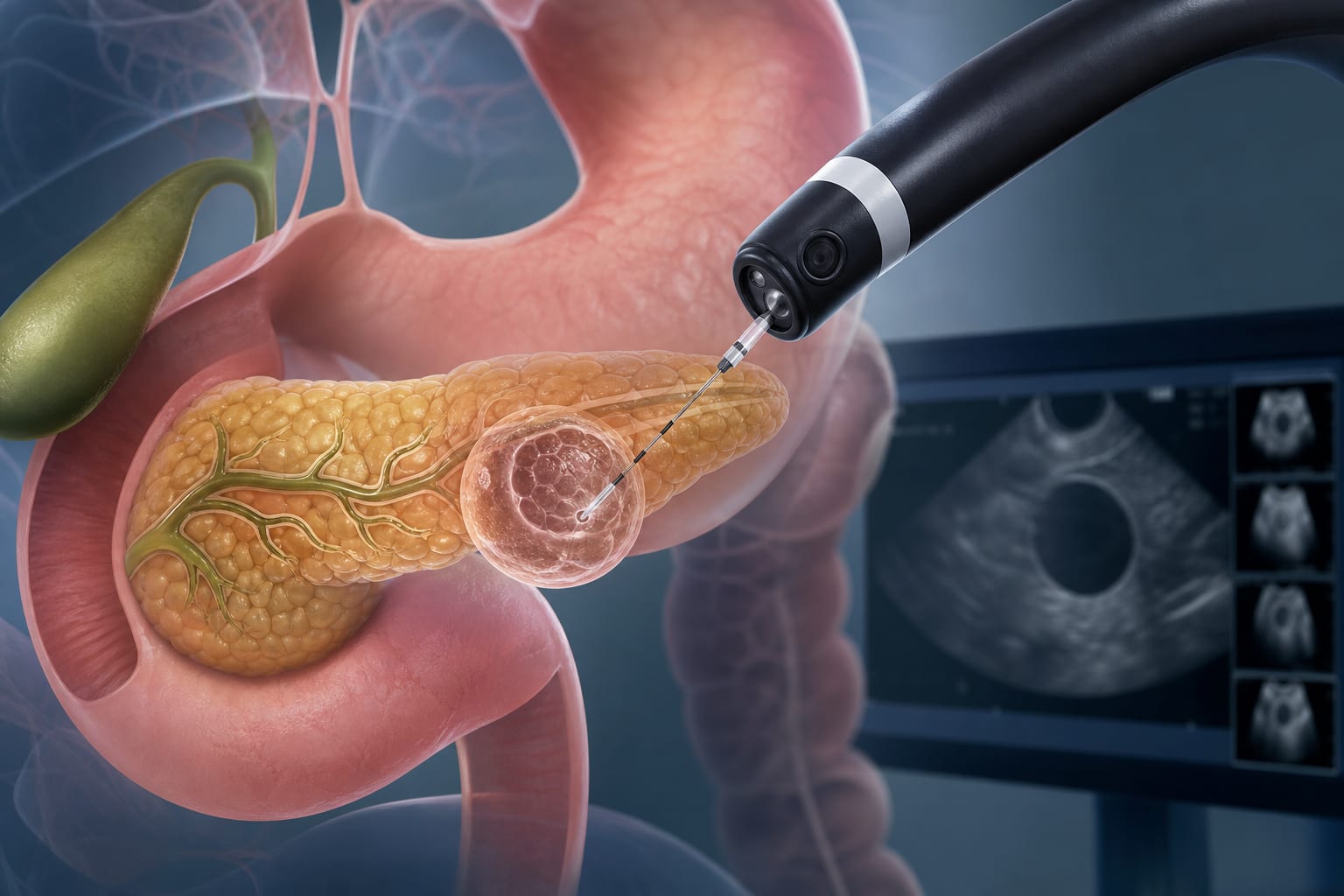
To determine the long-term incidence of pancreatic cancer among patients with low-risk pancreatic cystic lesions (PCLs) and identify baseline clinical and imaging factors associated with cancer development, emphasizing the significance of these factors in clinical decision-making.
Key Findings:
Low-risk PCLs are prevalent, but their exact risk of pancreatic cancer is unclear due to limited longitudinal studies, which complicates clinical decision-making.
Current management of low-risk PCLs is heterogeneous and often based on expert opinion rather than strong evidence, leading to potential inconsistencies in patient care.
There is significant variation among radiologists in recommending additional imaging for PCL management, highlighting the need for standardized protocols.
Interpretation:
The study highlights the need for an evidence-based approach to manage low-risk PCLs, given the uncertainty and variability in current clinical practices, which could significantly impact patient outcomes.
Limitations:
The study is retrospective and may be subject to verification bias, which could affect the reliability of the findings.
Exclusion of patients who underwent resection may limit generalizability, as these patients represent a specific subset of PCL management.
Limited longitudinal data on low-risk PCLs may affect the accuracy of cancer risk assessment, necessitating further research.
Conclusion:
Establishing a standardized, evidence-based management protocol for low-risk PCLs is essential to improve patient outcomes and reduce unnecessary interventions, addressing the gaps identified in current practices.
by Arya Haj Mirzaian, Nooshin Abbasi, Avinash R. Kambadakone, Ronilda Lacson, Yasmin G. Hernandez-Barco, David X. Jin, Kunal Jajoo, David W. Bates, Ramin Khorasani