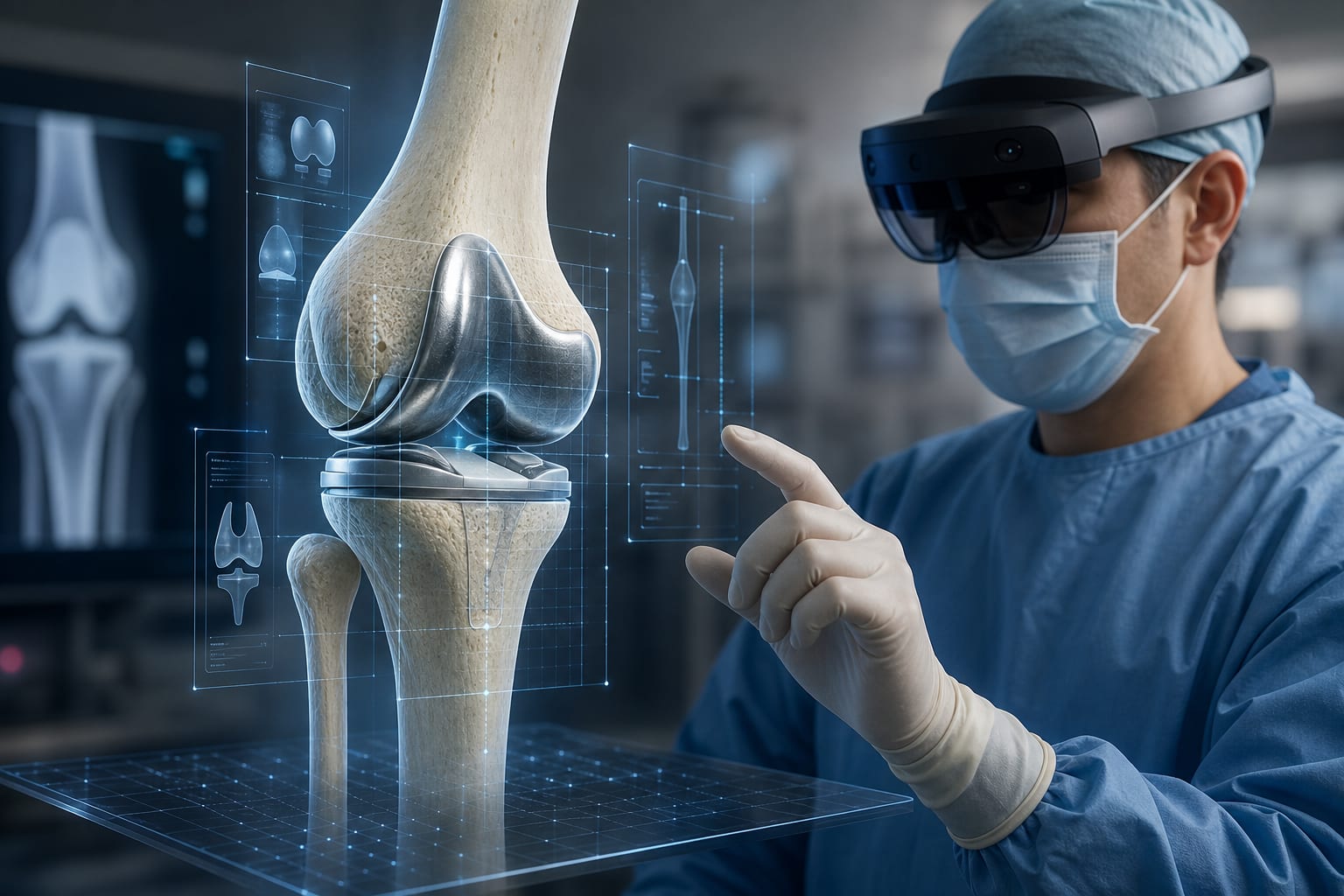
To explore the application and innovations of extended reality (XR) technologies in joint surgery and their clinical implications, emphasizing their potential to improve surgical outcomes.
Key Findings:
AR navigation technology assists in atlantoaxial pedicle screw placement with efficiency and accuracy, potentially improving surgical outcomes.
MR technology shows potential for interactive visualization in surgeries but has limitations such as registration drift and occlusion, which need to be addressed.
A systematic review indicated that MR's clinical effectiveness compared to traditional methods lacks high-quality evidence, underscoring the need for further research.
Combining MR with 3D printing enhances orthopedic education by improving student performance and learning efficiency, demonstrating its application potential.
Interpretation:
XR technology demonstrates feasibility and application potential in orthopedic surgical guidance and medical education, but current studies are in early stages with several limitations that necessitate further investigation.
Limitations:
Current clinical evidence for MR is limited and lacks high-quality support, indicating a need for more rigorous studies.
Challenges include registration drift, occlusion, sterility, and workflow integration, which require innovative solutions.
Conclusion:
The research topic aims to provide a platform for sharing experiences and innovations in XR applications in joint surgery, emphasizing the importance of ongoing research and collaboration in this evolving field.