Lactate dehydrogenase A exhibits sorbitol/fructose-related catalytic activity and contributes to polyol pathway metabolism in tumor cells - Summary - MDSpire
Advertisement
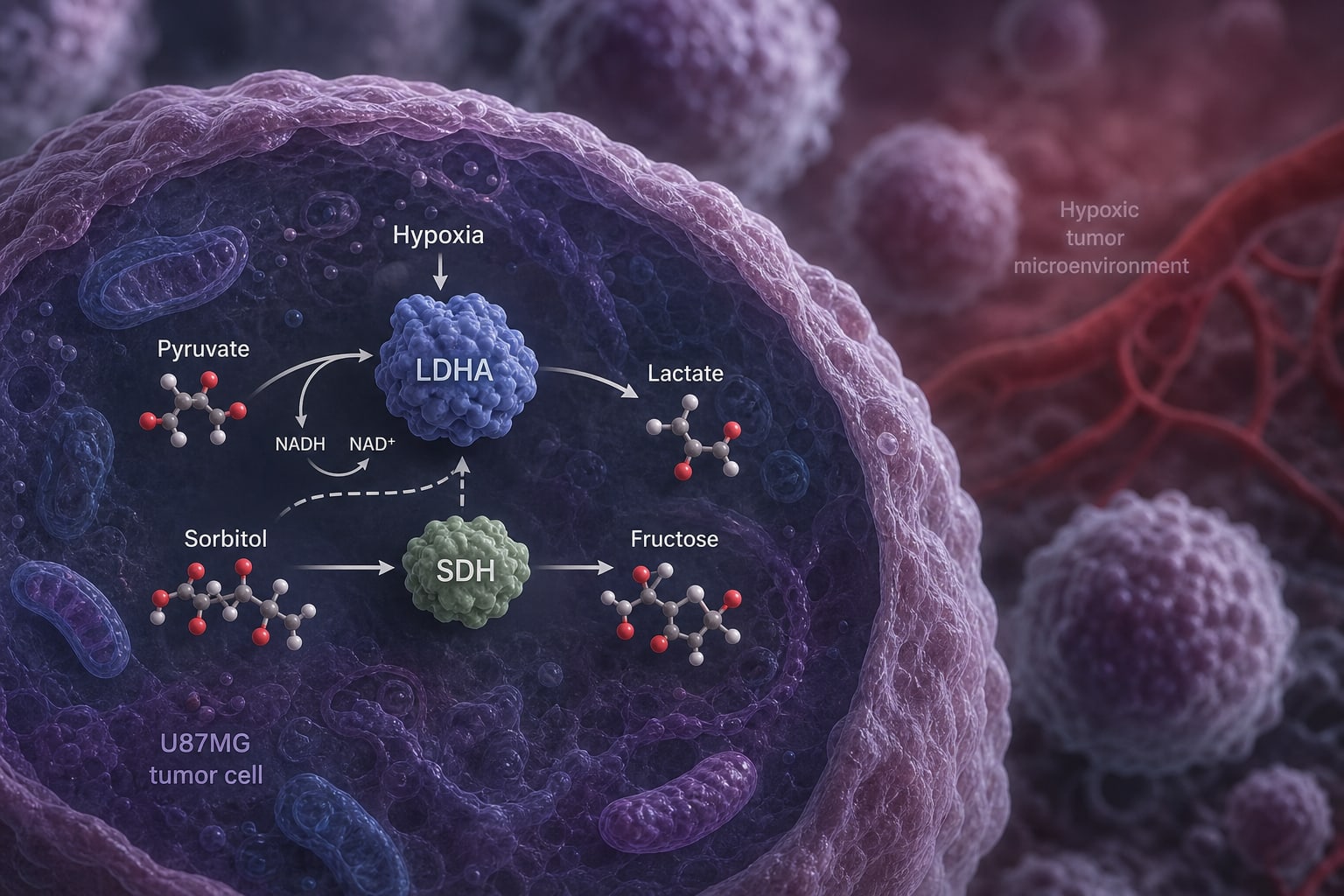
Lactate Dehydrogenase A Facilitates Sorbitol and Fructose Metabolism in Tumor Cells via the Polyol Pathway
To investigate the role of lactate dehydrogenase A (LDHA) in hypoxia-associated sorbitol and fructose metabolism in U87MG tumor cells with low sorbitol dehydrogenase (SDH) expression, highlighting its potential implications in tumor metabolism.
Approach:
Metabolomic Analysis: Intracellular metabolites in normoxic and hypoxic U87MG cells were analyzed using mass spectrometry to quantify levels of sorbitol and fructose.
Key Findings:
Fructose accumulation was marked in hypoxic U87MG cells.
Both SDH and LDHA catalyzed sorbitol oxidation and fructose reduction in vitro.
LDHA was detectable and increased under hypoxia, while SDH levels remained low.
LDHA knockdown reduced intracellular fructose levels and increased sorbitol accumulation, elevating ROS levels and decreasing cell viability under hypoxia.
LDHA overexpression showed the opposite effects.
Interpretation:
LDHA contributes to hypoxia-associated sorbitol/fructose metabolism, linking this metabolic activity to redox balance and cell viability in U87MG cells.
Limitations:
The study primarily focuses on U87MG cells and may not be generalizable to other tumor types.
The effects of LDHA on other metabolic pathways were not explored.
Conclusion:
LDHA plays a significant role in facilitating sorbitol and fructose metabolism in hypoxic tumor cells.