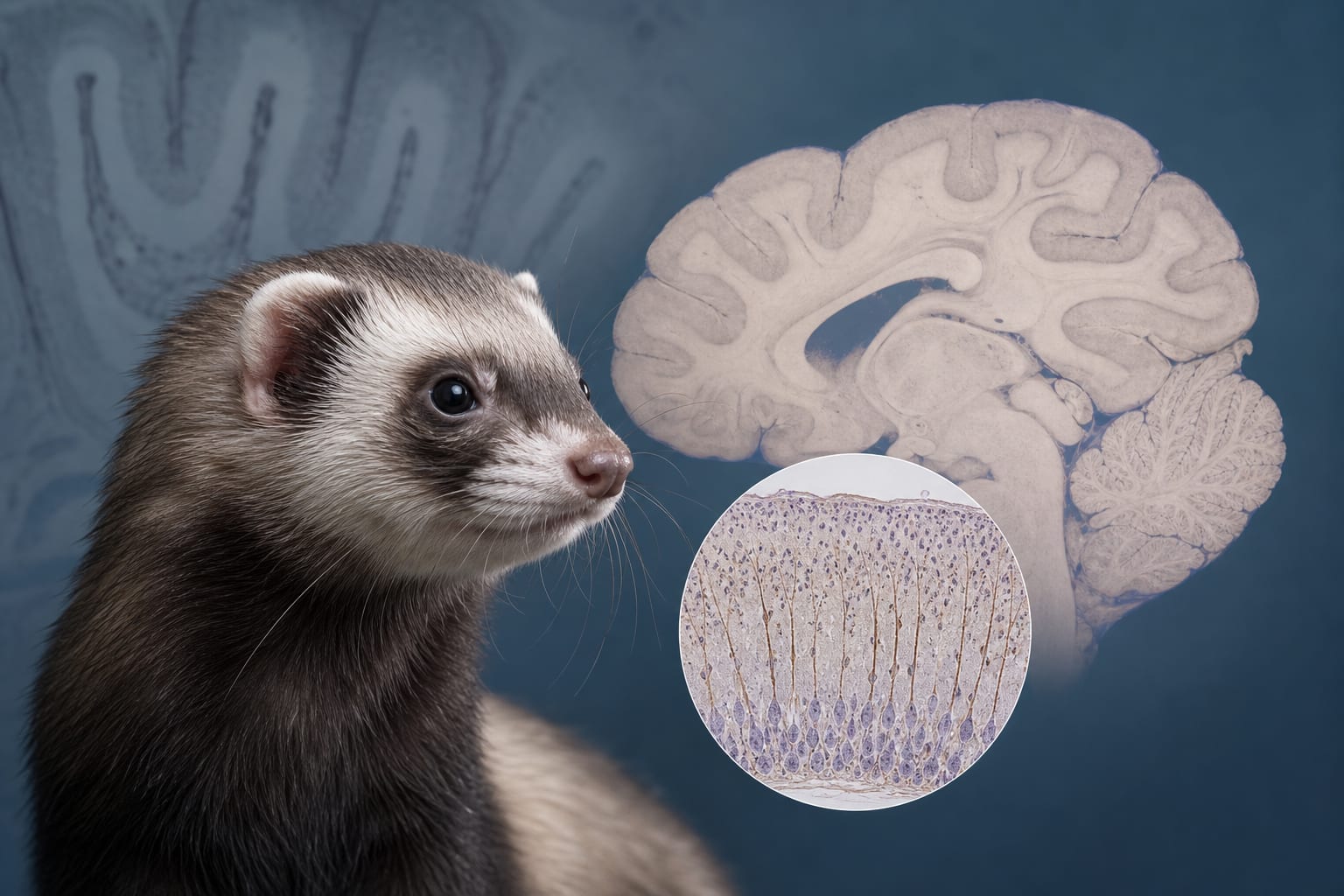
To summarize studies examining the effects of valproic acid (VPA) and lipopolysaccharide (LPS) on sulcogyral development in ferrets, a gyrencephalic species, particularly in relation to autism spectrum disorder.
Key Findings:
VPA exposure led to reduced sulcal infolding in rostroventral and medial cortices, while increasing it in the dorsolateral cortex, indicating a complex interaction with cortical development.
LPS exposure resulted in apoptosis of cortical neurons, causing anterior displacement of primary sulci in medial and dorsolateral cortices, emphasizing the detrimental effects of inflammatory agents.
Distinct patterns of gyrification abnormalities were observed due to the differing impacts of VPA and LPS on subventricular zone progenitors, underscoring the need for targeted research.
Interpretation:
Ferrets serve as an effective model for studying the neurodevelopmental impacts of chemical agents on gyrification, relevant to conditions like autism spectrum disorder, providing insights into potential therapeutic avenues.
Limitations:
The study primarily focuses on two chemical agents and may not encompass other factors influencing gyrification, necessitating broader investigations.
Findings in ferrets may not fully translate to human conditions due to species differences, highlighting the need for caution in extrapolation.
Conclusion:
The research highlights the importance of ferrets in understanding the pathogenesis of neurodevelopmental disorders related to gyrification anomalies induced by chemical exposure, paving the way for future studies.
A VHA study across 11 vendors finds AI-generated primary care notes score lower than clinician-written notes, with the largest deficits in thoroughness, organization, and usefulness