Vibroacoustic music therapy for postoperative delirium in the ICU: the VIMUD-ICU single-center exploratory randomized controlled trial - Summary - MDSpire
To assess therapist-guided vibroacoustic music therapy in non-ventilated adult ICU patients with postoperative delirium.
Approach:
Design and participants: Single-center exploratory randomized trial. Patients with an ICDSC score of ≥4 were assigned to music therapy plus standard care or standard care alone.
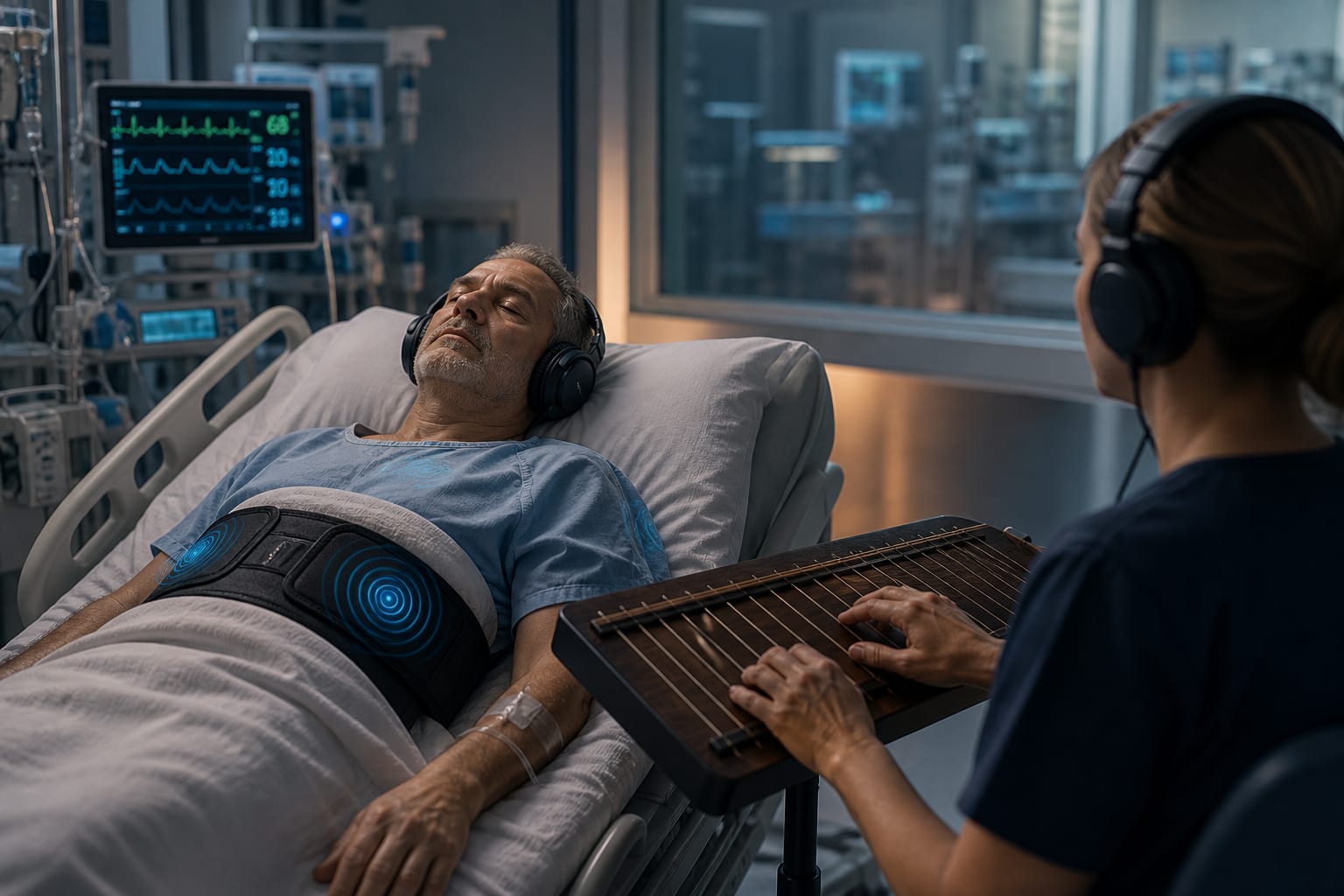
Intervention: Three daily sessions of 20–30 minutes combined music delivered through a vibroacoustic board with therapist-guided interaction and personalized music.
Enrollment and endpoint: Of 3,481 screened patients, 111 were randomized (56 intervention; 55 control), below the planned 122 because enrollment ended early. The primary endpoint was time from enrollment to 48 consecutive hours without a positive delirium score during the ICU stay.
Key Findings:
The primary endpoint did not differ significantly between groups.
The intervention group had more delirium-free time during the delirium episode (84.5 vs. 55 hours; p=0.018) and more days free from alpha-2 agonist treatment (6 vs. 3; p=0.028).
RASS measures differed between groups: pre- to post-session change was greater in the intervention group (p=0.006), and maximum daily RASS values were lower on study days 5–7 (p<0.05).
No significant differences were found in ICU length of stay, overall delirium duration, days without neuroleptics, or days without restraint procedures.
Interpretation:
The authors report that the secondary findings are hypothesis-generating; the trial did not show reduced overall delirium duration.
Limitations:
The trial was single-center and the intervention was unmasked.
Control-group therapist contact was not matched for time or attention, so the effects of individual intervention components cannot be determined.
Prescribing decisions may have influenced medication-related outcomes.
Enrollment ended before the planned sample size was reached.
Conclusion:
The authors state that further assessment of therapist-guided vibroacoustic music therapy as an adjunct to multimodal ICU delirium care is warranted.