Dual Action of Dipyridamole in Experimental Rheumatoid Arthritis: Suppression of Joint Inflammation and Upregulation of Muscle Anabolism via Adenosine and AMPK Pathways - Summary - MDSpire

Biphasic Effects of Dipyridamole in Experimental Models of Rheumatoid Arthritis: Inhibition of Joint Inflammation and Enhancement of Muscle Anabolism through Adenosine and AMPK Signaling Pathways

  • By

  • Miguel Marco-Bonilla

  • Maria Fresnadillo

  • Irene Sanchez-Platero

  • Macarena de la Riva-Bueno

  • Fernando Huete-Toral

  • Gonzalo Carracedo

  • Carmen Conde

  • Yolanda Benitez

  • Pablo Minguez

  • Sandra Carolina Cifuentes

  • Joaquin Rams

  • Gabriel Herrero-Beaumont

  • Raquel Largo

  • Aránzazu Mediero

  • July 1, 2026

Share

Objective:

To evaluate the role of adenosine and purinergic signaling in mediating muscle pathology in rheumatoid arthritis (RA) and rheumatoid sarcopenia.

Approach:
  • Animal Model: Utilized K/BxN serum transfer-induced arthritic model in C57BL/6J mice to assess the effects of dipyridamole on joint inflammation and muscle anabolism.
  • Treatment Groups: Mice were assigned to various groups including sham, dipyridamole treatment, and different RA conditions with or without dipyridamole, to compare outcomes.
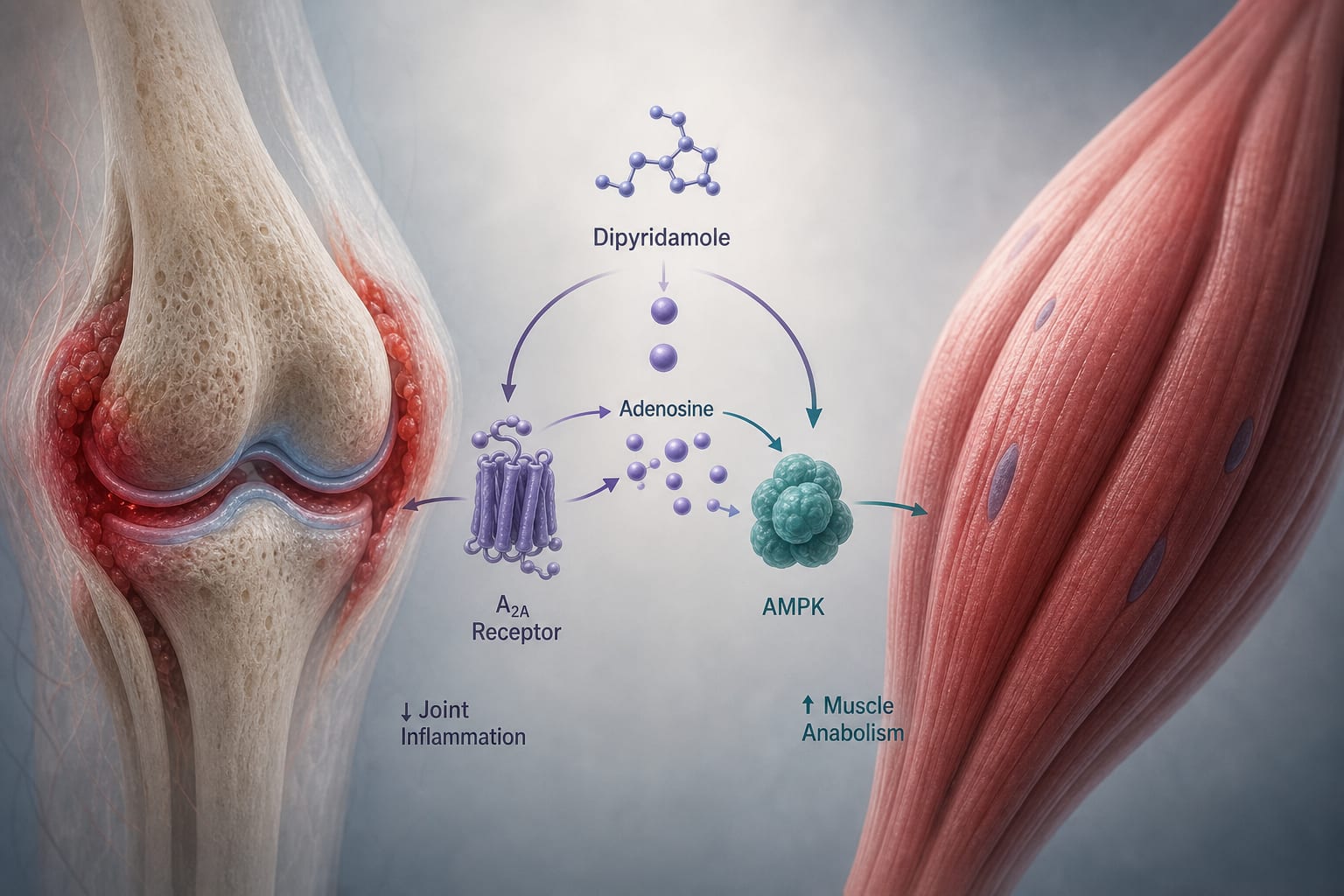
  • Signaling Pathways: Investigated the role of adenosine receptors A2AR and A2BR in mediating the effects of dipyridamole on inflammation and muscle anabolism, focusing on their signaling pathways.
Key Findings:
  • Dipyridamole inhibited joint inflammation in experimental RA models.
  • Dipyridamole enhanced muscle anabolism through activation of adenosine receptors and AMPK signaling.
  • The drug's effects were biphasic, showing both anti-inflammatory and anabolic properties.
Interpretation:

The study suggests that dipyridamole may serve as a dual-action therapeutic agent in RA by addressing both inflammation and muscle loss.

Limitations:
  • The specific interaction between the purinergic system and rheumatoid sarcopenia remains unexplored in this study.
  • Results are based on animal models and may not directly translate to human conditions.
Conclusion:

Dipyridamole shows potential in mitigating joint inflammation and enhancing muscle mass in RA, warranting further investigation.

Original Source(s)

Related Content