Efficacy of Jishi Shuanghua Granules in preventing radiation-induced esophagitis in non-small cell lung cancer patients undergoing concurrent chemoradiotherapy: protocol for a multicenter, randomized, double-blind, placebo-controlled trial - Summary - MDSpire

Efficacy of Jishi Shuanghua Granules in preventing radiation-induced esophagitis in non-small cell lung cancer patients undergoing concurrent chemoradiotherapy: protocol for a multicenter, randomized, double-blind, placebo-controlled trial

  • By

  • Huakang Li

  • Yuanzhen Mi

  • Ke Xu

  • Ming Fan

  • Jun Yin

  • Qiang Li

  • Ziliang Wu

  • Cuicui Gong

  • Yunjing Jia

  • Pengxuan Gu

  • Shanshan Wei

  • Zhonglin Zhang

  • Shuo Zhang

  • Yuanyuan Zheng

  • Bing Lin

  • Jinyi Lang

  • Biao Zhao

  • Meihua Chen

  • June 23, 2026

  • 0 min

Share

Objective:

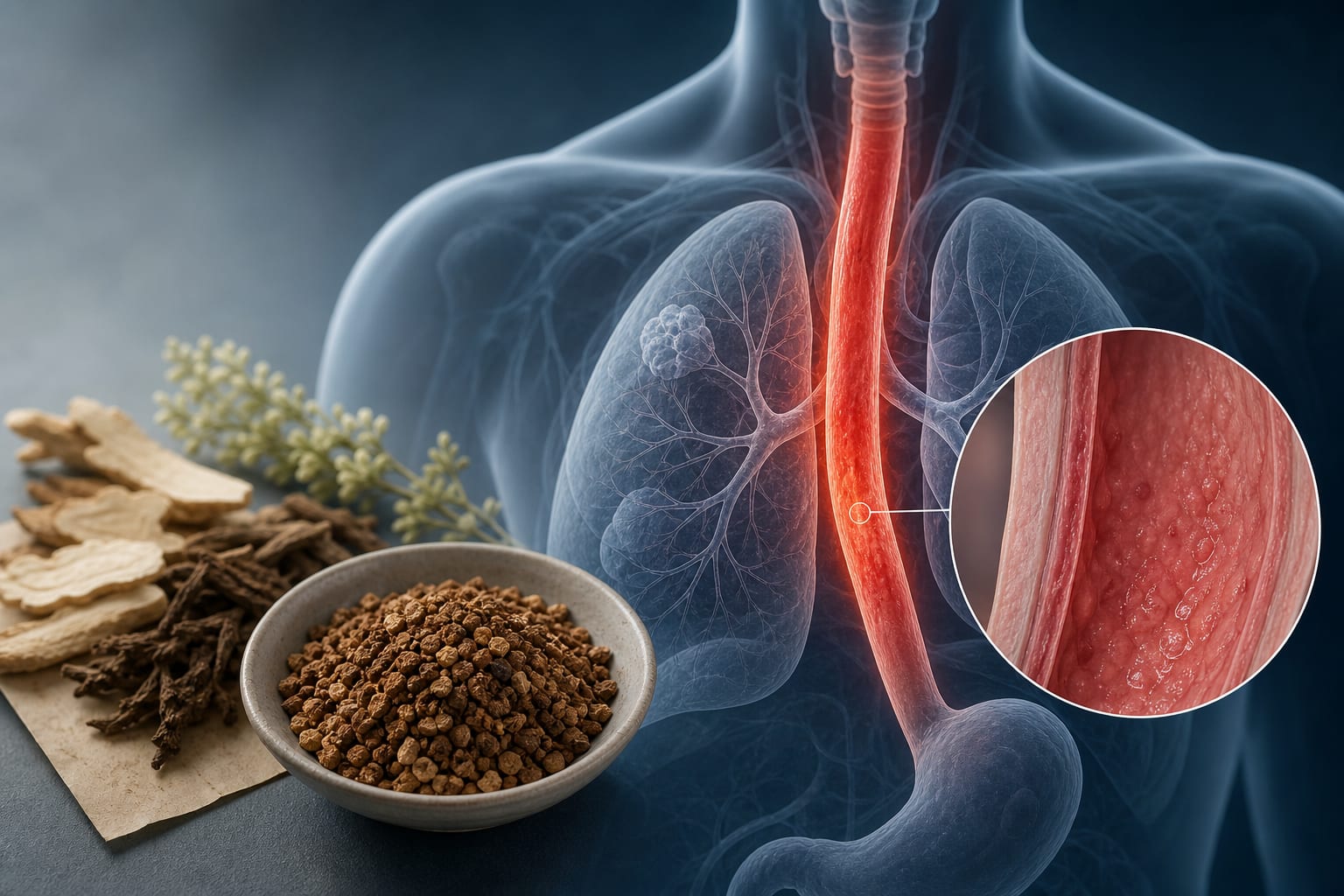
To assess the effectiveness of Jishi Shuanghua Granules (JSG) in mitigating the risk and severity of acute radiation-induced esophagitis (ARIE) in patients with non-small cell lung cancer (NSCLC) receiving concurrent chemoradiotherapy (CCRT).

Approach:
    Key Findings:
    • ARIE is a common complication in NSCLC patients undergoing CCRT, affecting quality of life and treatment outcomes.
    • JSG is a Traditional Chinese Medicine formulation that has been used clinically for over ten years but lacks robust evidence from structured studies.
    • Existing treatments for ARIE primarily focus on symptomatic relief, highlighting a need for effective preventive measures.
    Interpretation:

    Limitations:
    • Previous studies on herbal formulations for ARIE have been limited by small sample sizes and methodological rigor.
    • The trial's findings may be influenced by the specific characteristics of the patient population and the clinical setting.
    Conclusion:

    This study aims to fill the evidence gap regarding the efficacy and safety of JSG in ARIE prevention, potentially enhancing treatment protocols for NSCLC patients.

    Sources:

Original Source(s)

Related Content