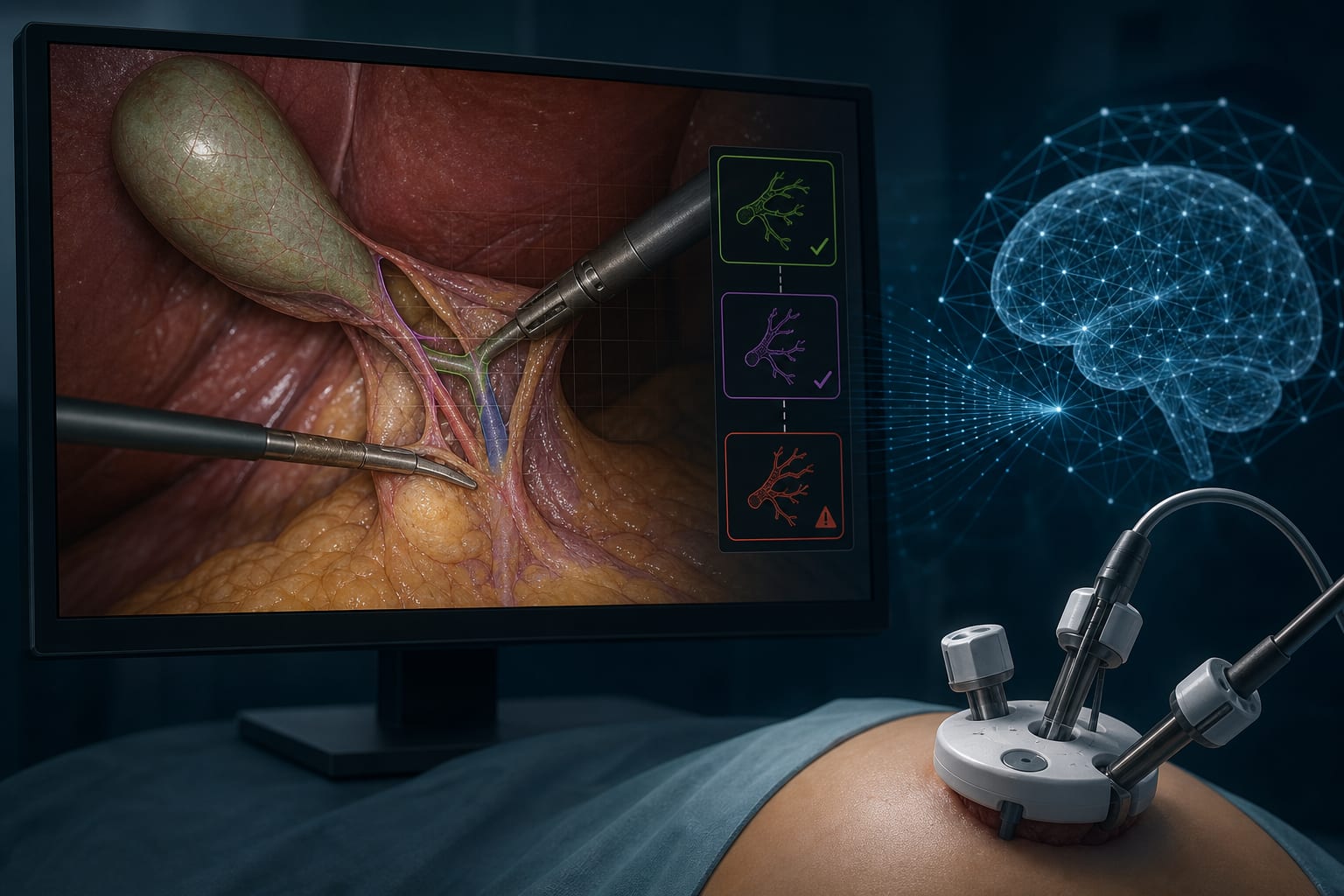
To develop and evaluate deep learning models for recognizing critical anatomical zones in intraoperative videos of single-incision laparoscopic cholecystectomy (SILC), thereby enhancing surgical safety.
Key Findings:
SILC is associated with higher operative complication risks compared to conventional laparoscopic cholecystectomy, with specific rates of major bile duct injury and other complications.
Expert surgeons can effectively identify safe versus hazardous dissection zones, which is crucial for minimizing risks, as evidenced by their performance metrics.
Deep learning models can potentially enhance real-time surgical guidance by accurately identifying critical anatomical structures, with preliminary results indicating high accuracy.
Interpretation:
The study highlights the potential of AI in improving surgical outcomes by providing real-time guidance during SILC, specifically addressing the challenges posed by the procedure's technical complexity and variability.
Limitations:
Variability in surgical videos due to factors like bleeding and individual techniques may affect model performance; future work should explore adaptive learning techniques.
The dataset may not fully represent all possible surgical scenarios encountered in SILC, suggesting the need for broader data collection in future studies.
Conclusion:
Implementing AI-driven guidance in SILC could significantly improve surgical decision-making and patient safety, warranting further research and validation to explore its full potential.