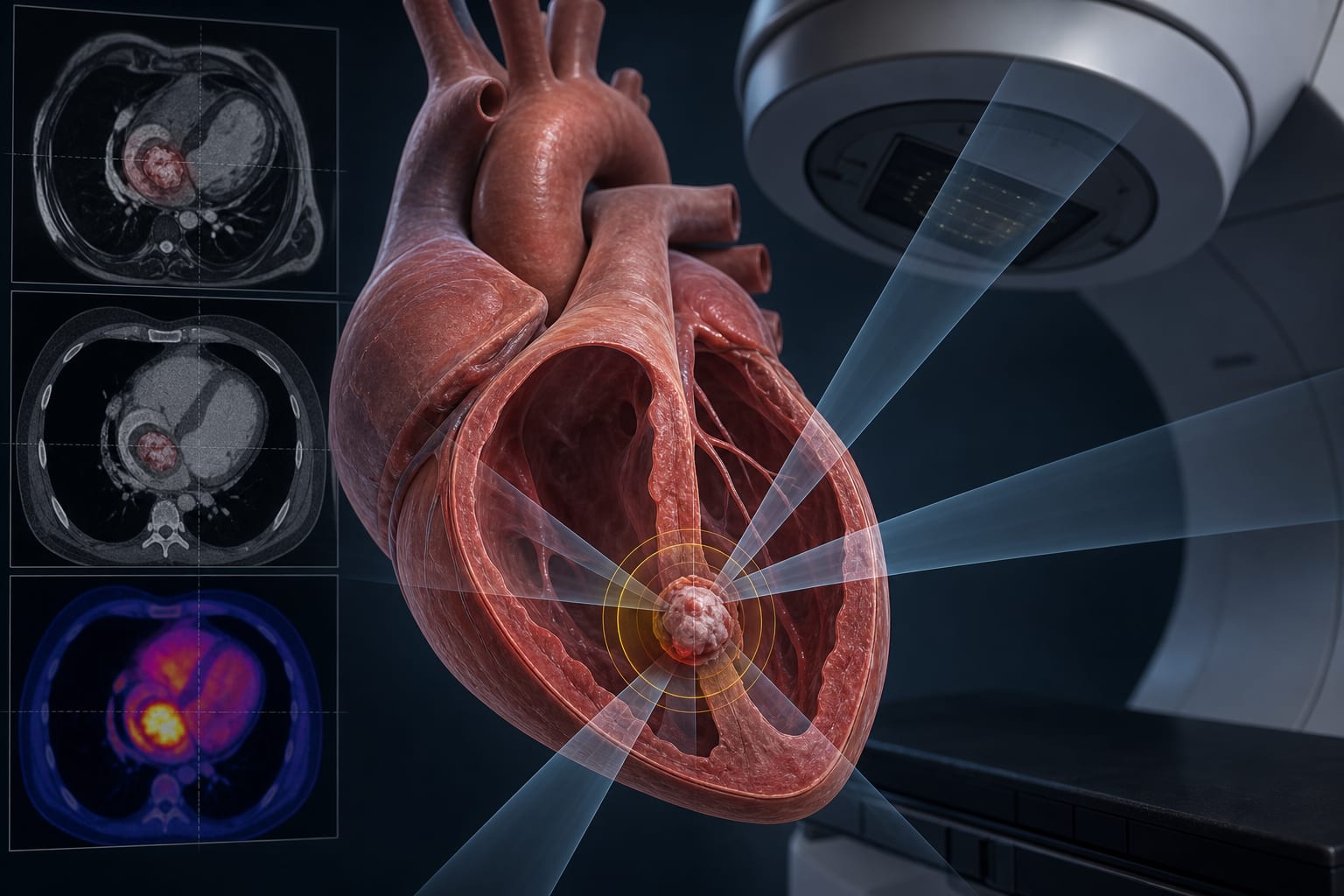
To report the application of a STAR-inspired 25 Gy single-fraction cardiac radioablation approach for right-ventricular metastasis from Ewing sarcoma.
Approach:
Case Presentation: A 26-year-old man with a history of limb Ewing sarcoma developed an incidentally detected right-ventricular mass during routine staging. After partial surgical debulking, multimodal imaging confirmed a 17 × 15 mm residual intracavitary lesion. Because complete surgical resection was not technically feasible, frameless stereotactic body radiotherapy (SBRT) was delivered in a single 25 Gy fraction using STAR workflow principles. Treatment was completed without complication. At 12-month MRI, the lesion was reduced to 8 × 10 mm, and subsequent imaging confirmed persistent local cardiac control.
Treatment Details: The patient was treated with 25 Gy in a single fraction, delivered without complications. Follow-up imaging was conducted at 12 months.
Key Findings:
The lesion reduced from 17 × 15 mm to 8 × 10 mm at 12 months post-treatment.
The patient remained free of cardiac symptoms and signs of cardiac disease progression at 31 months after treatment.
No cardiac toxicity was observed following the STAR-inspired radioablation.
Interpretation:
The application of a STAR-inspired single-fraction regimen for oncologic cardiac targets is feasible and can provide durable control.
Limitations:
The case report is based on a single patient experience.
Further evaluation is needed to establish broader applicability and efficacy.
Conclusion:
The experience supports further evaluation of STAR-inspired SBRT for unresectable cardiac tumors.