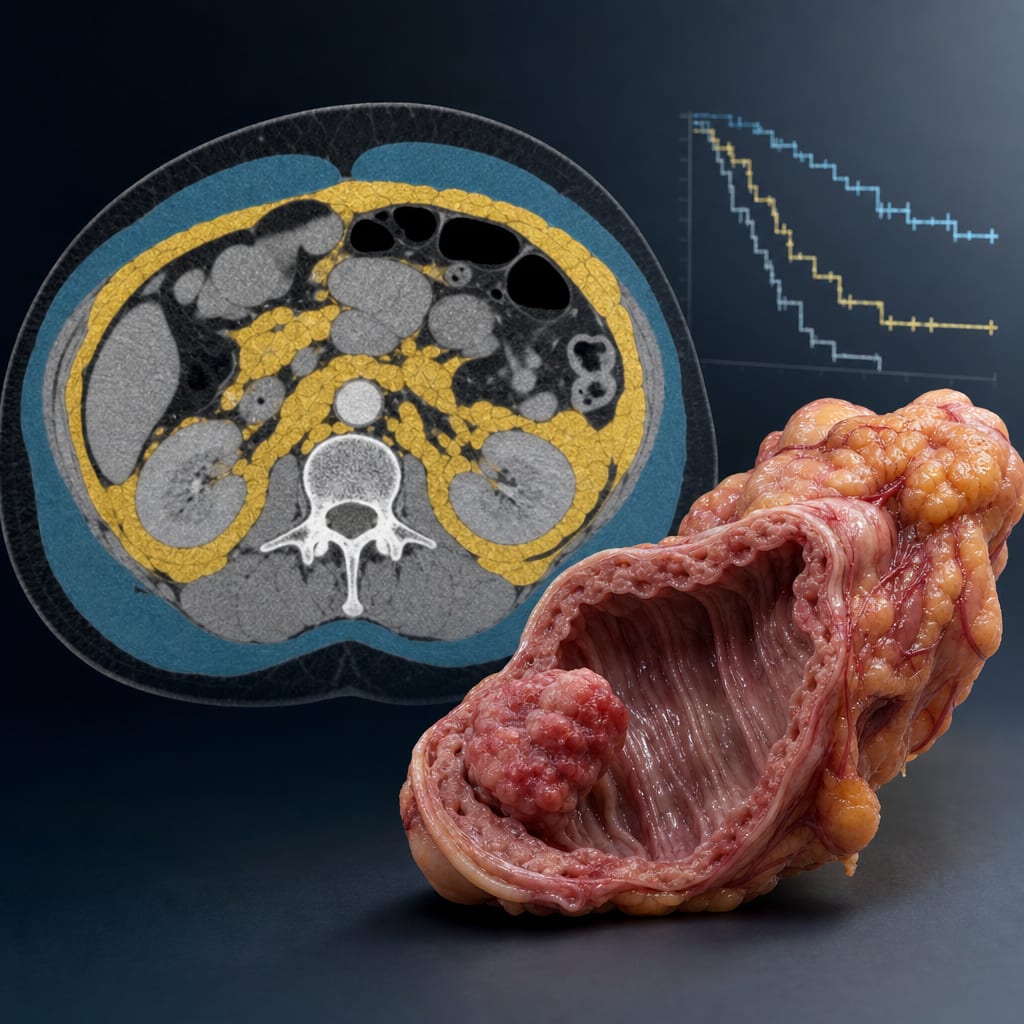
To explore the mechanism underlying the heterogeneity of mismatch repair (MMR) status in synchronous colorectal cancers (SCRCs) and emphasize the clinical value of lesion-specific molecular profiling combined with regional metastatic lymph node MMR phenotyping for individualized treatment.
Key Findings:
Two synchronous primary adenocarcinomas were confirmed: one with deficient MMR (dMMR) and the other with proficient MMR (pMMR).
The ascending colon tumor was dMMR, while the rectal tumor was pMMR and adjacent to a sessile serrated lesion.
Germline NGS revealed no pathogenic MMR gene variants, consistent with Lynch-like syndrome.
Regional metastatic lymph nodes showed a pMMR phenotype, indicating higher metastatic potential of the rectal lesion.
No recurrence or metastasis was observed at the 24-month follow-up.
Interpretation:
Lesion-specific molecular characterization and regional lymph node MMR phenotyping are critical for managing SCRCs with discordant MMR status, supporting individualized therapy.
Limitations:
The case study is based on a single patient, limiting generalizability and the ability to draw broader conclusions.
There is a lack of standardized diagnostic workflows for similar cases in current guidelines, which may hinder effective management.
Conclusion:
This case highlights the importance of comprehensive molecular profiling in SCRCs with discordant MMR status, providing a framework for risk-adapted individualized therapy and addressing current clinical practice gaps.
Colorectal cancer (CRC) impacts about 1 in 13,000 pregnancies in the United States. This article follows the case of a 36-year-old woman diagnosed with CRC while pregnant and highlights considerations around CRC diagnosis and cancer treatment during pregnancy.