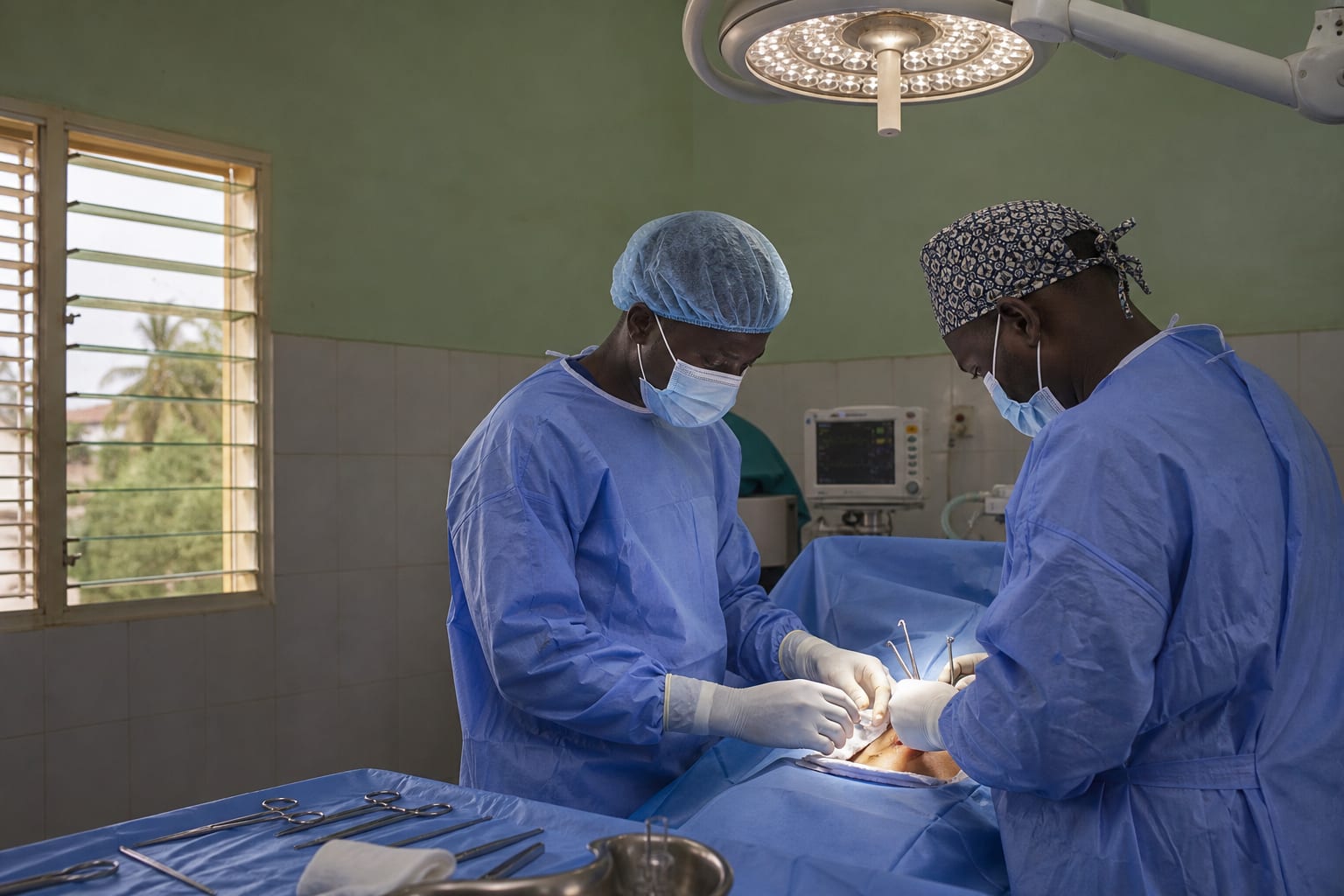
Abdominal wall hernia management in a second level hospital of Senegal: a cross-sectional study
-
By
-
Guillaume Tcheutchoua Soh
-
Seneba Aicha Gaye
-
Papa Mamadou Faye
-
Thierno Amadou Telly Diallo
-
Abdoul Kharim Diop
-
Jacques Noel Tendeng
-
Ousmane Thiam
-
Philippe Manyacka Ma Nyemb
-
Alpha Oumar Toure
-
Ibrahima Konate
-
Mamadou Cisse
-
June 26, 2026
-
Objective:
To describe the current management of abdominal wall hernias in a secondary centre in Senegal.
Approach:
- Study Design: Cross-sectional study conducted over six months in a surgical department of a second-level hospital in Senegal.
- Inclusion Criteria: Patients over 15 years admitted for treatment of abdominal wall hernias, both emergency and elective.
- Data Collection: Prospective collection of data from patient records, including follow-up during hospitalization and at 1 week and 1 month.
Key Findings:
- Hernia repairs accounted for 34.2% of surgical activity, with inguinal hernias constituting 75% of the hernias operated on.
- Inguinal hernias accounted for 25.6% and midline ventral hernias for 8.5% of all procedures.
- 51.5% of hernias were repaired using mesh, while 48.5% used tissue repair.
- Emergency repairs accounted for 19.1% of cases.
- Complications included pain at the surgical site (17.7%) and lower urinary tract obstructive disorders (11.8%).
Interpretation:
Limitations:
- Limited research funding hinders the development of local guidelines.
- Short follow-up periods may affect the assessment of long-term outcomes.
Conclusion: