Multiple sclerosis patients under treatment with interferon β1-a or ocrelizumab exhibit different T and B cell responses to SARS-CoV-2 vaccine - Summary - MDSpire

Multiple sclerosis patients under treatment with interferon β1-a or ocrelizumab exhibit different T and B cell responses to SARS-CoV-2 vaccine

  • By

  • Antonietta Liotti

  • Giorgia Teresa Maniscalco

  • Anne Lise Ferrara

  • Valeria Mazzone

  • Maedeh Dehbozorgi

  • Annamária Szabó

  • Martina Belardo

  • Daria Marcogiuseppe

  • Antonio De Martino

  • Maria Elena Di Battista

  • Giovanna Servillo

  • Ornella Moreggia

  • Daniele Di Giulio Cesare

  • Vincenzo Andreone

  • Gilda Varricchi

  • Veronica De Rosa

  • June 16, 2026

  • 0 min

Share

Objective:

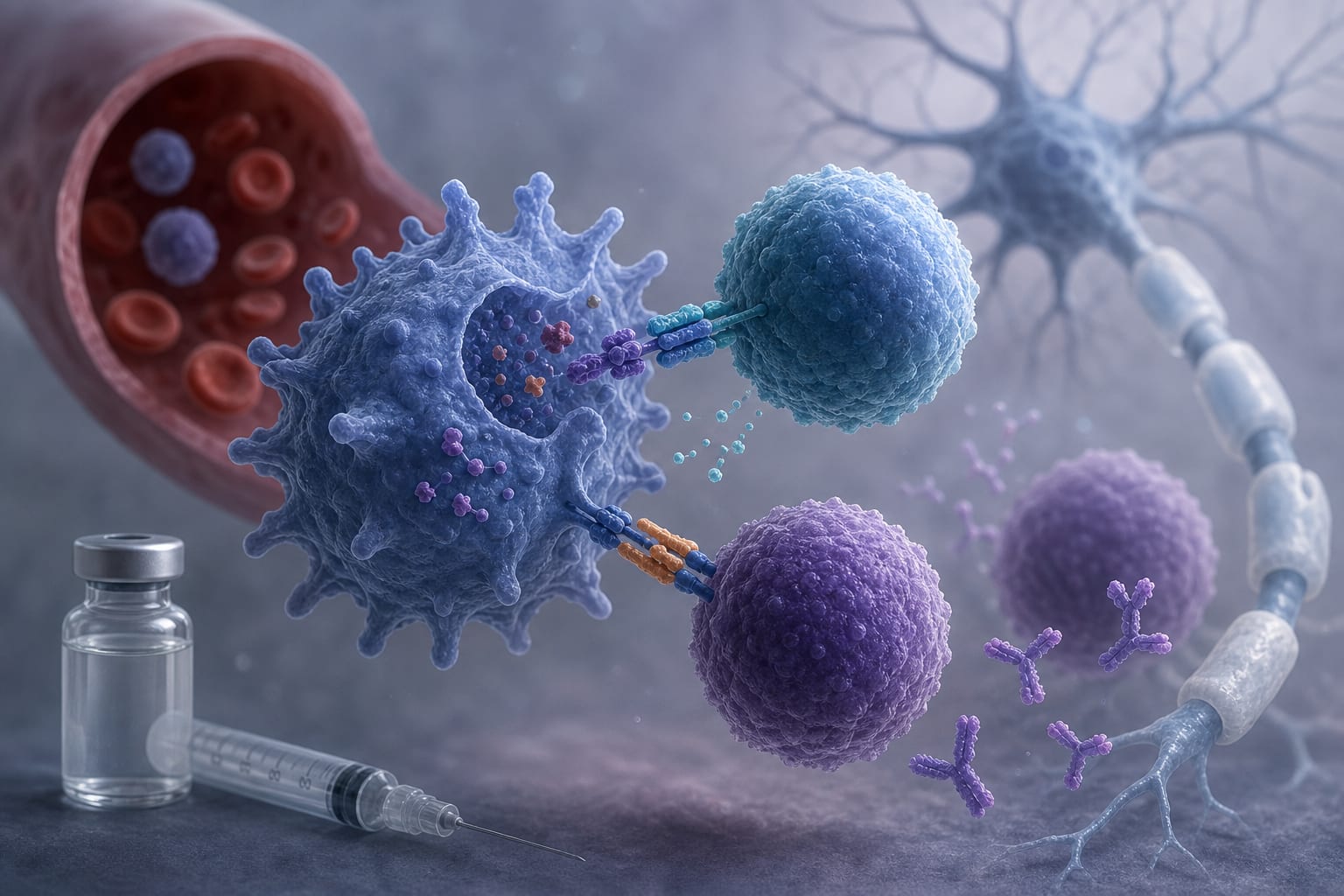
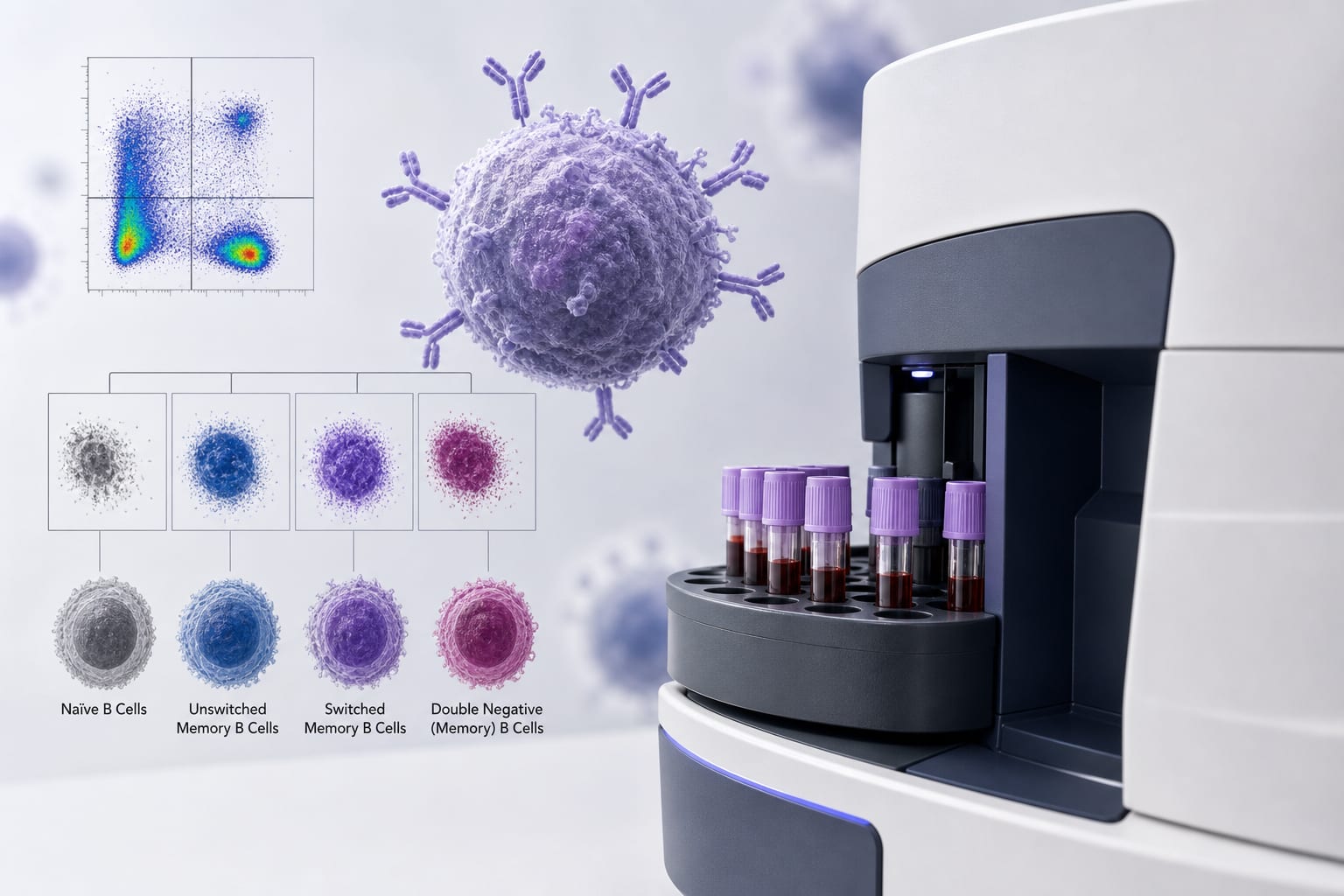
To analyze T and B cell subsets and the antigen-specific T cell response in multiple sclerosis patients treated with interferon β1-a or ocrelizumab before and after SARS-CoV-2 vaccination, highlighting the importance of these analyses.

Key Findings:
  • CD20+ B-cells were decreased in OCRE-treated pwMS compared to IFN-treated pwMS before and after vaccination.
  • CD8+ and CD4+ T cell responses and immunological memory were comparable between both treatment groups.
  • Th17 cells increased after vaccination only in the OCRE-treated group.
  • A spike-specific T cell response was observed in both groups, alongside a significant decrease in Treg frequency.
Interpretation:

Both DMTs allowed for a vaccine-induced cellular and humoral immune response, despite distinct immunological profiles, as observed in the findings.

Limitations:
  • Small sample size of 20 pwMS.
  • Single-center study may limit generalizability.
Conclusion:

The study provides insights into the immune response to SARS-CoV-2 vaccination in pwMS treated with different DMTs, based on the observed data.

Original Source(s)

Related Content