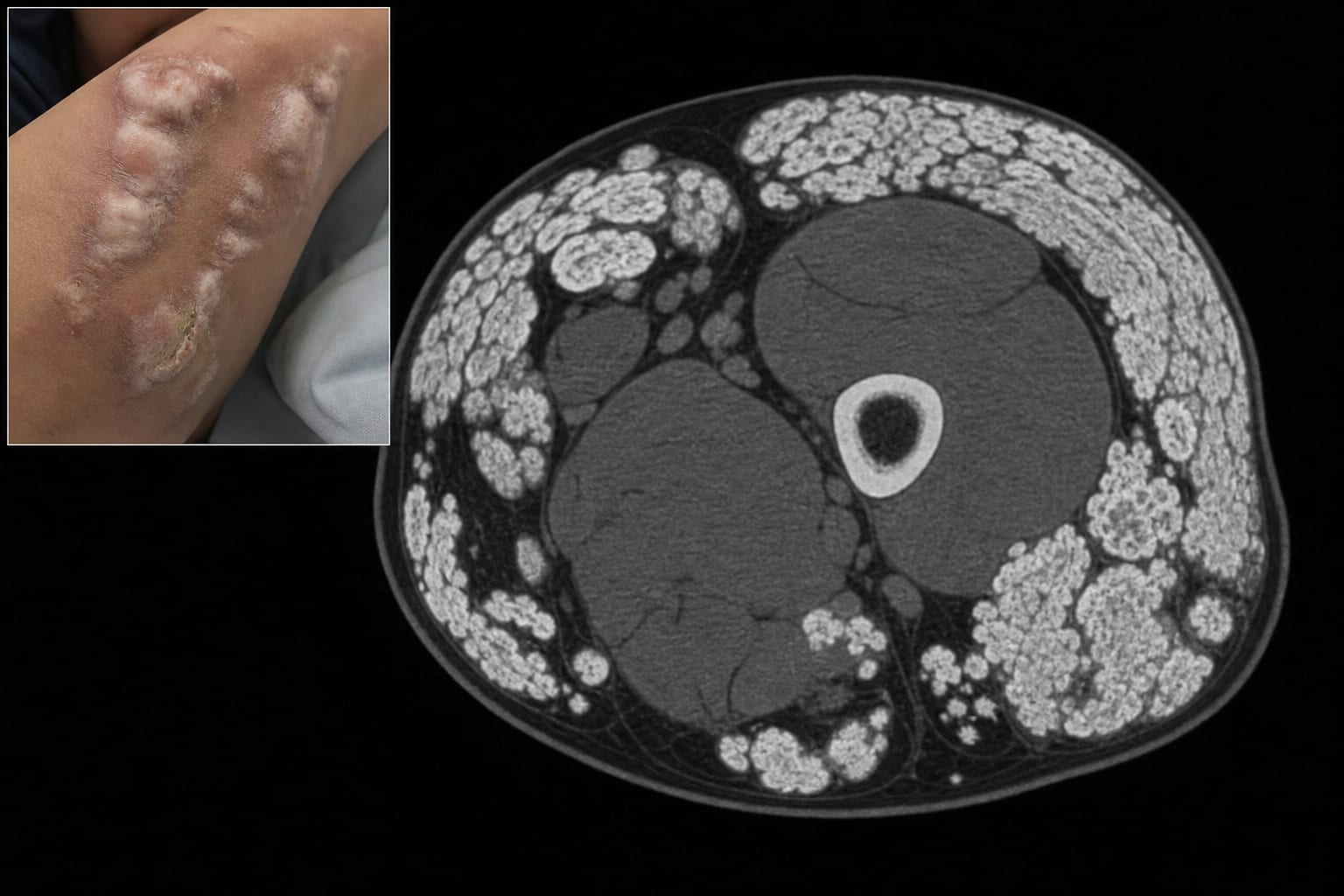
To present a case of extensive subcutaneous calcification in a patient with overlap syndrome of systemic lupus erythematosus (SLE) and systemic sclerosis (SSc).
Approach:
Patient Presentation: A 50-year-old female with a 15-year history of SLE and SSc presented with advancing subcutaneous lesions, including polyarthritis, digital contractures, acro-osteolysis, and livedo reticularis.
Lesion Description: The patient developed multiple symmetric subcutaneous indurations that merged into large, plate-like calcified plaques, which were nontender but prone to rupture.
Treatment: The patient was treated with mycophenolate mofetil, hydroxychloroquine, and low-dose prednisone after irregular prednisone treatment.
Key Findings:
This case exemplifies dystrophic calcification as a consequence of connective-tissue disorders primarily affecting the buttocks and extremities.
Widespread calcium accumulation occurred in the dermis, subcutaneous layers, musculature, and tendons without significant organ involvement.
Severity of calcinosis does not necessarily correlate with systemic disease activity.
Interpretation:
Traditional treatments, such as bisphosphonates, calcium channel blockers, and sodium thiosulfate, have exhibited limited and variable effectiveness, and no guideline-endorsed therapies exist for managing this condition.
Limitations:
Institutional review board approval was deemed unnecessary.
Informed consent was obtained directly from the patient.
Conclusion:
Effective management of the underlying autoimmune condition is fundamental due to the absence of established therapies for calcinosis.