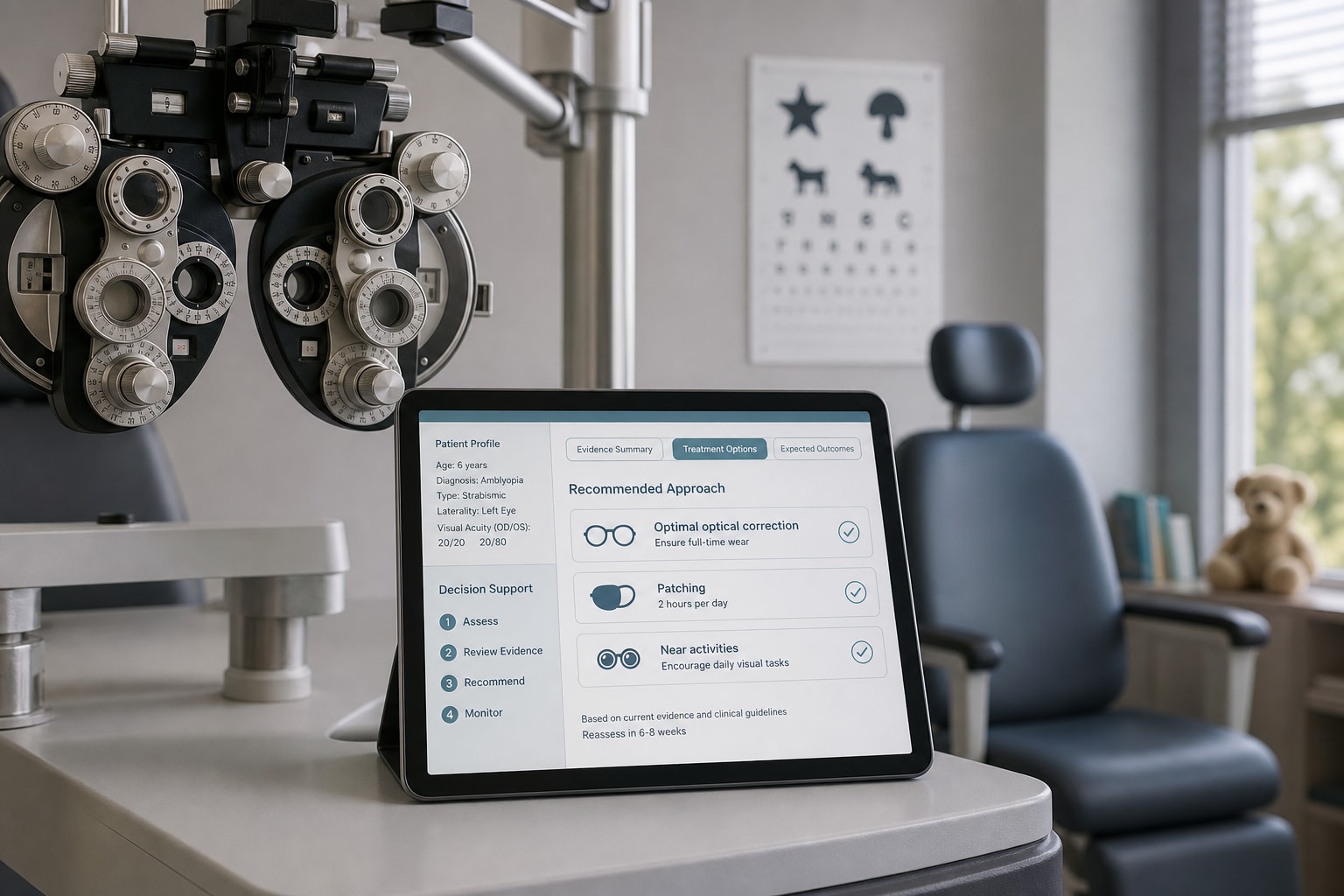
To expand access to evidence-based clinical decision-making for pediatric amblyopia management amidst a shortage of specialists, which limits timely care for affected children.
Key Findings:
Amblyopia affects 3 out of every 100 children and is the leading cause of preventable monocular vision loss.
Early detection and treatment can lead to near-normal vision outcomes, while untreated amblyopia can result in permanent vision impairment and affect quality of life.
The geographic distribution of pediatric eye care specialists is uneven across the U.S.
Interpretation:
The ANDI tool aims to bridge the gap in pediatric ophthalmic care access, empowering non-specialist clinicians to effectively manage amblyopia.
Limitations:
The tool's effectiveness in real-world clinical settings has yet to be fully evaluated.
Access to the tool requires internet for optimal use, which may limit some clinicians, particularly in rural or underserved areas.
Conclusion:
The ANDI tool represents a significant step towards improving amblyopia care accessibility and management for children across the U.S.