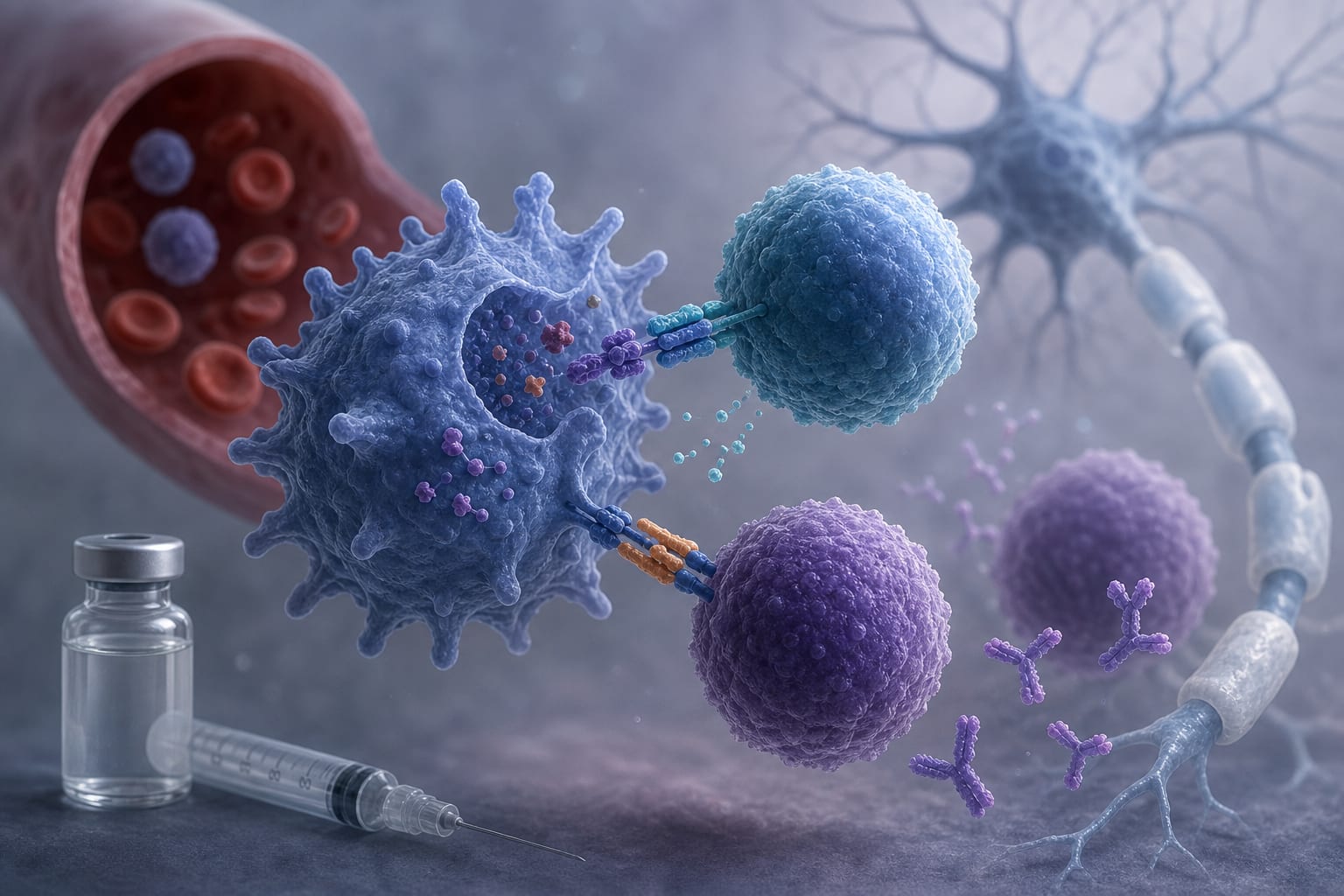
To systematically profile the biochemical and functional landscape of EBNA1-specific antibodies in patients diagnosed with MS using an unbiased, high-dimensional serology platform and investigate their association with MS disease activity.
Approach:
Study Participants: The study utilized the 'focal inflammation' subcohort from the Swiss Multiple Sclerosis Cohort (SMSC), involving 60 patients diagnosed with MS, with blood samples collected during both active disease and remission phases across multiple Swiss academic medical centers from January 1, 2012 to October 22, 2022.
Clinical Assessments: Clinical assessments were performed using the Expanded Disability Status Scale (EDSS), and samples were collected following a standardized protocol across multiple Swiss academic medical centers.
Key Findings:
Elevated IgG titers against EBNA1 are a consistent serologic risk factor for MS.
High EBNA1-specific IgG levels remain prominent after MS onset.
The study aimed to clarify the association between EBV-IgG biosignatures and MS activity.
Interpretation:
The mechanisms by which EBNA1-specific IgG may contribute to MS susceptibility are not fully understood, but may involve cross-reactivity with CNS antigens.
Limitations:
The study included only White race and ethnicity participants, limiting generalizability. Additionally, potential biases related to the temporal order of sampling were acknowledged, as the order of active disease and remission sampling was not uniform across patients.
Conclusion:
The study systematically investigates the role of EBNA1-specific antibodies in MS, focusing on their potential association with disease activity.
by Malina Behrens, Paula Terroba-Navajas, Eline A.J. Willemse, Sabine Schädelin, Manuel Comabella, Christian Münz, Gordan Lauc, Yannic Bartsch, Jens Kuhle, Jan D. Lünemann