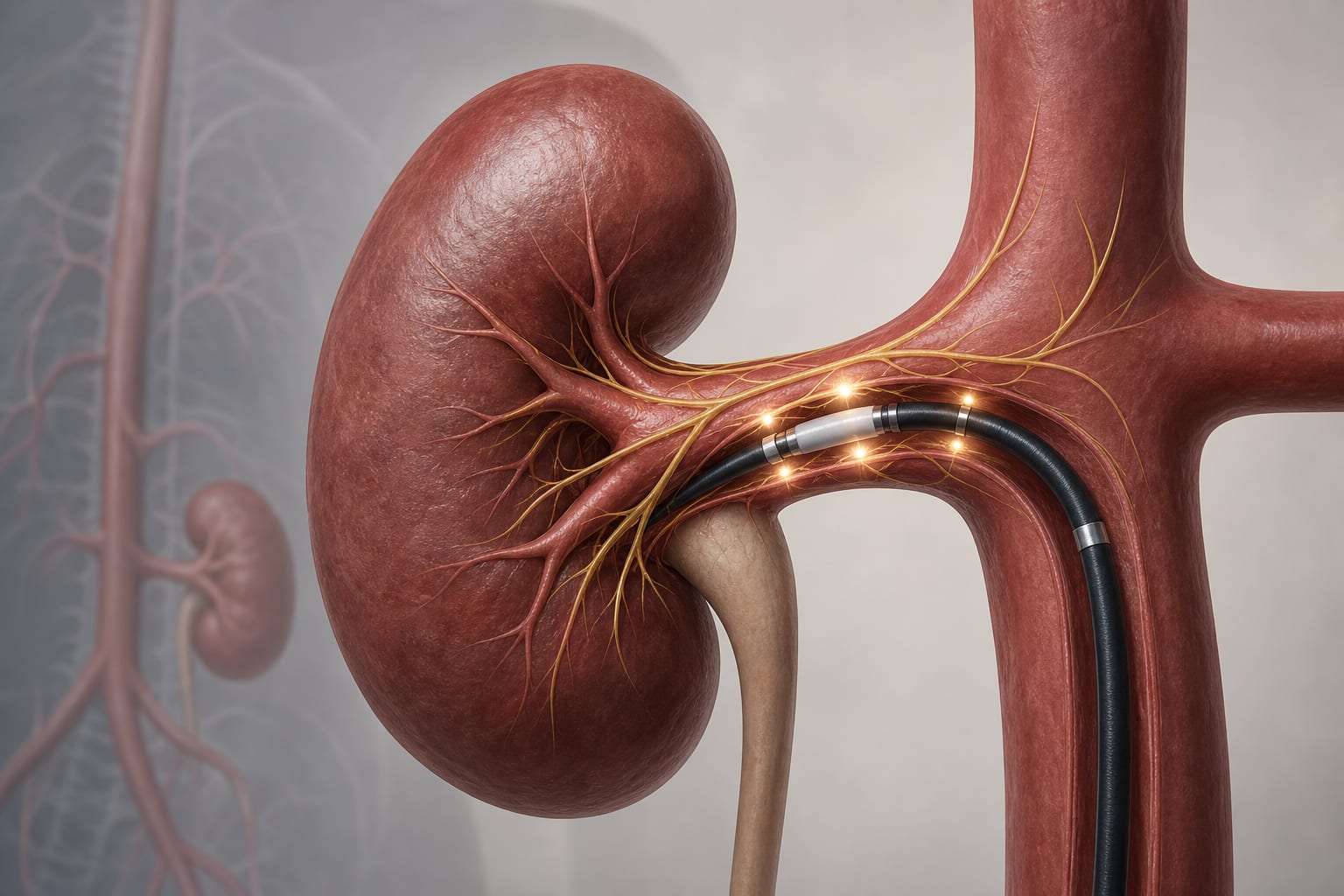
To provide information on renal denervation (RDN) as a treatment for resistant hypertension.
Approach:
Definition of RDN: RDN is a minimally invasive procedure aimed at treating resistant hypertension, characterized by high blood pressure despite the use of three antihypertensive medications.
Devices Used: Two FDA-approved RDN systems, Spyral and Paradise, utilize different energy sources (radiofrequency and ultrasound) to disrupt renal nerves.
Evidence of Efficacy: Blinded studies show RDN effectively reduces blood pressure by 5–10 mmHg in patients on and off medications.
Specialist Training: Only interventional cardiologists are trained to perform RDN procedures, undergoing specialty training with RDN systems.
Patient Eligibility: Candidates for RDN include patients with uncontrolled resistant hypertension, evaluated by a hypertension specialist.
Procedure Expectations: Patients receive pre-procedure instructions, sedation, and local anesthesia during the procedure, which lasts 60–90 minutes.
Post-Procedure Care: Patients must remain flat for 4–6 hours post-procedure and avoid strenuous activity for 48–72 hours.
Potential Risks: Risks include arterial injury, blood clot formation, infection, and bleeding, mitigated by imaging guidance and blood thinners.
Key Findings:
RDN is effective in reducing blood pressure in resistant hypertension.
The procedure is performed using two different energy delivery systems.
Only trained interventional cardiologists can perform RDN.
Interpretation:
RDN offers a minimally invasive option for patients with resistant hypertension, but careful patient selection and monitoring are essential.
Limitations:
RDN has not been well studied in patients with moderate-to-severe kidney disease, renal artery issues, or those who are pregnant.
Conclusion:
RDN is a promising treatment for resistant hypertension, but further research is needed for specific patient populations.