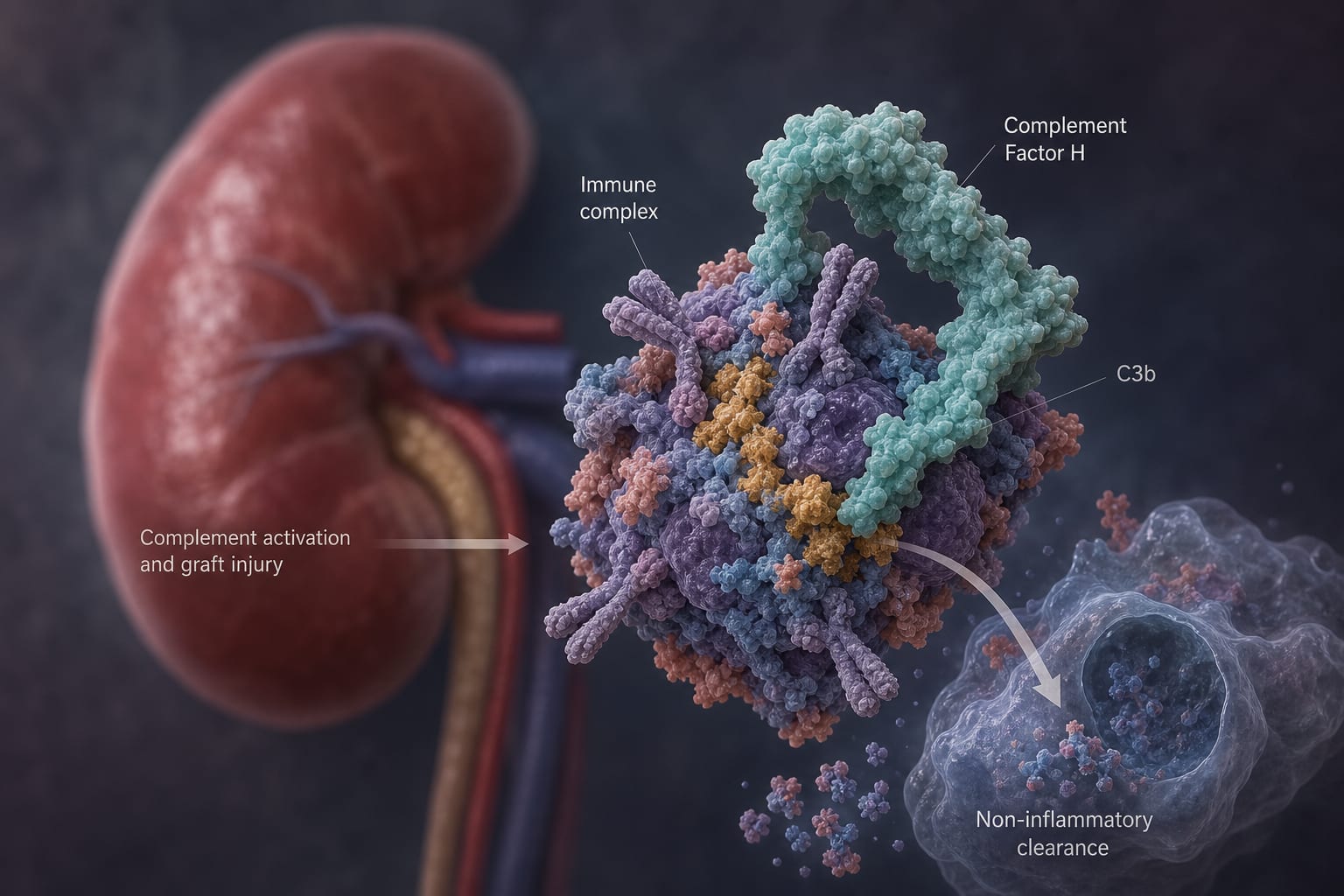
To explore the role of immune complexes (ICs) in graft injury during solid organ transplantation and the regulatory functions of complement factor H (CFH) in this process, with implications for improving transplant outcomes.
Approach:
Key Findings:
Immune complexes are dynamic regulators of graft injury in transplantation, influencing both acute and chronic rejection.
Complement factor H (CFH) is crucial for modulating complement amplification and directing ICs toward non-inflammatory clearance, which is vital for graft survival.
The pathogenic impact of ICs is influenced by their size, composition, and clearance efficiency, which can vary significantly among patients.
Dysregulation of complement regulatory pathways can lead to IC-mediated pathology, underscoring the need for targeted interventions.
Interpretation:
The handling of immune complexes is a central determinant of transplant outcomes, necessitating a shift in focus from mere IC formation to their effective management, particularly through the role of CFH.
Limitations:
The contribution of circulating immune complexes in solid organ transplantation is not well established, which may limit the applicability of findings.
Species-specific differences complicate the translation of preclinical findings to clinical settings, necessitating careful consideration in therapeutic development.
Conclusion:
Understanding the dynamics of immune complex handling and complement regulation, particularly the role of CFH, is essential for improving transplant outcomes.