Diagnostic delay and histopathological subtyping challenges in idiopathic multicentric Castleman disease, not otherwise specified: a case report of a three-hospital odyssey - Summary - MDSpire
Advertisement
Challenges in Diagnosis and Histopathological Classification of Idiopathic Multicentric Castleman Disease: A Case Study Involving Multiple Healthcare Facilities
To highlight the diagnostic challenges and misdiagnosis issues related to idiopathic multicentric Castleman disease, not otherwise specified (iMCD-NOS), through a detailed case study.
Approach:
Case Presentation: A 53-year-old male presented with a 4-month history of persistent right submandibular lymphadenopathy and recurrent fever, leading to evaluations across multiple hospitals before a final diagnosis of iMCD-NOS.
Diagnostic Strategy: The case emphasizes the importance of excisional biopsy over core needle biopsy and the systematic exclusion of differential diagnoses, including HHV-8 infection.
Key Findings:
The patient presented with persistent lymphadenopathy, recurrent fever, and elevated inflammatory markers, including leukocytosis and eosinophilia.
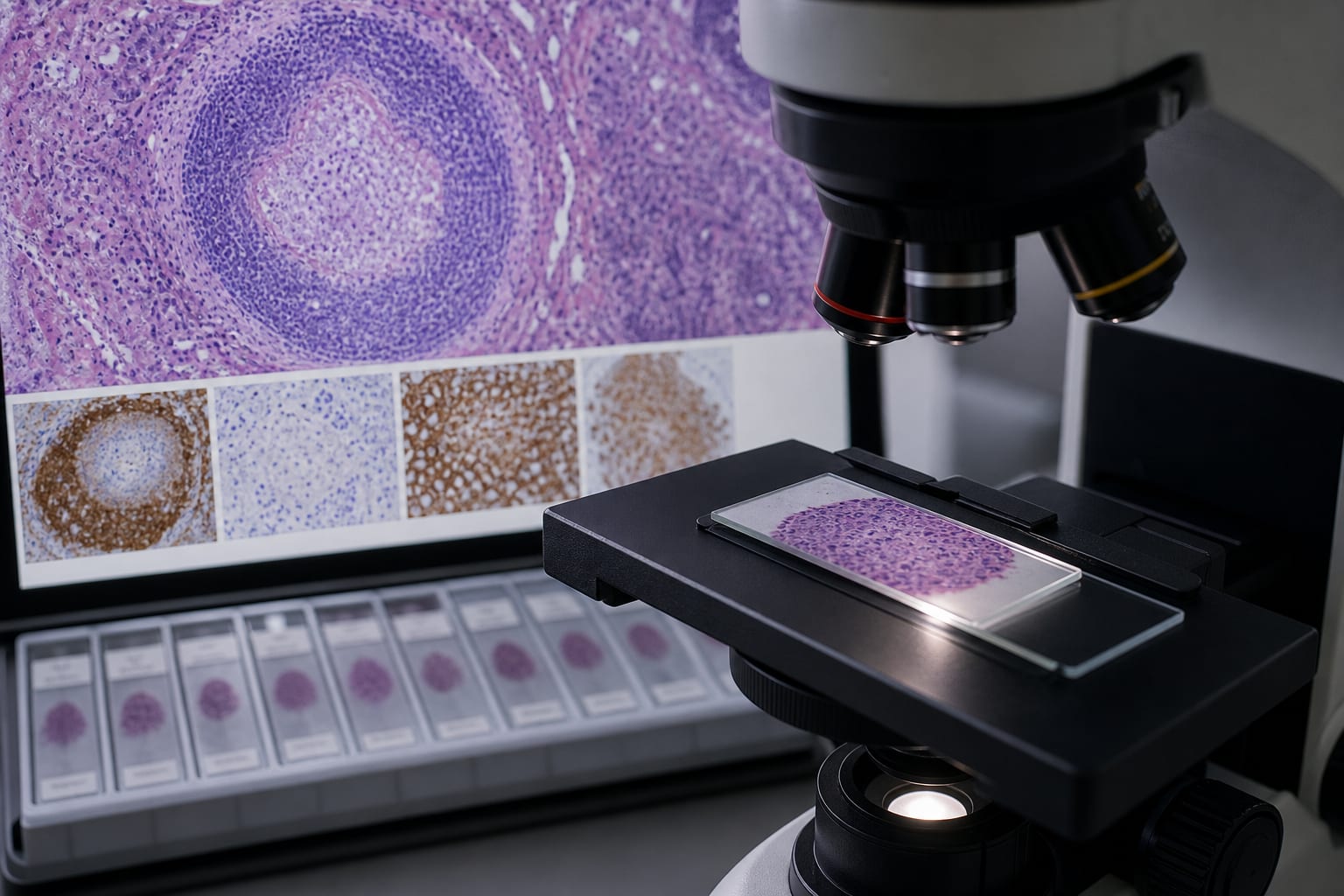
Histopathological examination revealed disrupted lymph node architecture with both atrophic and hyperplastic follicles, and immunohistochemistry demonstrated positivity for CD38, CD138, IgG4, and IgG.
Final diagnosis of iMCD-NOS was made after excluding HHV-8 infection and other mimickers, highlighting the complexity of the diagnostic process.
Interpretation:
The case illustrates the complexity of diagnosing iMCD-NOS and the necessity for thorough diagnostic procedures.
Limitations:
The rarity of iMCD-NOS may limit the generalizability of findings to broader patient populations.
This case study reflects a single patient's experience, which may not encompass all presentations of the disease.
Conclusion:
The case underscores the importance of thorough diagnostic procedures in recognizing iMCD-NOS to reduce diagnostic delays.