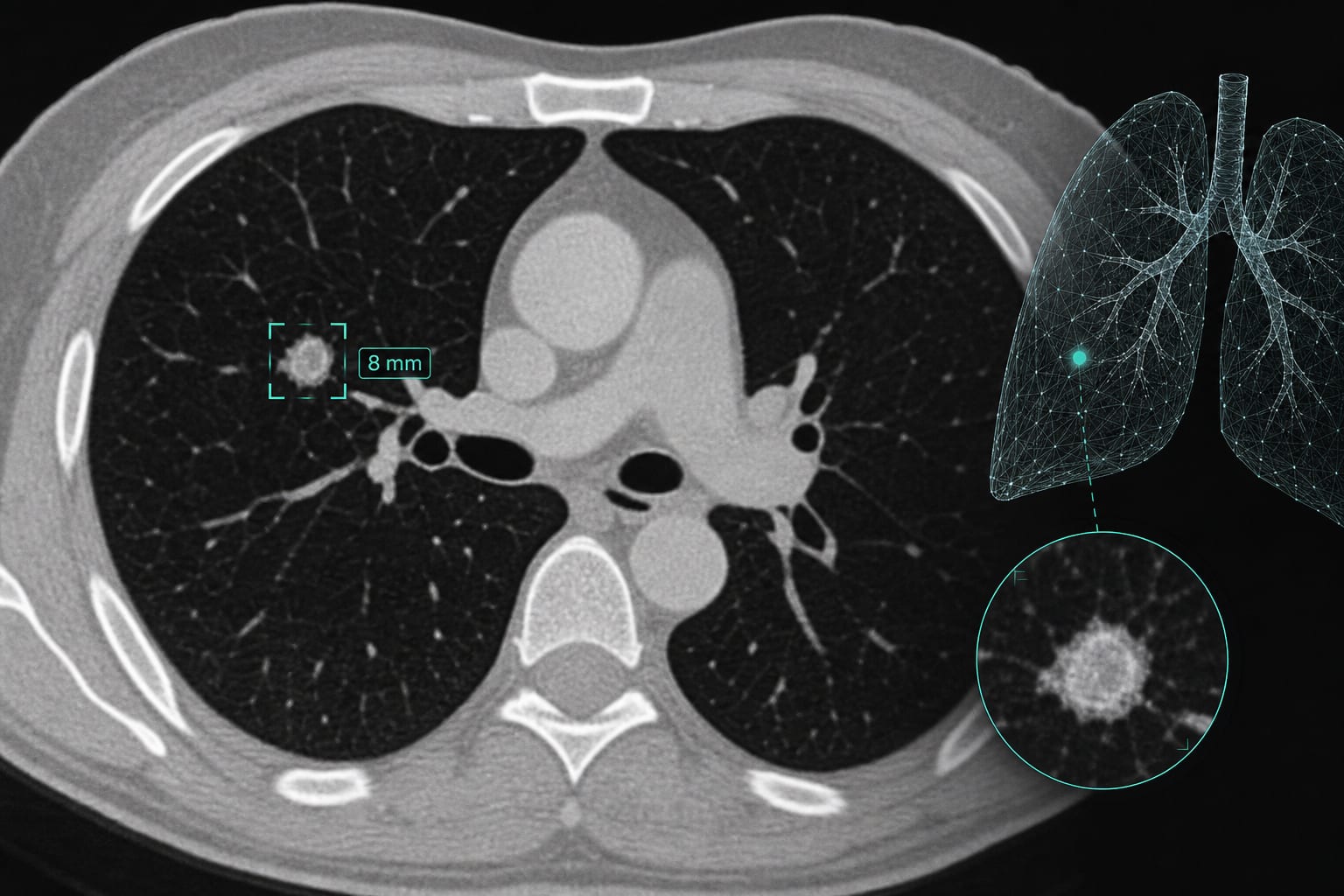
To systematically review the scientific evidence regarding the efficacy of commercially available AI software for the assessment of pulmonary nodules on CT scans.
Approach:
Search Strategy: Conducted searches in multiple databases for studies published between January 2012 and November 2024, focusing on AI, lung cancer, and CT imaging.
Study Selection: Included peer-reviewed studies on AI software validation for lung nodule assessment, with specific inclusion and exclusion criteria.
Data Collection and Analysis: Extracted relevant data using a predesigned form and assessed studies based on the RADAR hierarchical efficacy model.
Key Findings:
AI technologies can automate the detection and analysis of pulmonary nodules, potentially improving diagnostic accuracy.
The RADAR framework provides a comprehensive evaluation of AI efficacy beyond technical performance.
Interpretation:
The review highlights the need for thorough assessments of AI tools to ensure they meet clinical needs and improve patient outcomes.
Limitations:
The review may not capture all relevant studies due to the limitations of the search strategy.
Only studies with CE-marked or FDA-cleared AI applications were included, potentially limiting the generalizability of findings.
Conclusion:
A comprehensive evaluation of AI software for lung nodule assessment is essential to validate their efficacy in clinical practice.
by Jasika Paramasamy, Asabi Leliveld, Jan-Willem Groen, Bo Willems, Joachim G. J. V. Aerts, Aad van der Lugt, Ties A. Mulders, Arlette E. Odink, Jacob J. Visser