Nomogram-based prediction of hemorrhagic transformation risk integrating platelet-to-white blood cell ratio in patients with acute ischemic stroke after intravenous thrombolysis - Summary - MDSpire
Advertisement
Nomogram-based prediction of hemorrhagic transformation risk integrating platelet-to-white blood cell ratio in patients with acute ischemic stroke after intravenous thrombolysis
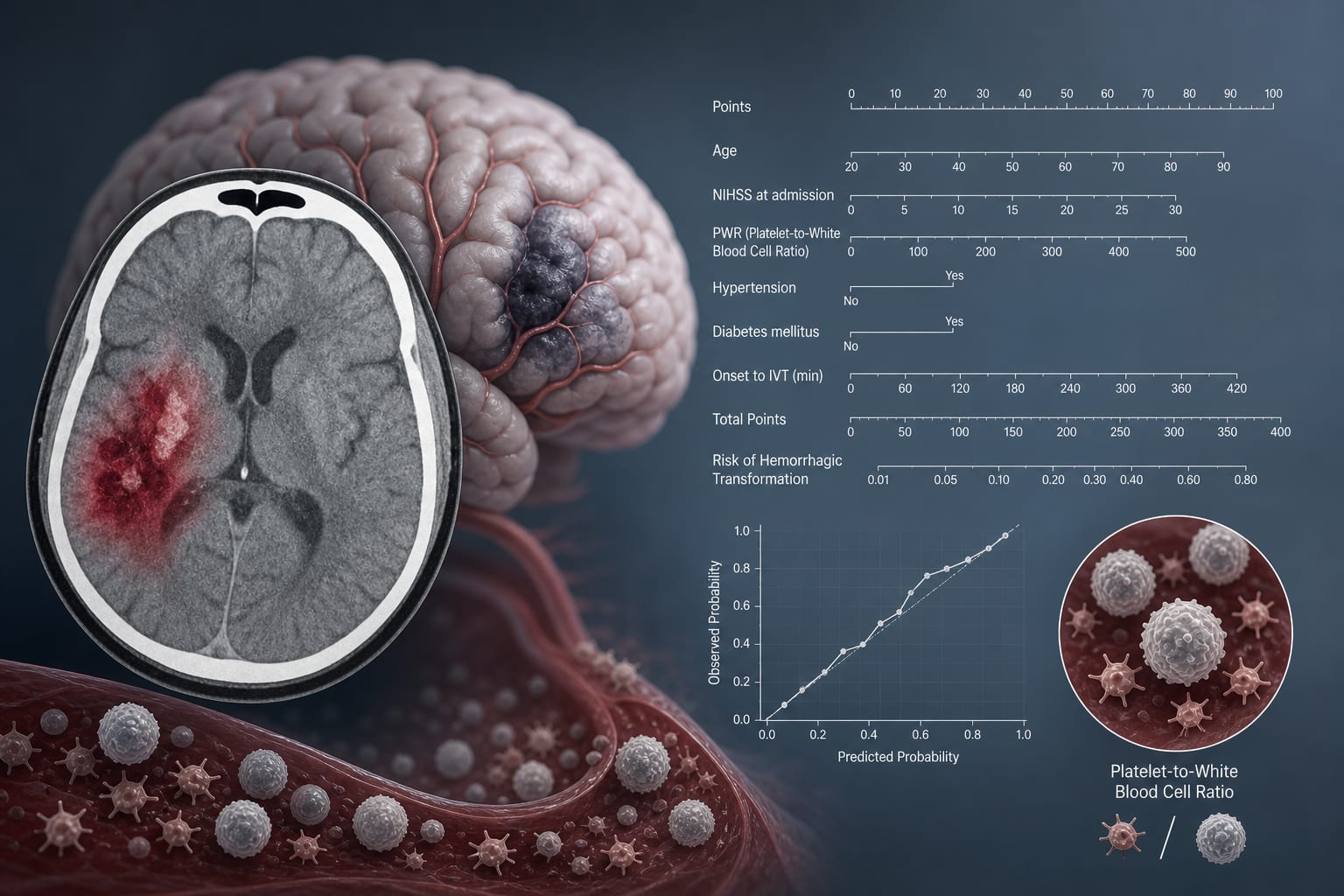
To investigate the independent association between low platelet-to-white blood cell ratio (PWR) and the increased incidence and severity of hemorrhagic transformation (HT) following intravenous thrombolysis (IVT) in acute ischemic stroke (AIS) patients.
Approach:
Key Findings:
Patients with HT had lower PWR levels compared to those without HT.
The highest PWR quartile (Q4) was associated with a reduced risk of HT (OR: 0.33; 95% CI: 0.18–0.61).
The nomogram achieved an AUC of 0.767 (95% CI: 0.716–0.818) for predicting HT risk.