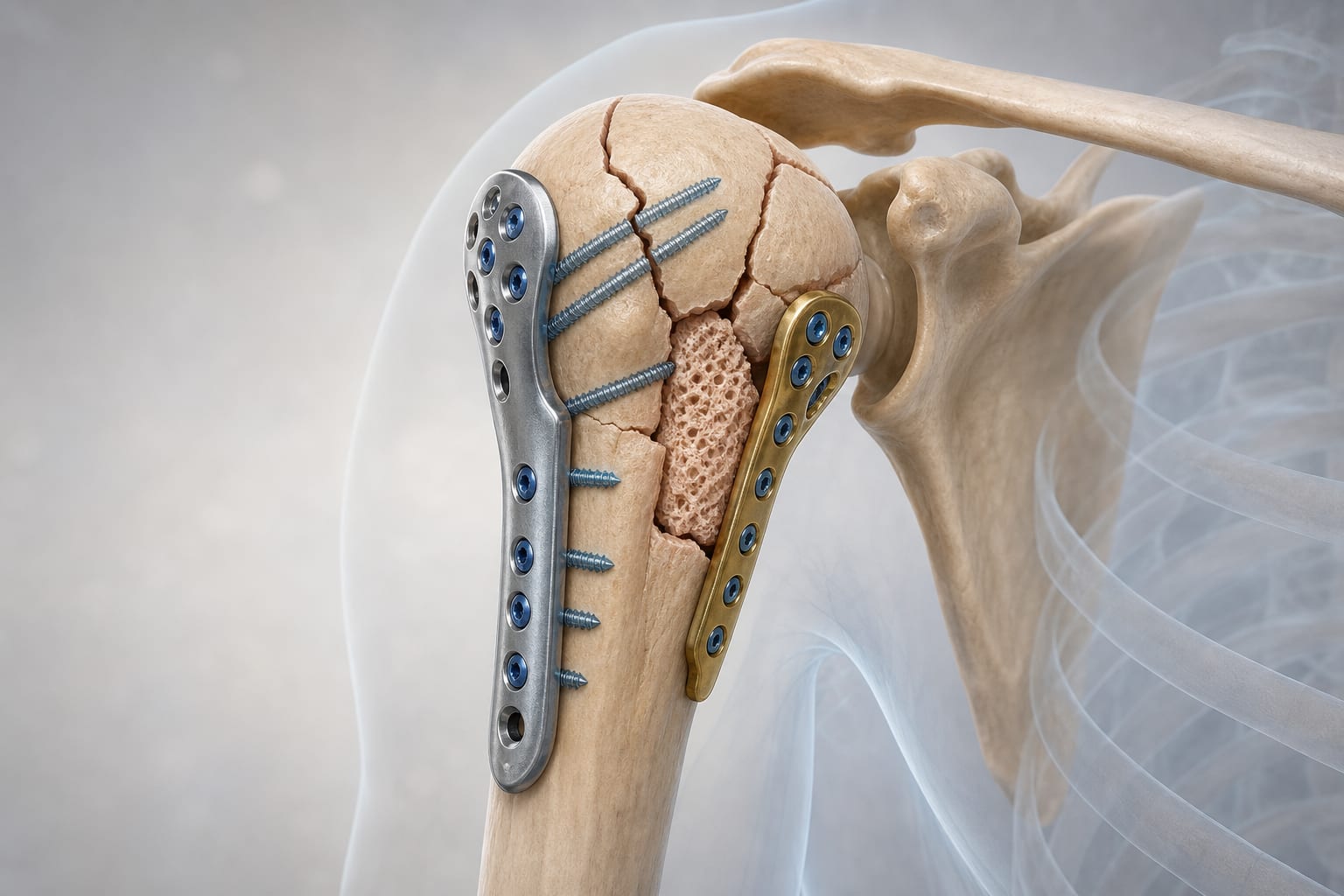
To evaluate the therapeutic results of three surgical methods for medial column support deficiency in geriatric patients with proximal humeral fractures.
Key Findings:
No significant differences in preoperative characteristics among the three groups.
At final follow-up, no significant differences in VAS, ASES, DASH, and Constant Murley scores.
Complications were reported as 1, 2, and 3 in the respective groups, with no significant differences.
Interpretation:
All three surgical approaches effectively restored medial column stability in geriatric patients with proximal humeral fractures, with the dual plating method showing superior results.
Limitations:
Retrospective cohort design may introduce bias.
Small sample size for each treatment group.
Conclusion:
All three reconstruction methods can effectively restore stability, but the dual plating approach exhibited superior outcomes.