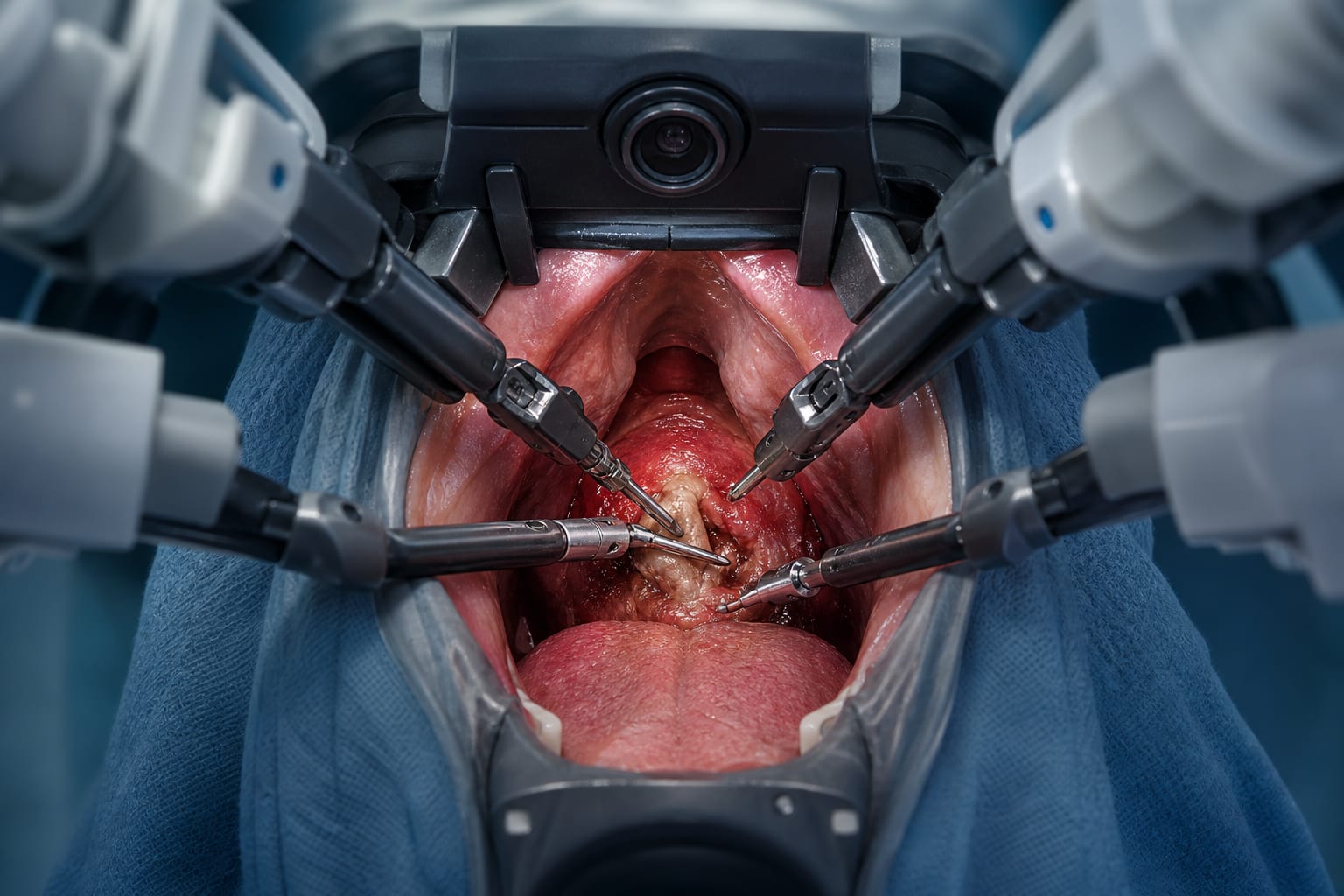
To evaluate the outcomes of the robotic-assisted extended Sistrunk approach (RESA) in patients who previously underwent radiotherapy to the head and neck region.
Approach:
Patient Enrollment: Patients were enrolled in a prospective robotic surgery registry with ethics approval, focusing on those who could not achieve adequate exposure using transoral approaches.
Surgical Technique: The RESA technique involves a submental incision, central hyoid resection, and vallecular pharyngotomy, utilizing the da Vinci Xi robotic system for dissection.
Key Findings:
RESA provides direct access to hypopharyngeal and laryngeal structures, overcoming limitations of transoral approaches.
The approach allows for controlled en bloc resection and has shown favorable functional recovery.
RESA may facilitate organ-preserving salvage procedures or minimally invasive total laryngectomy.
Interpretation:
Limitations:
Data regarding the feasibility and safety of RESA in previously irradiated patients remain limited.
Conclusion:
RESA expands the spectrum of tumors amenable to minimally invasive resection, addressing the challenges faced in irradiated fields.
Analysis of England’s multicancer early detection screening trial found modest, temporary diagnostic delays in participating regions, adding to concerns about health system effects and the evidence base for population-level blood-based cancer screening.
A prospective cohort study suggests that clinically meaningful quality‐of‐life changes continue well beyond the first postoperative year, with one‐year complications emerging as the strongest potentially modifiable predictor of later decline.