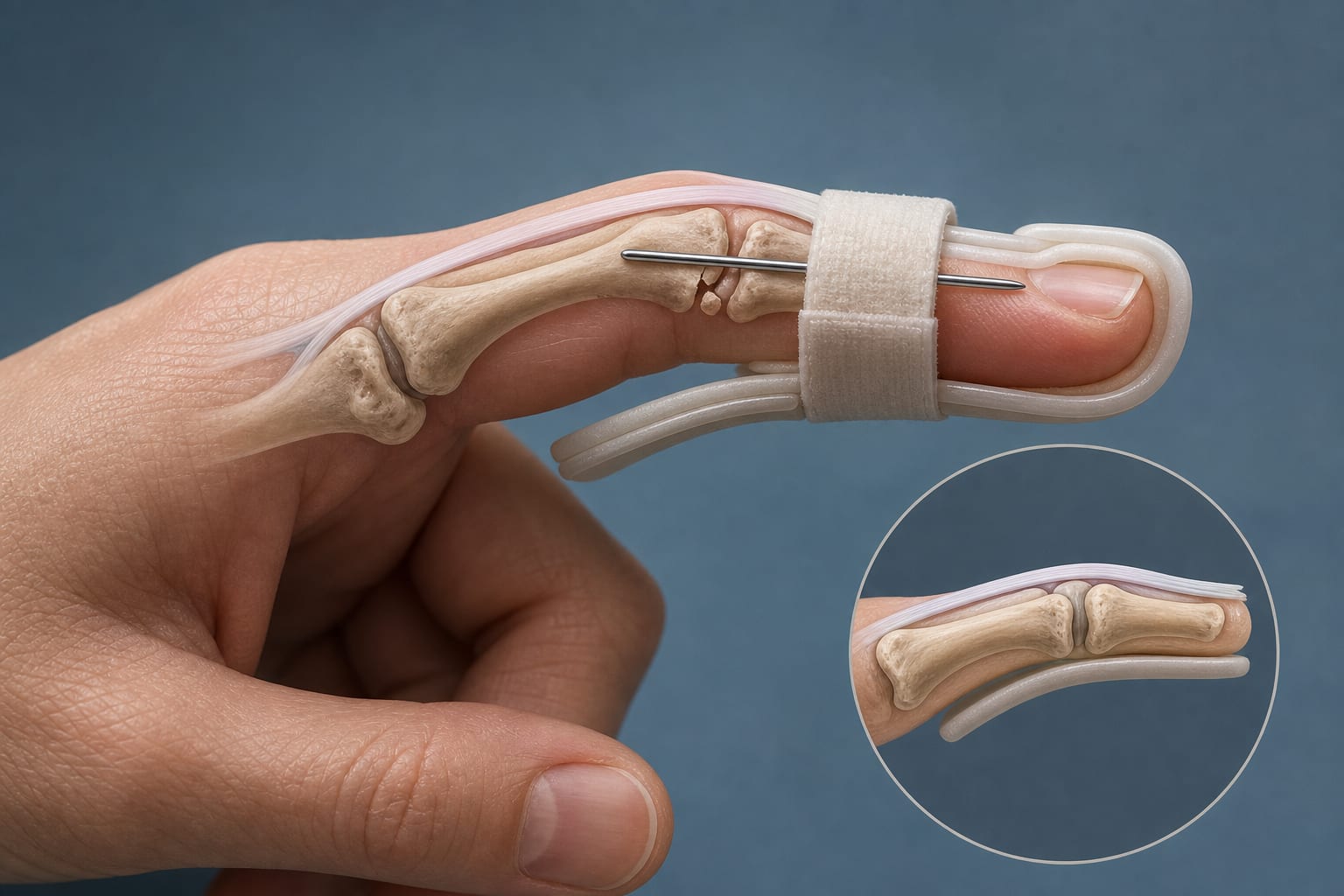
To compare the clinical and radiographic outcomes of pin-orthosis extension-block pinning technique (PO-EBPT) with conservative treatment in patients with Doyle type 4B mallet fractures.
Approach:
Study Design: A prospective randomized study conducted with ethical approval, enrolling patients with acute Doyle type 4B mallet fractures.
Inclusion/Exclusion Criteria: Inclusion: Ages 18-65, acute mallet fractures involving 20-50% of the DIP joint articular surface. Exclusion: Open fractures, chronic fractures, and other specified conditions.
Randomization: 62 patients were randomized into PO-EBPT (n=33) and conservative treatment (n=29) groups.
Conservative Treatment: Managed with a Stack orthosis for six weeks, followed by part-time splinting and active DIP joint flexion exercises.
Surgical Technique: PO-EBPT involved inserting a Kirschner wire for fracture reduction, followed by application of a volar aluminum orthosis.
Key Findings:
Both treatment methods were assessed for clinical and radiographic outcomes.
Interpretation:
The study hypothesizes that PO-EBPT will yield better functional results compared to conservative management.
Limitations:
Loss to follow-up in the conservative group may affect outcome assessment.
Sample size may limit the generalizability of the findings.
Conclusion:
The study seeks to provide insights into the effectiveness of PO-EBPT versus conservative management for mallet fractures.