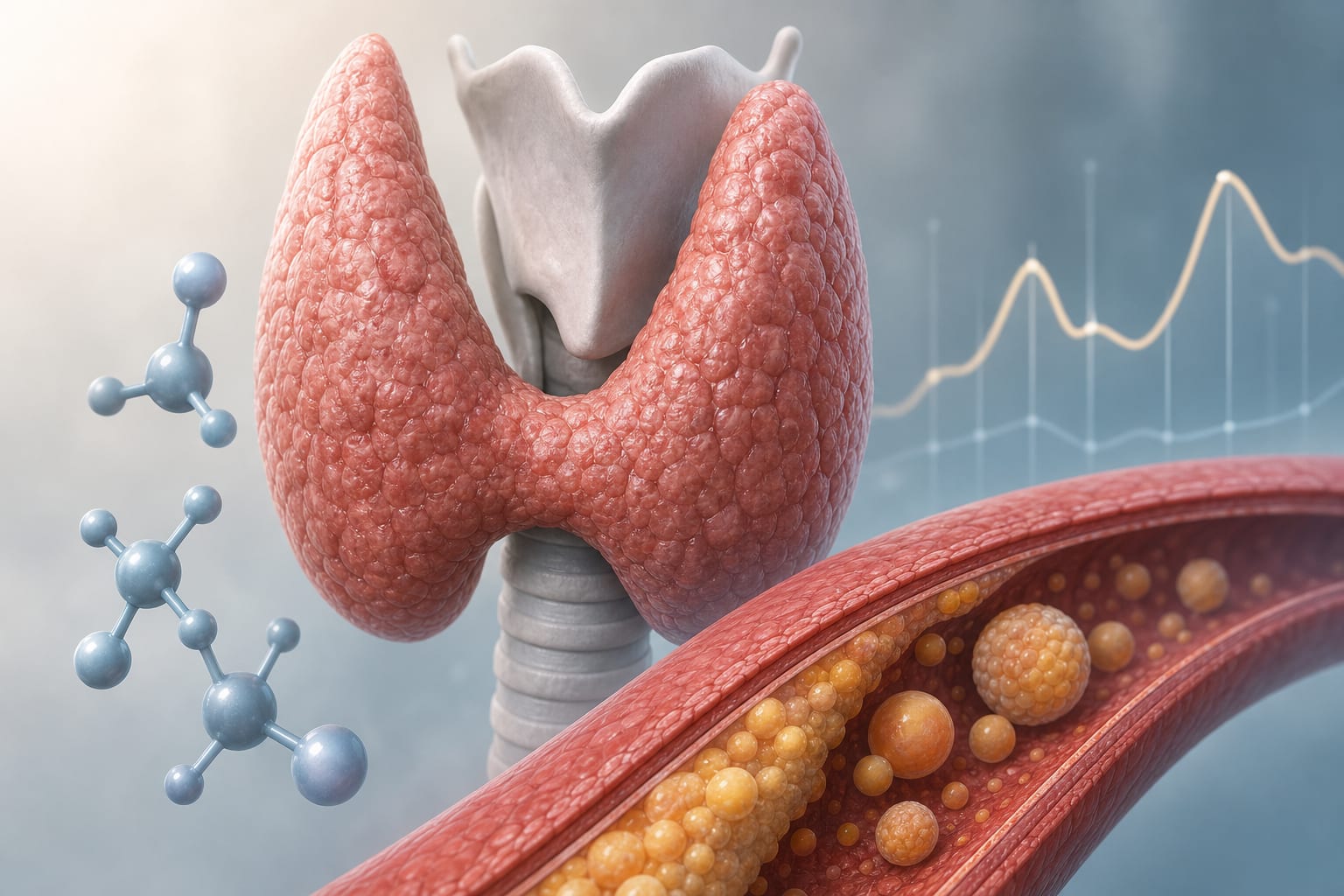
To assess the differences in lipid metabolism parameters between patients with mild subclinical hypothyroidism treated or untreated with levothyroxine.
Approach:
Study Design: Single-center, retrospective cohort study including patients with mild subclinical hypothyroidism not on thyroid hormone replacement therapy.
Participants: Fifty-two patients with at least two measurements of TSH and lipid panel were analyzed.
Endpoints: Primary endpoints were changes in TSH, total cholesterol, and LDL cholesterol between treated and untreated groups.
Key Findings:
Patients treated with levothyroxine showed a significant decrease in TSH levels compared to untreated patients.
Total cholesterol levels decreased in the treated group, while the untreated group showed no significant change.
LDL cholesterol levels were significantly lower in the treated group compared to the untreated group.
Interpretation:
Levothyroxine therapy in patients with mild subclinical hypothyroidism was associated with increased total and LDL-cholesterol.
Limitations:
Retrospective design limits causal inferences.
Single-center study may affect generalizability.
Exclusion of patients on lipid-lowering therapies may skew results.
Conclusion:
Levothyroxine therapy was associated with increased cholesterol levels in patients with mild subclinical hypothyroidism. ---