The protective role of resilience-related strength in the association between sleep reactivity and insomnia symptoms among young Chinese male university students: a moderated network approach - Summary - MDSpire
Conexiant’s news site is now MDSpire News. Learn more
Advertisement
The Moderating Effect of Resilience-Related Strength on the Relationship Between Sleep Reactivity and Insomnia Symptoms in Young Male University Students in China: A Network Analysis
To investigate the associations between sleep reactivity, psychological resilience, and insomnia symptoms among young Chinese male university students.
Approach:
Participants: 1,122 male participants (Mean age = 21.13, SD age = 1.48) were included in the study.
Assessment Tools: The Ford Insomnia Response to Stress Test, Insomnia Severity Index, and Connor-Davidson Resilience Scale were used to assess sleep reactivity, insomnia symptoms, and psychological resilience.
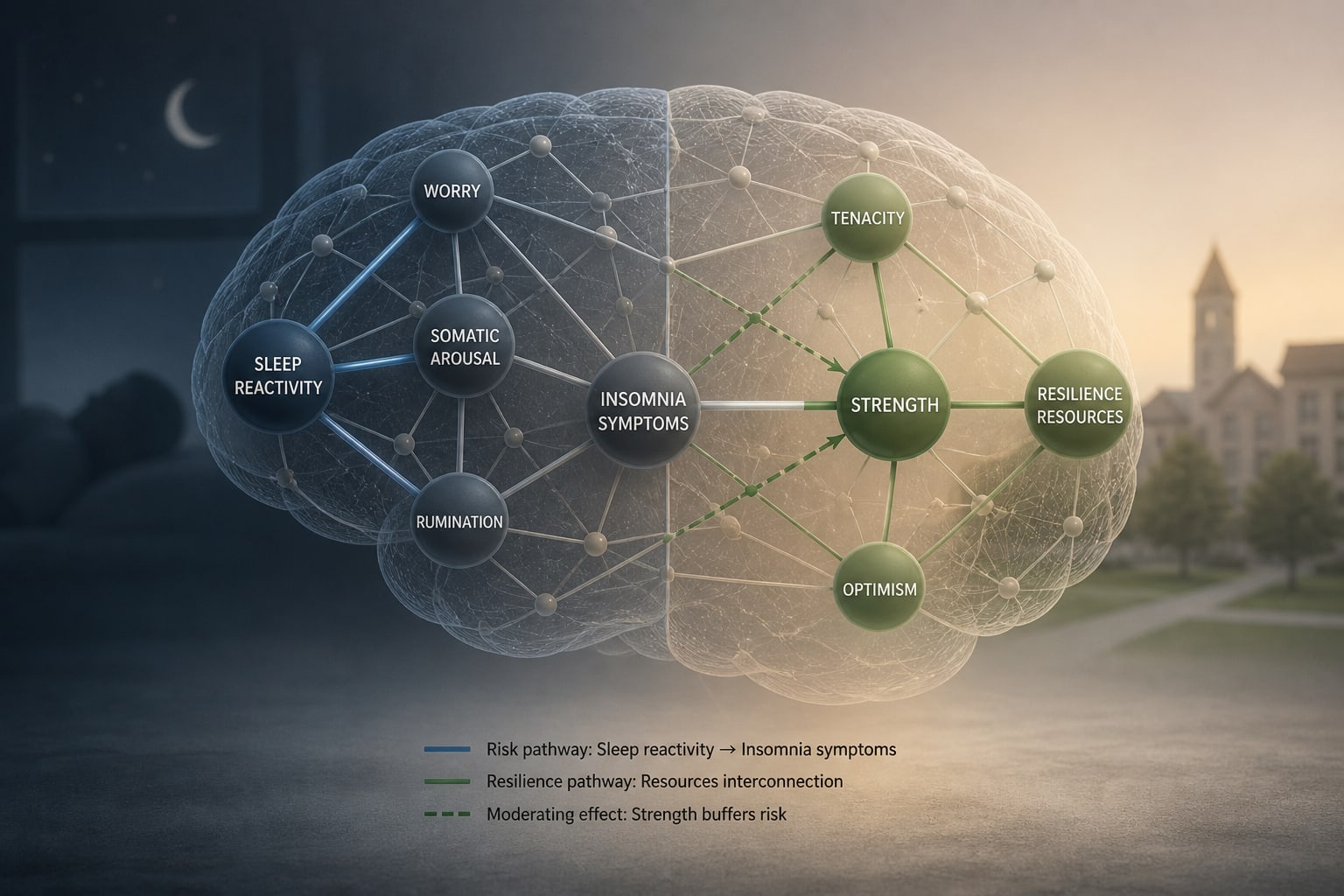
Analysis Methods: Multiple regression analyses were conducted to compare main and moderating effects of three resilience dimensions—Tenacity, Strength, and Optimism. A moderated network model was also estimated.
Key Findings:
Greater sleep reactivity was associated with more severe insomnia symptoms.
Strength showed a negative association with insomnia symptoms and significantly moderated the relationship between sleep reactivity and insomnia symptoms.
Moderated network analysis indicated that Strength moderated specific connections between sleep reactivity components and insomnia symptoms, particularly those related to interpersonal conflict and public speaking.
Limitations:
The study focused solely on young male university students, limiting generalizability.
The cross-sectional design does not allow for causal inferences.