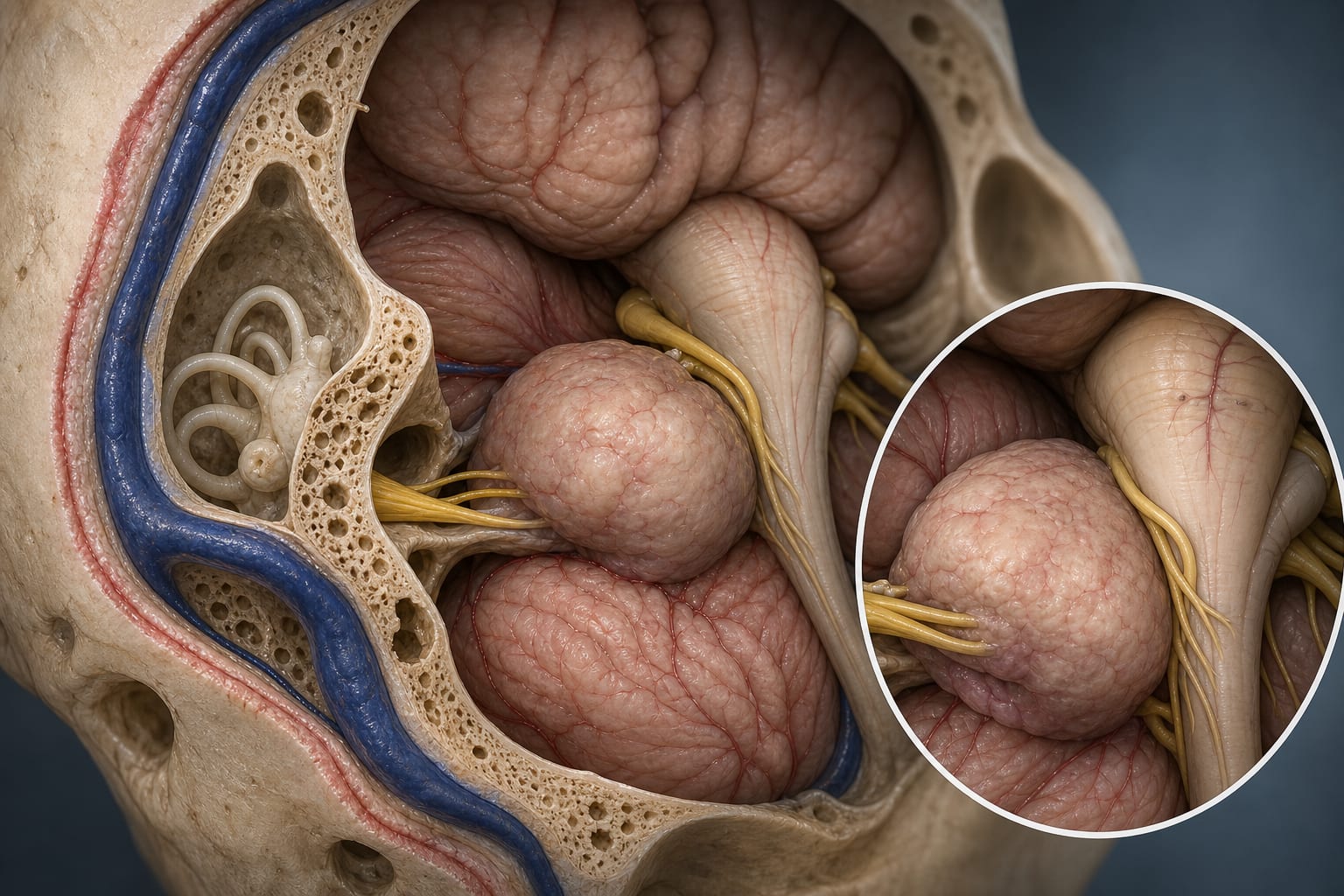
To report the use of a combined presigmoid retrolabyrinthine and retrosigmoid approach for the safe resection of a large vestibular schwannoma with brainstem compression, highlighting its significance in improving surgical outcomes.
Key Findings:
Gross total resection of the tumor was achieved.
Facial nerve function remained normal (House–Brackmann grade I) postoperatively.
Residual hearing was noted on the operated side, avoiding complete deafness, which is crucial for patient quality of life.
Interpretation:
The combined approach enhances access to the brainstem, minimizes cerebellar retraction, and facilitates safe tumor removal in cases of large vestibular schwannomas, potentially offering advantages over traditional methods.
Limitations:
The study is based on a single case, limiting generalizability and the ability to draw broader conclusions.
Long-term outcomes and potential complications were not extensively discussed, which could inform future clinical practice.
Conclusion:
The integrated presigmoid retrolabyrinthine and retrosigmoid approach is a practical strategy for resecting large vestibular schwannomas with significant brainstem compression, improving surgical outcomes and preserving neurological function, which is vital for patient recovery.
Phones in class, a 25-year prescription gone wrong, pickleball's hidden danger, and why your spin class is too loud — four findings hiding in everyday care.