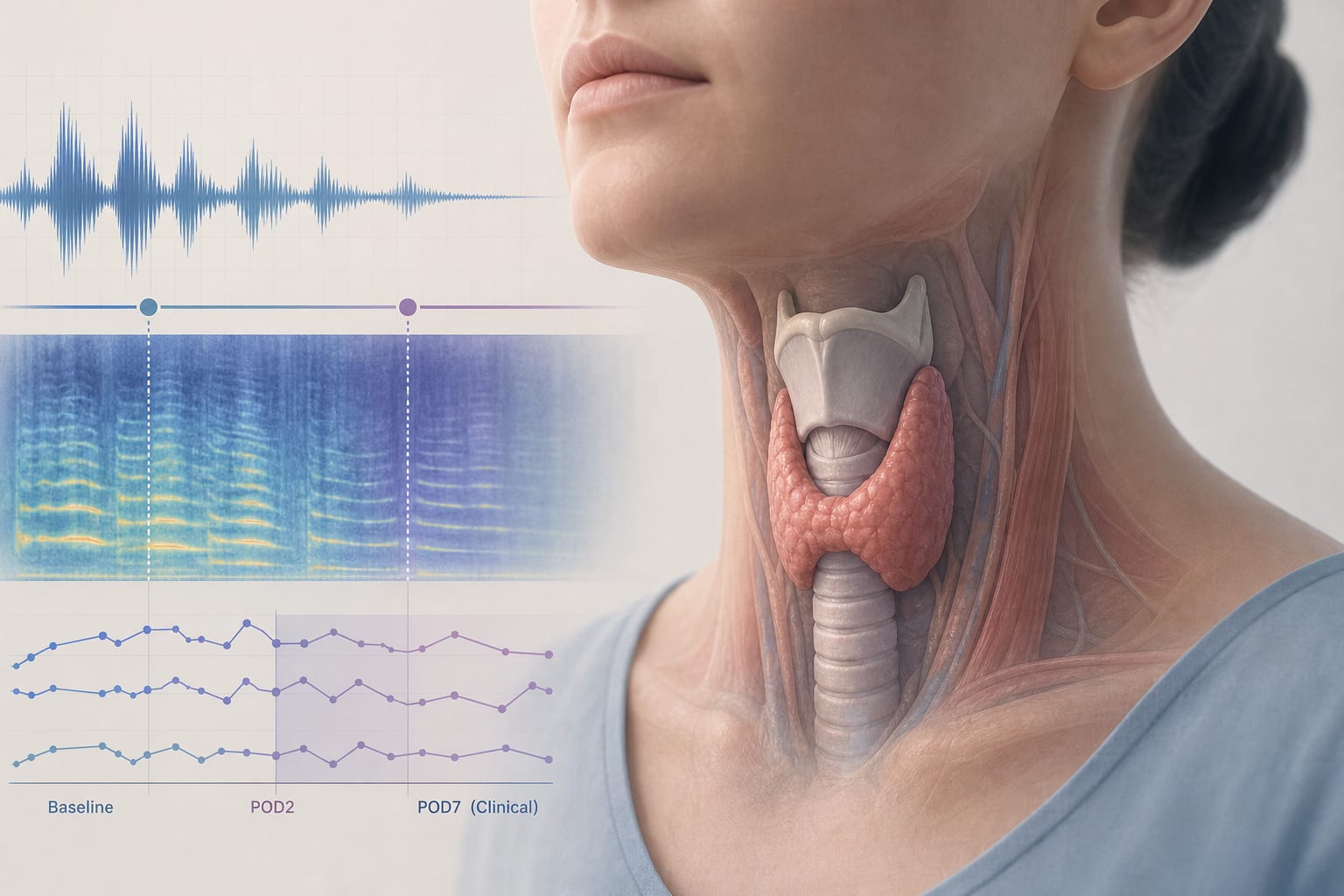
To characterize early postoperative voice change patterns following thyroid surgery and assess their short-term clinical relevance, highlighting the importance of these changes for patient care.
Key Findings:
245 patients were included in the final analytic cohort, with significant implications for understanding postoperative voice changes.
Three phenotypes were identified: A (59 patients), B (56 patients), and C (130 patients), each with distinct clinical profiles.
Significant differences in spectral clustering features across phenotypes (P < 0.001) indicate varying degrees of voice change.
At POD7, phenotypes differed significantly in VHI-30 change and responder rates (all P < 0.001), suggesting different recovery trajectories.
Phenotype B exhibited the greatest short-term burden with a responder rate of 53.6%, highlighting the need for targeted interventions.
Interpretation:
Early postoperative voice changes can be categorized into clinically interpretable phenotypes that correlate with patient-reported outcomes, suggesting potential pathways for tailored clinical management.
Limitations:
The study was conducted at a single center, which may limit generalizability and introduce selection bias.
The follow-up period was short, focusing only on early postoperative changes, which may overlook long-term outcomes.
Conclusion:
Early postoperative voice changes after thyroid surgery can be organized into distinct phenotypes associated with patient-reported outcomes, emphasizing the need for multidimensional assessment in clinical practice.
Researchers evaluated perioperative and postdischarge factors associated with opioid refill prescriptions during the first 90 days after inpatient otolaryngology–head and neck surgery.