Virtual reality training for gait disorders in Parkinson’s disease: a bibliometric and visual analysis of hotspots and trends using CiteSpace and VOSviewer - Summary - MDSpire
Advertisement
Virtual reality training for gait disorders in Parkinson’s disease: a bibliometric and visual analysis of hotspots and trends using CiteSpace and VOSviewer
To map the global intellectual landscape and emerging frontiers of VR training for PD gait disorders (primary objective), while identifying developmental gaps in Chinese research through cross-database comparative analysis (secondary objective).
Approach:
Key Findings:
English publication volume grew steadily, peaking between 2020 and 2025, with a total of 535 articles analyzed.
The United States leads in publication volume with 108 papers, while China ranks third with 42 papers.
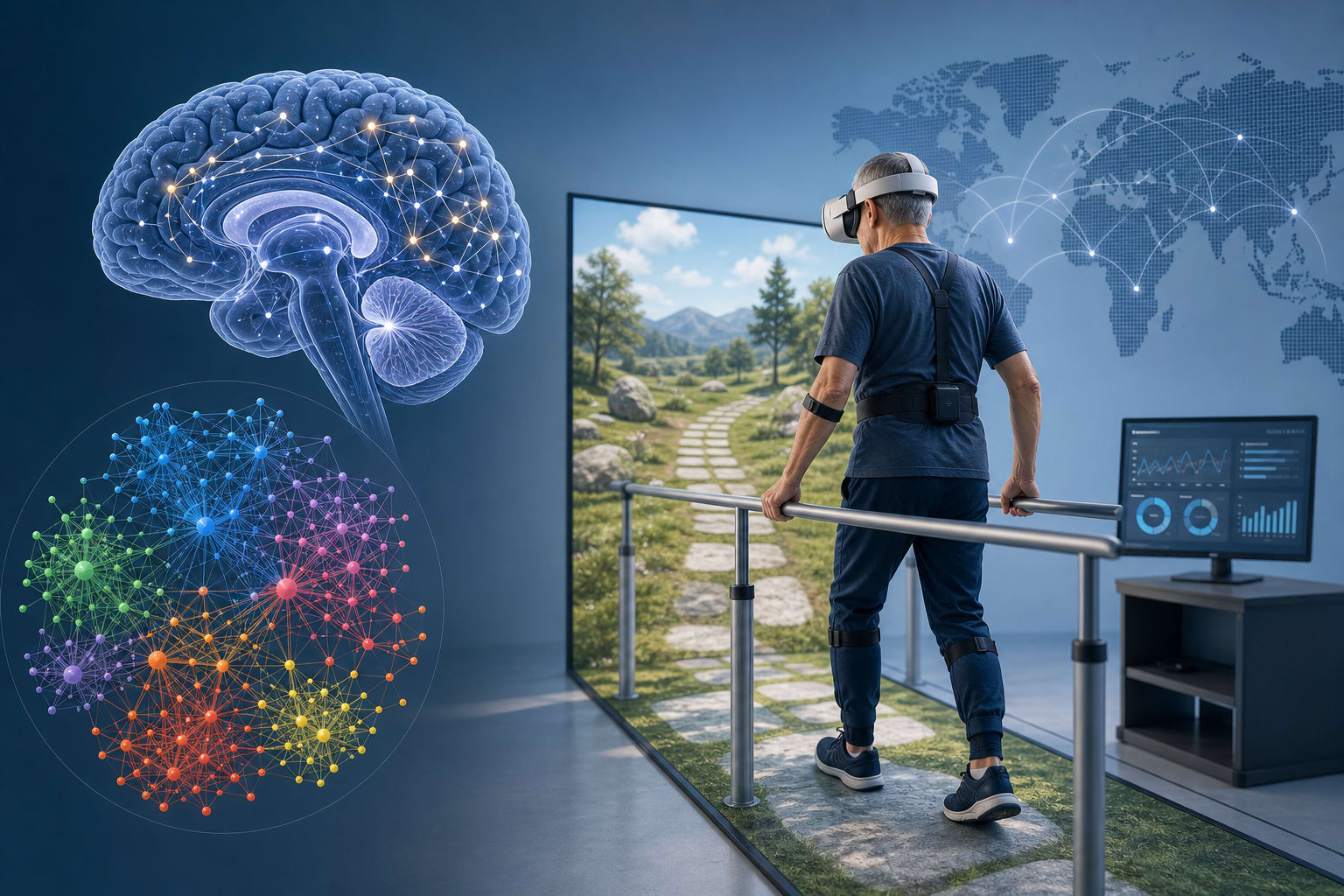
Research frontiers have shifted towards intelligent, remote, and personalized directions such as wearable sensors and telerehabilitation.
Interpretation:
VR training for PD gait disorders is an expanding global research domain. Distinct thematic focuses exist between English and Chinese literature, indicating diverse research priorities.
Limitations:
Chinese literature is limited, with only 18 articles published, averaging fewer than three annually, which may skew the overall understanding of the field.
The study is constrained by the databases used and may not capture all relevant research, potentially affecting the comprehensiveness of the findings.
Conclusion:
Future studies should enhance multi-center cross-linguistic collaboration by establishing joint research initiatives and sharing best practices, while focusing on precision rehabilitation and neural mechanisms.