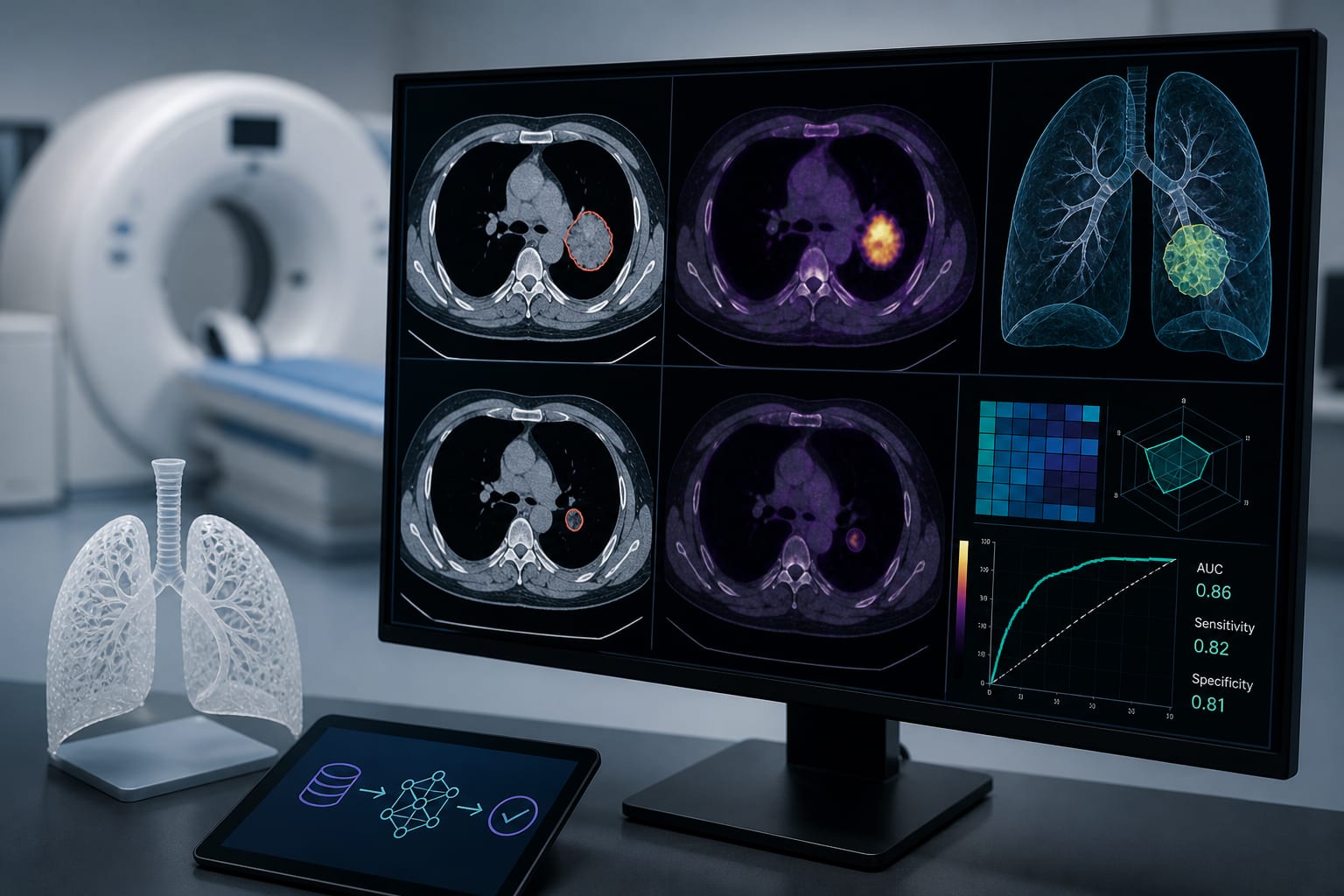
Authors’ Reply: Clarifying the Comparative Interpretation and Clinical Implications of Radiomics-Based AI for Pathological Response Prediction - Summary - MDSpire
To address comments regarding the systematic review and meta-analysis on radiomics-based AI for predicting pathological responses in non-small cell lung cancer.
Approach:
Clarification of Analysis: The analysis included validation cohorts only, and the Z test was a cross-study comparison, not a head-to-head comparison.
Sensitivity-Specificity Trade-off: AI showed greater sensitivity for pathological complete response (pCR), while conventional criteria had greater specificity.
Limitations Acknowledged: The findings should not be extrapolated to an intention-to-treat population, and variations in prediction timing contributed to heterogeneity.
Key Findings:
No same-patient head-to-head study is available to establish overall superiority.
Pooled estimates reflect patients who underwent resection and should not be generalized.
Interpretation:
The principal finding remains that radiomics-based AI shows promising performance in predicting pathological response following neoadjuvant immunochemotherapy.
Limitations:
The analysis does not establish readiness for surgical-timing decisions or treatment changes.
Future studies are needed for multicenter validation and same-patient comparisons.
Conclusion:
Definitive superiority and treatment-changing utility require studies assessing the same patients at the same time point.