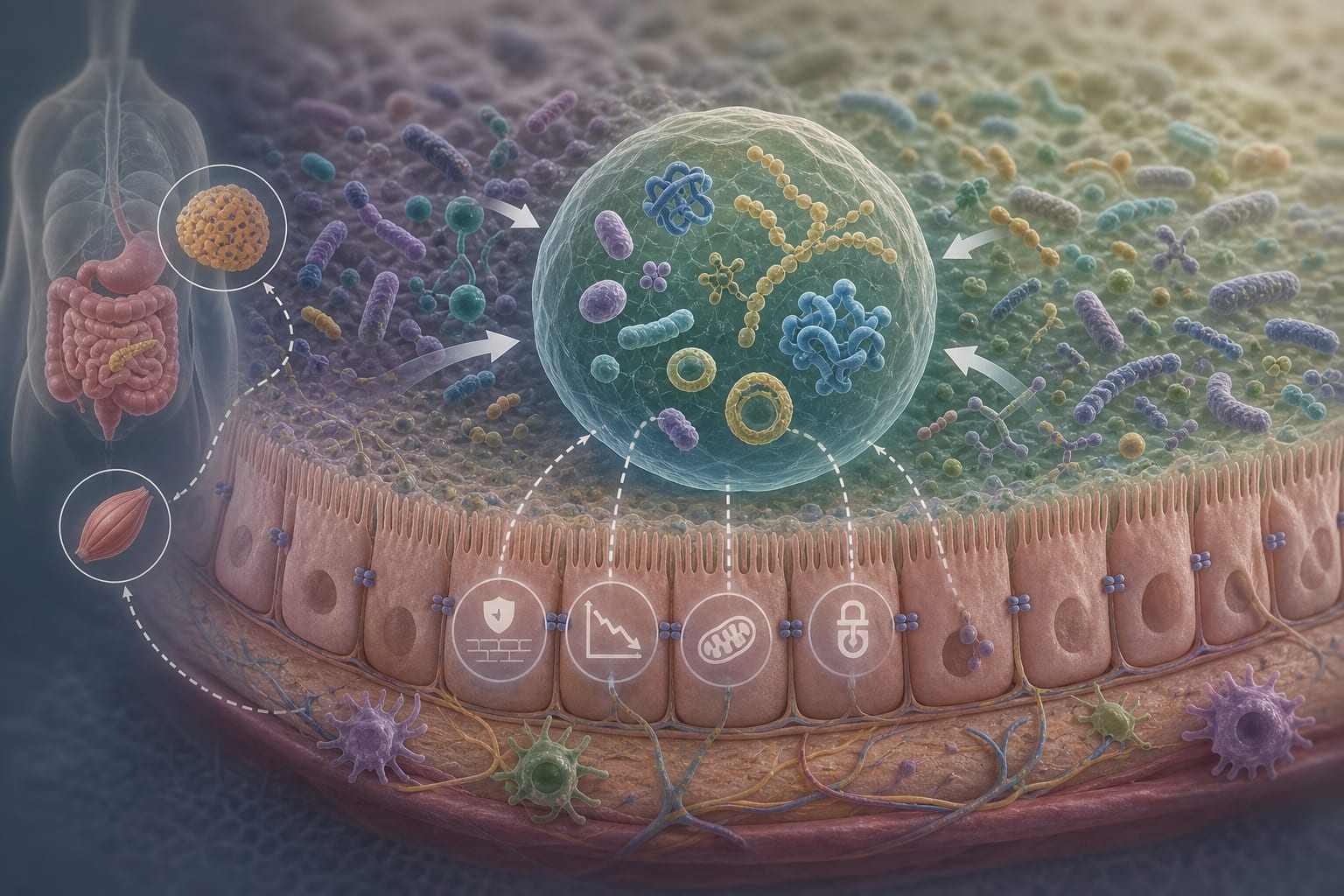
To propose the concept of 'Envbiotics' as a new strategy for microbial-targeted intervention in Type 2 Diabetes Mellitus (T2DM) that optimizes the intestinal microenvironment and regulates the microbiota structure and function in a non-nutritional manner.
Approach:
Definition of Envbiotics: Envbiotics are defined as substances that target the host, optimize the intestinal microenvironment, and regulate the microbiota structure and function in a non-nutritional manner.
Mechanisms of Action: The paper discusses typical evidence, including berberine, urolithin A, and plant exosomes, to elucidate the mechanisms through which Envbiotics operate.
Key Findings:
Imbalance of gut microbiota is a significant trigger for insulin resistance in T2DM.
Existing microbiota-targeted therapies have limitations in effectively addressing T2DM.
Envbiotics provide a new strategy for microbial-targeted intervention in T2DM.
Interpretation:
Envbiotics represent a novel approach that could enhance the efficacy of microbiota-directed therapies for T2DM by focusing on host metabolism and health.
Limitations:
Clinical translation of microbiota-targeted therapies faces challenges such as insufficient evidence and regulatory issues.
The classification of substances as Envbiotics may exclude many beneficial compounds that do not fit traditional categories.
Conclusion:
Envbiotics provide a new framework for understanding and developing interventions targeting the gut microbiota in T2DM.