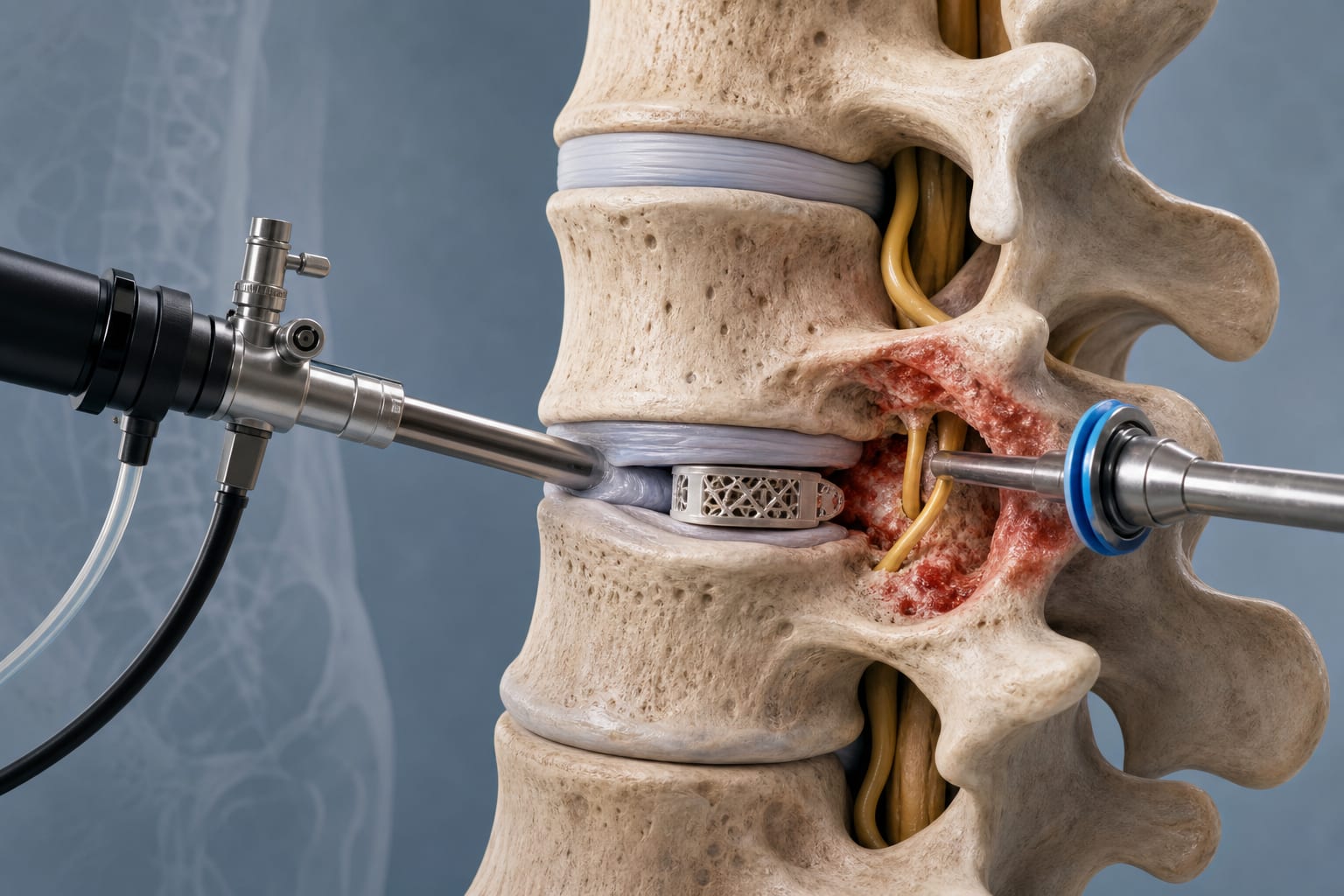
To compare the clinical efficacy and safety of UBE-TLIF vs. MIS-TLIF in treating lumbar spinal brucellosis.
Key Findings:
UBE-TLIF group had significantly shorter operative time, reduced blood loss, and smaller incisions compared to MIS-TLIF (P < 0.05).
Postoperative inflammatory markers decreased significantly in both groups with no significant intergroup differences (P > 0.05).
UBE-TLIF group had lower VAS scores at 1 and 3 months postoperatively, but differences resolved by 6 months (P > 0.05).
Both groups showed significant improvements in ODI and intervertebral disc height postoperatively with no intergroup differences (P > 0.05).
Complications included three dural tears (UBE-TLIF) and four nerve root injuries (MIS-TLIF), with comparable complication rates (P > 0.05).
Bone fusion rates and MacNab excellent/good rates were similar between groups (P > 0.05).
Interpretation:
Both UBE-TLIF and MIS-TLIF are safe and effective for lumbar spinal brucellosis, with UBE-TLIF providing advantages in terms of minimally invasive benefits.
Limitations:
The study is retrospective and may have selection bias.
Limited sample size may affect the generalizability of the findings.
Conclusion:
UBE-TLIF offers superior minimally invasive benefits and may be preferred in selected patients.