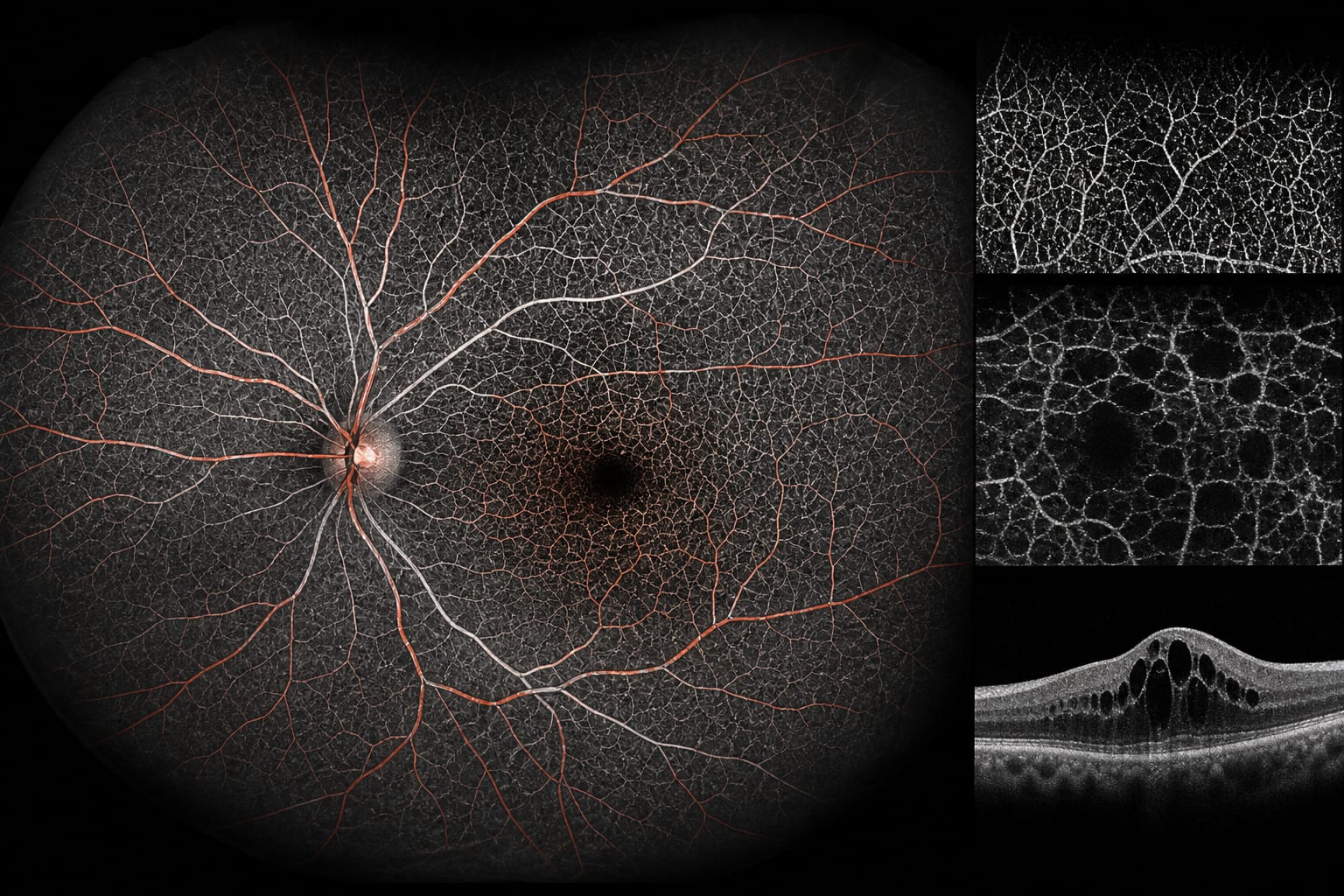
To investigate retinal blood flow alterations in diabetic macular edema (DME) using ultra-widefield optical coherence tomography angiography (OCTA), highlighting its significance in early detection.
Key Findings:
Nasal SVC vascular density was significantly reduced in diabetes patients without retinopathy (p<0.05).
NPDR patients exhibited widespread SVC vascular density reduction compared to controls and DM patients (p<0.01).
DME patients showed increased SVC vascular density in the peripheral retina (p<0.05).
DVC changes were significant only in the macular area in NPDR patients (p<0.05).
Peripheral DVC vascular density strongly correlated with DME presence (r=0.85, p<0.01).
Interpretation:
Nasal SVC vascular alterations are detectable early in preclinical diabetic retinopathy, and peripheral DVC vascular density correlates closely with DME, suggesting potential for early intervention.
Limitations:
The study is retrospective and may be subject to selection bias, including potential confounding factors.
Limited sample size may affect the generalizability of the findings.
Conclusion:
The study highlights the potential of OCTA in detecting early vascular changes associated with diabetic macular edema, paving the way for future research on therapeutic interventions.