To systematically elucidate the role of ubiquitination in the pathogenesis of Type 2 diabetes mellitus (T2DM).
Approach:
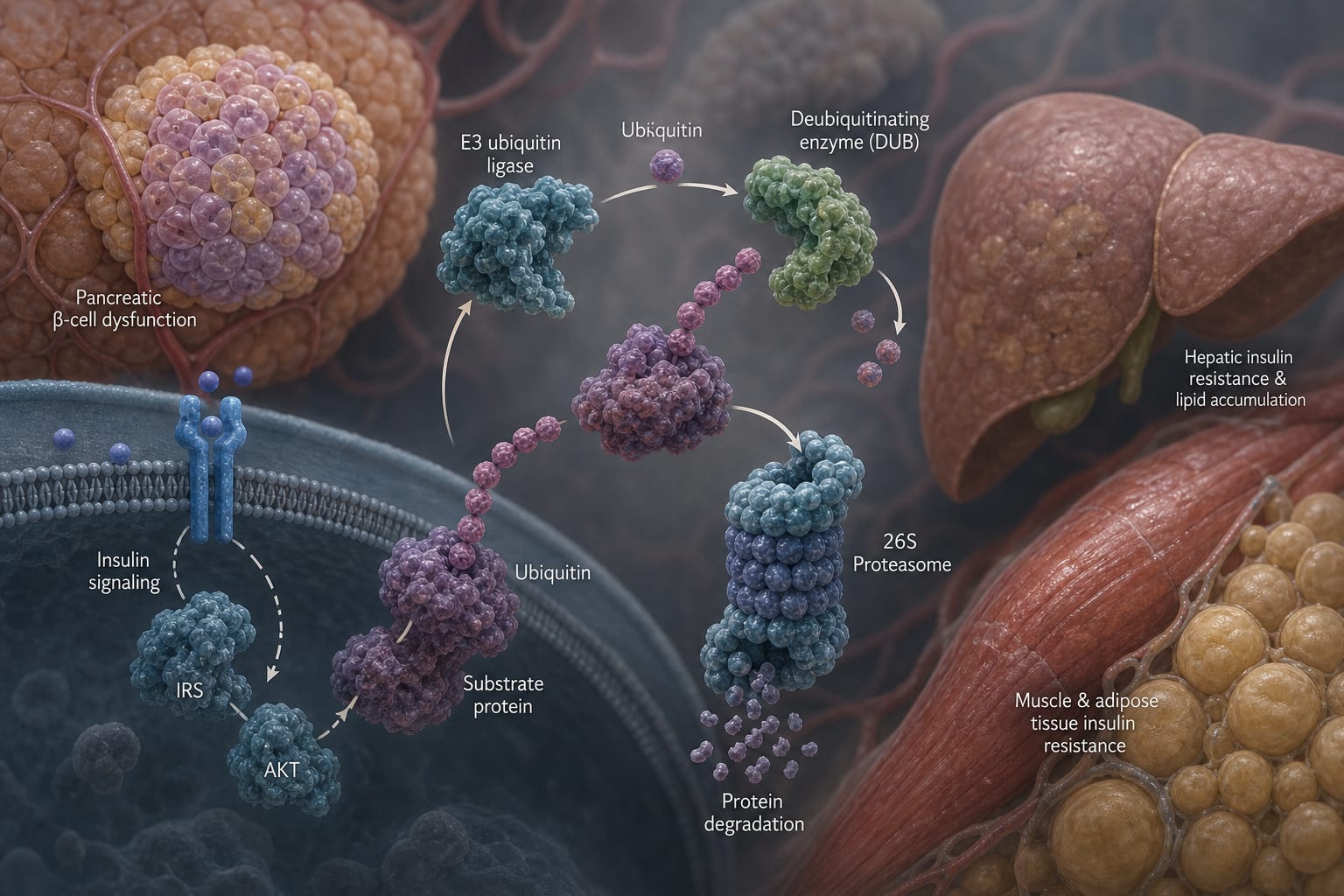
Ubiquitin System Overview: Outlines the fundamental principles of the ubiquitin system.
Regulatory Mechanisms: Discusses regulatory mechanisms in insulin-sensitive tissues and pancreatic β-cells.
Therapeutic Strategies: Explores potential and challenges of targeting E3 ligases or DUBs as therapeutic strategies.
Novel Perspectives: Presents enzyme-specific resolution, multi-organ integration, and translational orientation.
Key Findings:
E3 ligases and DUBs form tissue-specific regulatory networks governing T2DM pathology.
Ubiquitination modifications are linked to insulin signaling pathways and metabolic regulatory networks.
Dysregulation of ubiquitination leads to systemic metabolic dysfunction in T2DM.
Interpretation:
Targeting the ubiquitination system may offer new precision therapeutic strategies for T2DM.
Limitations:
Current knowledge gaps in human evidence regarding ubiquitination in T2DM.
Challenges in translating findings from basic research to clinical applications.
Conclusion:
The review provides a theoretical foundation for understanding T2DM's molecular basis and facilitates the development of novel therapeutic interventions.