Precision medicine decision-making under pharmacogenomics in nursing: realizing value from limited evidence to scaled clinical pathways - Summary - MDSpire
Advertisement
Precision medicine decision-making under pharmacogenomics in nursing: realizing value from limited evidence to scaled clinical pathways
To promote the long-term integration of precision medicine and care, transforming digital PGx outcomes into tangible health benefits for patients.
Approach:
Methods: A structured narrative review was conducted, searching PubMed, Embase, and CINAHL for relevant literature from January 2010 to January 2026, focusing on guidelines, pragmatic trials, randomized controlled studies, meta-analyses, and implementation studies rela…
Key Findings:
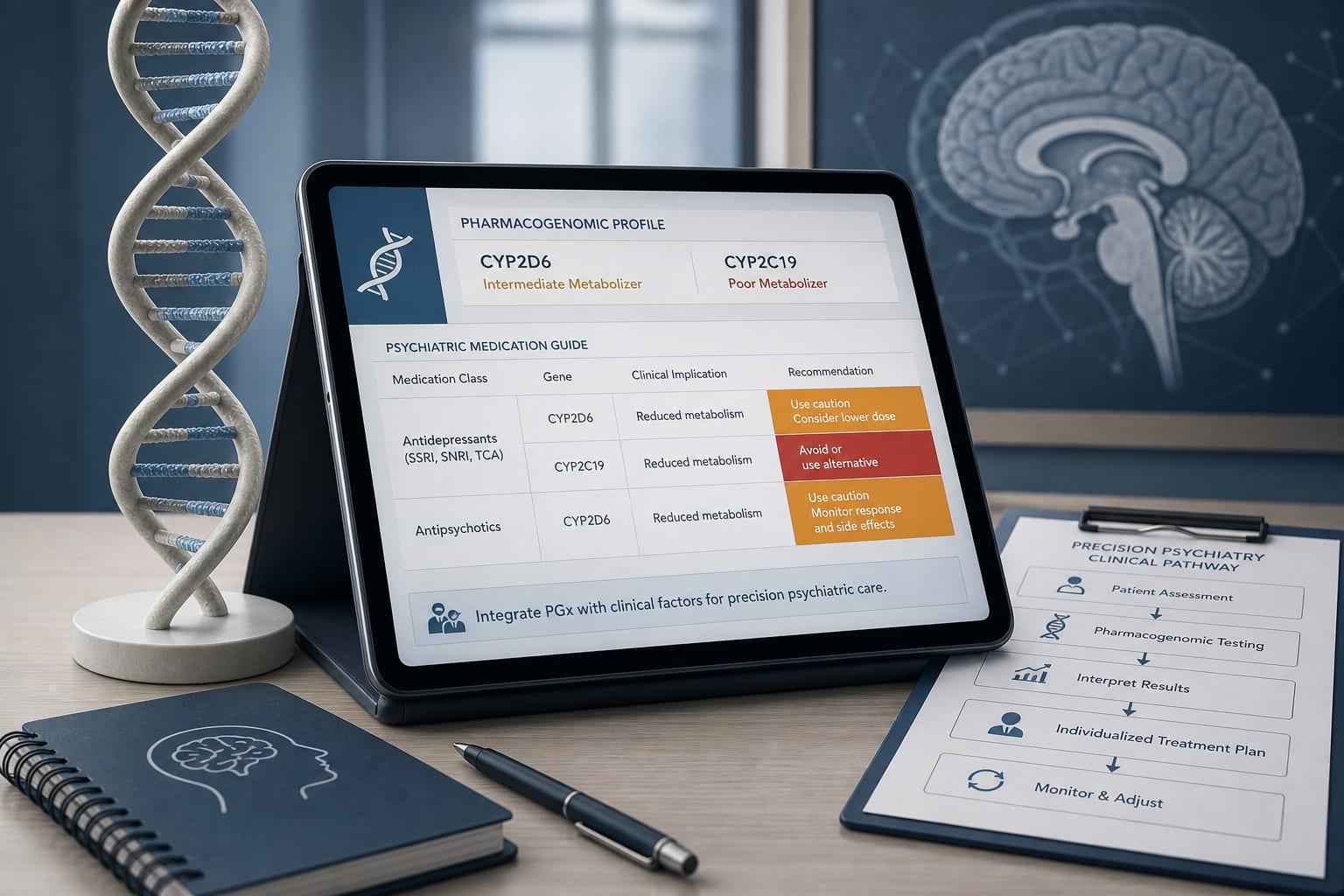
Current evidence supports PGx as an adjunctive prescribing tool for selected antidepressants and antipsychotics with established drug-gene guidance.
Pooled estimates from depression trials suggest modest improvements in remission or response, but benefits vary significantly.
Patients most likely to benefit from PGx testing include those with prior treatment failure, troublesome adverse effects, and complex polypharmacy.
Routine testing for all psychiatric patients is not supported by current evidence.
Nurses can play a crucial role in medication history-taking, patient education, and monitoring, but implementation requires attention to workforce capability and integration into electronic health records.
Interpretation:
PGx should be integrated into a broader precision-prescribing framework in psychiatry to enhance clinical practice.
Limitations:
Implementation challenges due to limited structured genotype fields in electronic health records.
Inconsistent interpretation of PGx reports and varying clinician awareness and acceptance.
Conclusion:
PGx has the potential to transform clinical practice in psychiatry, but requires careful integration into existing care pathways.