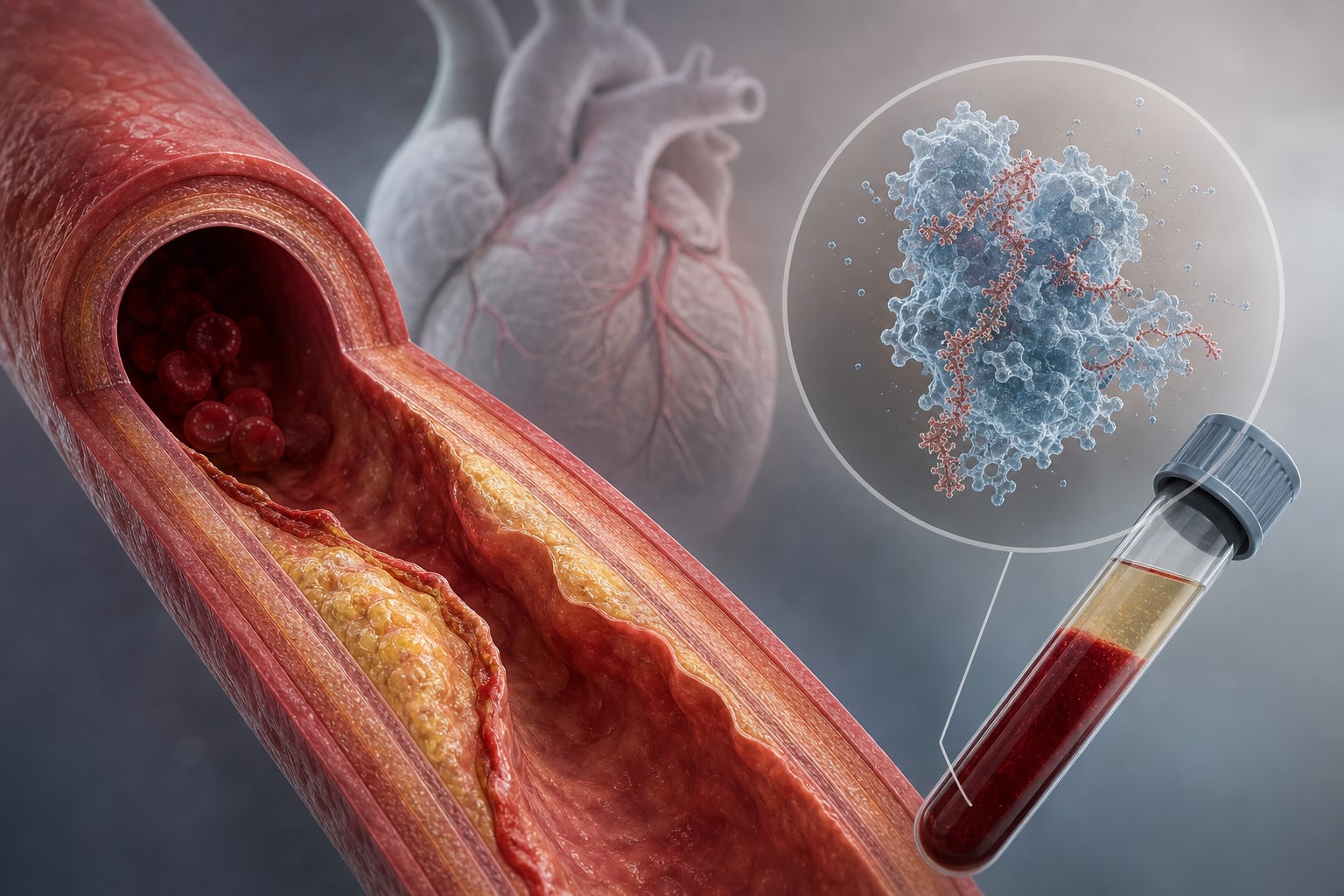
To investigate serum endocan levels in patients with non–ST-segment elevation myocardial infarction (NSTEMI) and their association with coronary stenosis severity.
Key Findings:
Serum endocan levels were significantly higher in patients with clinically significant coronary stenosis (p < 0.001).
Mean age and BMI were higher in the significant stenosis group (p = 0.038, p = 0.042).
Inflammation parameters (CRP, WBC, NLR) were higher in the significant stenosis group (p < 0.001, p = 0.011, p = 0.038).
Endocan, BMI, and CRP were independently associated with clinically significant coronary stenosis in multivariate analysis.
Endocan cut-off value for discriminating significant stenosis was > 393.1 ng/L (AUC = 0.826, p < 0.001).
Interpretation:
Endocan levels are elevated in NSTEMI patients with clinically significant coronary stenosis and may reflect endothelial dysfunction and atherosclerotic burden.
Limitations:
Conclusion:
Endocan may serve as a biomarker for assessing coronary stenosis severity in NSTEMI patients.