To synthesize previously published studies on AI applications in triple-negative breast cancer (TNBC) across various modalities and clinical tasks.
Approach:
Review Design: Structured narrative synthesis of literature focusing on AI in TNBC, organized by data modality, clinical task, validation strategy, and translational readiness.
Literature Selection: Targeted searches of multiple databases with specific criteria for inclusion based on TNBC relevance and methodological rigor.
Synthesis Strategy: Synthesis by modality and task, considering study design features affecting translational credibility.
Key Findings:
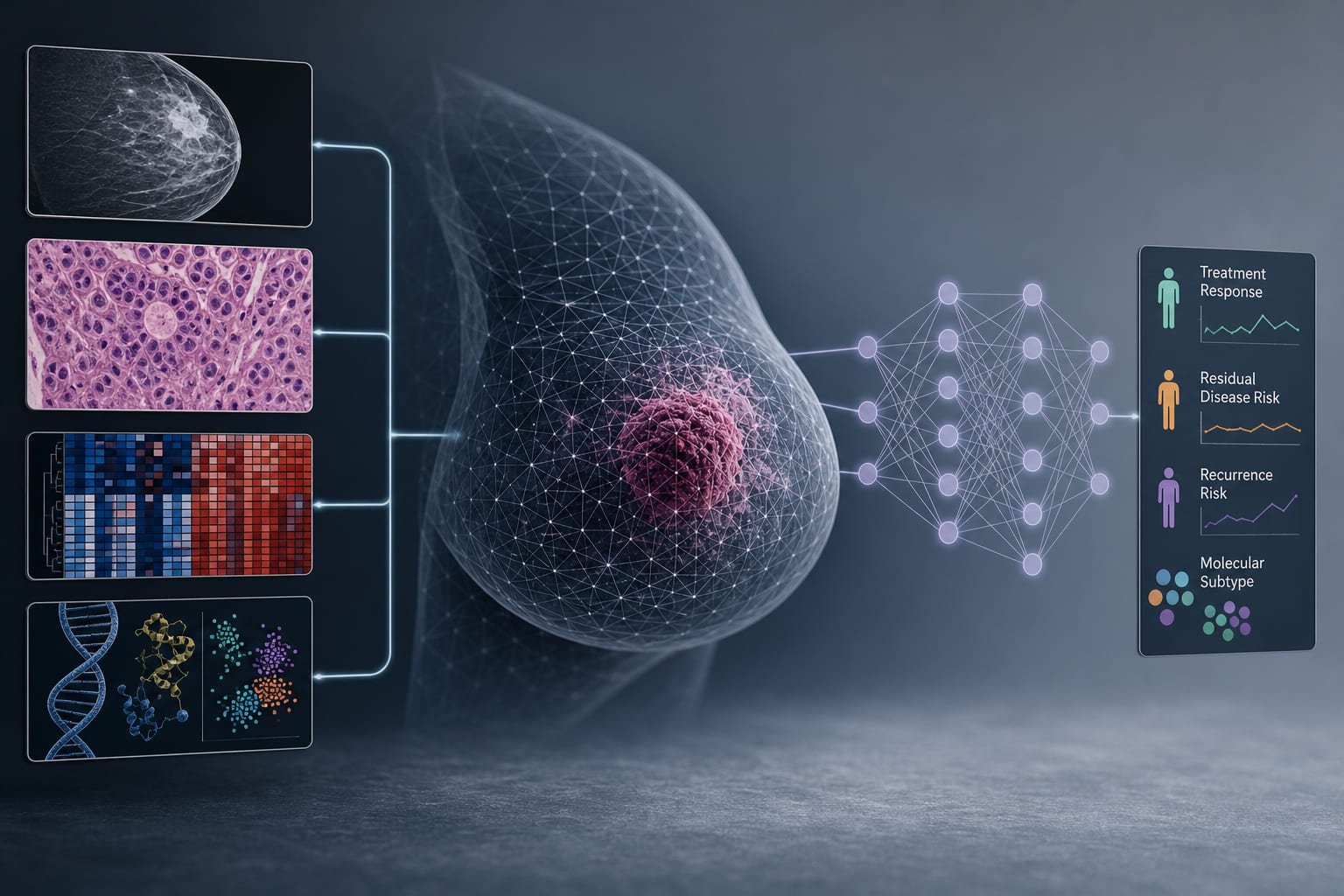
AI has been applied to lesion segmentation, subtype classification, prediction of pathological complete response after neoadjuvant therapy, recurrence-risk stratification, and survival modeling.
Magnetic resonance imaging, ultrasound, mammography, whole-slide histopathology, transcriptomics, and multi-omics provide complementary information for TNBC.
Multimodal fusion and radiogenomic frameworks show promise in capturing TNBC heterogeneity.
Current evidence is limited by small cohorts, inconsistent endpoint definitions, and inadequate external testing.
Interpretation:
Clinically credible AI studies in TNBC align with actionable clinical decisions and are supported by robust validation and transparent reporting.
Limitations:
Limited by small cohort sizes and inconsistent definitions of endpoints.
Inadequate external validation and domain shifts across different data sources.
Conclusion:
Future advancements will rely on multi-institutional data curation, improved model training, and reliable multimodal designs.